NEW DELHI: India is prepared to face offensive military action on its borders should the need arise, Army Chief General Dalbir Singh said here on Tuesday, adding that any future conflict was expected to be short and swift.
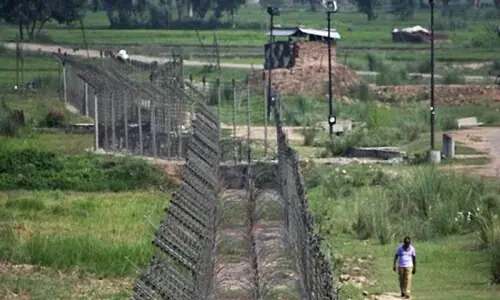
The Hindu quoted him as referring to the ceasefire violations along the borders in Jammu and Kashmir, which have put relations between India and Pakistan under a strain. This had made New Delhi aware of the need to remain prepared, General Singh said.
According to The Hindu, the general was speaking at a tri-service seminar on the 1965 Indo-Pak War. “The army chief said a very high level of operational preparedness at all times has become part of India’s strategy as there is recognition that the swift, short nature of future wars is likely to offer limited warning time,” according to the paper.
Take a look: Pakistan is not Myanmar, will respond to foreign aggression, Nisar tells India
It said the comments came against the backdrop of alleged ceasefire violations by Pakistan which had put India on alert. “As we look ahead we can see that our threats and challenges become more complex. As a result the commitments of the Indian Army have increased manifold in scope and intensity in past few years. The frequent ceasefire violations and infiltration bids by our western neighbour always remain live and active,” he pointed out.
Without naming names, the army chief accused Pakistan of employing “new methods to create unrest in Jammu and Kashmir” and said the recent instances of terrorist violence are “clear pointers to extend this arc of violence to other areas”.
The Hindu recalled that General Singh’s comments followed Pakistan Defence Minister Khawaja Muhammad Asif’s statement blaming India for trying to “impose war on Pakistan”. The Pakistani minister also cautioned India on Sunday that it would suffer “heavy losses” if it tries to “impose” a war on his country.
The two countries have been embroiled in a war of words over ceasefire violations, the paper said. It added that tensions between them escalated after the Gurdaspur and Udhampur terror attacks, which New Delhi asserts were carried out by Pakistani nationals.
After the cancellation of the talks between the National Security Advisers of both sides, following disagreements over the agenda for talks, both countries have accused the other of violating the ceasefire agreement that has led to loss of civilian lives as well as casualties to the defence forces.
While India claims 192 ceasefire violations by Pakistan along the international border in Jammu and Kashmir till July 29 this year, Islamabad has countered it by asserting that the Indian forces have committed 37 and 24 unprovoked ceasefire violations on the LoC and the Working Boundary in July and August respectively, The Hindu said.
Published in Dawn, September 2nd, 2015
On a mobile phone? Get the Dawn Mobile App: Apple Store | Google Play