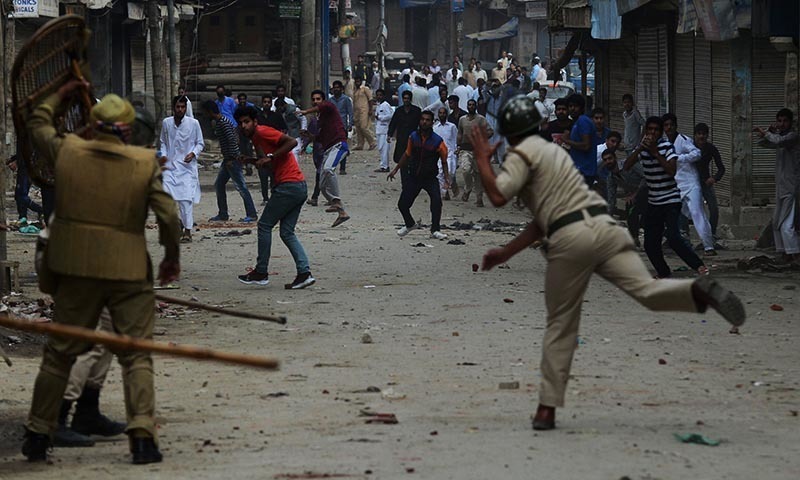


NEW YORK: India has not taken any member of its security forces deployed in India-held Kashmir to court for human rights violations, a major watchdog has said in a scathing report.
The report released on Wednesday by the Amnesty International revealed that New Delhi had denied permission to prosecute under section 7 of the Armed Forces Special Powers Act (AFSPA) in every case brought against members of the army or paramilitary forces, or in a small number of cases, kept the decision pending for years.
The report quoted Mohammad Amin Magray, uncle of 17-year-old Javaid Ahmad Magray who was killed in April 2003 by the troops, as having said: “If the [Indian] army knew they would be charged, and will have to go to court and be prosecuted, they will think ten times before they pull their triggers on an innocent….
“The AFSPA is like a blank cheque from the government of India to kill innocents like my nephew.”
Local rights activist Parveena Ahanger said the Indian military courts were “unreliable” and “dishonest”.
“India has martyred one lakh (100,000) people in Kashmir. More than 8,000 disappeared (while) in the custody of army and state police. No one has returned so far.
“In the absence of this act (AFSPA) soldiers involved in the crimes would have been tried in local courts instead of Indian military courts (which) we don’t trust.”
Her son Javaid Ahmad was picked up by armed forces personnel in 1990 and since then she has continued to lead peaceful protests seeking independent international investigation into the cases of the disappeared.
“Many parents have died while seeking whereabouts of their sons... No money or compensation will substitute the lives of our dear ones,” said Ms Ahanger, who heads a chapter of the Association of Parents of Disappeared Persons (APDP).
AFP adds: The London-based group released the report on the eve of the 25th anniversary of the introduction of the AFSPA in the disputed territory. The law gives thousands of soldiers and paramilitary personnel sweeping powers to shoot on sight, detain suspects without trial and seize property.
Successive governments and the army have staunchly resisted calls for repeal of the law, arguing it is needed to quell resistance and track down militants.
But Amnesty and other groups have repeatedly said the law, also in force in India’s remote northeast region, was breeding further violence and alienation.
The report includes interviews with families whose relatives have allegedly been killed, sexually assaulted or tortured by soldiers and is based in part on the examination of court, police and other official records.
Published in Dawn, July 2nd, 2015
On a mobile phone? Get the Dawn Mobile App: Apple Store | Google Play