LAHORE: The Punjab government plans to install 2,000 public service centres by the year end for getting feedback from customers on the performance of around 100 services and departments.
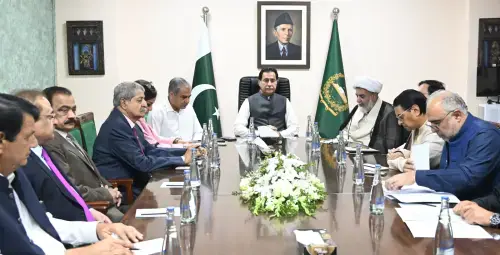
Punjab Information Technology Board (PTIB) Chairman Dr Umar Saif-led team briefed a select group of people on the contours of the Punjab Public Management Reform Programme on Thursday.
Some components of the system have already been made functional in the revenue, health, food, education and police departments while several others are in the pipeline.
The audience heard that charges and the reasonable time required for each service would be displayed at each of the centre where the customers would give their feedback on the quality of the service provided by the department/service delivery entity they had approached.
Kiosks would be manned to facilitate the illiterate persons about how to give their feedback on services ranging from birth registration to provision of civic amenities to health, education services.
Dr Saif said the PITB had also digitised with audio support the textbooks from grade 6 to 10 with hundreds of self-assessment exercises and the same would be made available to students of public schools with tablets.
The PITB has developed dengue surveillance applications to help curb successfully the disease while applications tracking vaccinators, school monitoring systems, agriculture, irrigation and food departments, helplines of excise and taxation, livestock, health, local government, intermediate and secondary education boards and Board of Revenue were on through its Citizen Contact Centre.
So far 9.2 million citizens across Punjab had been approached through these IT-based interventions, he said.
Dr Saif said that the government was also introducing Open Data Initiative to empower the people by giving them access to various official data under the right to information law.
Fasieh Mehta, a member of the team, informed the audience that an application for wheat procurement drive had also been successfully launched in which farmers were being asked if they had received gunny bags and that they were being paid the officially announced support price.
He said that from January 2014 to March 2015, hospitals emergencies received the maximum 30 percent of negative feedback while Rescue 1122 was at the lowest end with just 5 percent of negative remarks.
Mustafa Naseem, Amna Raza, Fatima Agha, Sarah Gilani Arsalaan and Ali Gijran threw light on IT interventions in health, employment, Khidmat cards, Thana culture reforms, and Dataplug (a free application for researcher) in their presentations.
Published in Dawn, May 15th, 2015
On a mobile phone? Get the Dawn Mobile App: Apple Store | Google Play