TEHRAN: Iran’s President Hassan Rouhani said on Saturday differences remain but all issues can be resolved in talks with the West to secure a long-sought deal on his country’s disputed nuclear programme.
“I believe an agreement is possible. There is nothing that cannot be resolved and the other party must make its final decision for this,” the official IRNA news agency quoted him as saying.
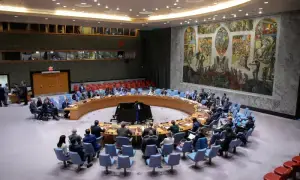
Rouhani’s comments came a day after the latest round of talks between Iran and the P5+1 group of world powers — Britain, China, France, Russia and the United States plus Germany — ended without a breakthrough.
The long-running talks are aimed at putting an Iranian nuclear bomb out of reach in exchange for easing sanctions on its economy.
“In this round of negotiations (in Lausanne, Switzerland) there were differences on some issues,” Rouhani said, but noting that “common views emerged that can be the basis of a final agreement”.
However he added: “Some points of disagreement persist”. The negotiations are to resume on Wednesday, leaving the two sides with just one week to meet a March 31 deadline for agreeing the outlines of a nuclear deal they hope will end a 12-year deadlock.
US Secretary of State John Kerry was to leave Switzerland on Saturday for talks in London with his British, French and German counterparts, the State Department said.
On Friday Kerry spoke by telephone with the foreign ministers of Russia and China, the other two powers involved in talks that officially resumed after the 2013 election of Rouhani.
Iran’s Foreign Minister Mohammad Javad Zarif, who faced Kerry in talks all week, said his team had been willing to work through the weekend, but the P5+1 needed time to “coordinate,” hinting at a split between the world powers.
“In some cases, their diversity of interests, political views or personal issues or personalities became more sensitive than the actual negotiations,” he wrote on his Facebook page, without naming any of the P5+1 countries.
The highly complex mooted agreement, due to be finalised by the end of June, is aimed at assuring the world Iran will not build nuclear weapons under the guise of a civilian energy programme.
It would likely involve Iran reducing in scope its nuclear activities, allowing ultra-tight inspections, exporting atomic material and limiting development of new nuclear machinery.
Published in Dawn March 22nd , 2015
On a mobile phone? Get the Dawn Mobile App: Apple Store | Google Play