0
0
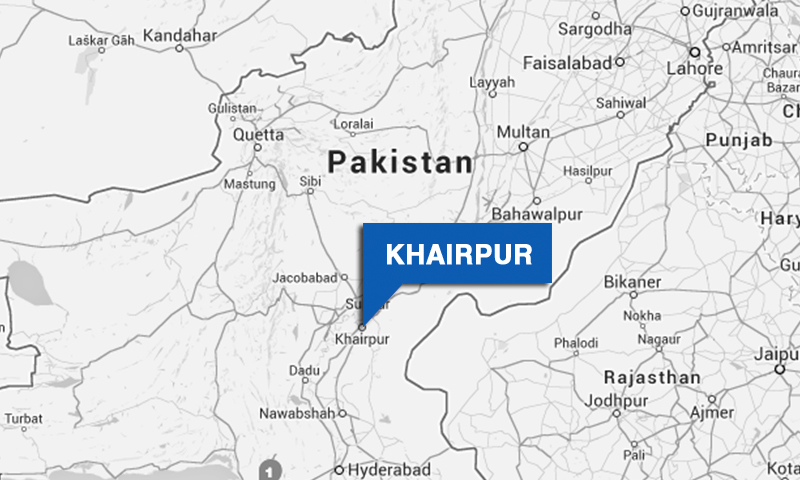

KHAIRPUR: Issues relating to armed conflicts, insecurity, tribal hostilities and violence claiming lives and disturbing peace in society were discussed at a conference held at the Shah Abdul Latif University (Salu) under the aegis of the Bhittai Social Watch & Advocacy (BSWA) in collaboration with the Inter-University Consortium for Promotion of Social Sciences, Arts and Humanities on Wednesday.
Chief Guest Shah Jahan Balouch spoke on ‘Food security in South Asia to ensure human security’. He observed that food insecurity played an important role in triggering conflicts that had been affecting people’s home economy. He referred to the plight of starving population of Thar, and called for land reforms, fair distribution of water resources and other measures to avoid conflicts.
Guest of honour Saeen Rakhiyo Mirani said tribal clashes had crippled life, shattered peace and affected people economically. He said such clashes used to erupt due to individuals’ ego and petty matters.
The beneficiaries appeared to be feudal lords, he said, adding that government and police could play a decisive role in rooting out the menace. He also mentioned corruption, weak prosecution and police and some other factors leading to tribal clashes, and said these had to be addressed .
Abdul Jabbar Khaskheli, convener of the Sindh Amun Forum — a conglomerate of 14 organisations — presented his paper on ‘Solution analysis on tribal conflicts in Sindh 2010-14 and peace situation of district Khairpur in 2014’. He said as many as 1,566 people lost their lives in tribal conflicts during the 2010-2014 period in Sindh. A total of 362 jirgas (tribal courts) were held to settle disputes, he added.
Prof Imdad Chandio presented his paper on ‘Tribal conflicts: problems for state and democracy’, and said these conflicts posed a threat to the state and democracy and a big challenge to peace.
Guest speaker Adam Malik, spoke on “Conflict and human security’, and observed that 50 per cent of tribal clashes related to lands. He suggested that revenue record be set straight and transparent judicial system be ensured to avoid such clashes.
Dr Santosh Kumar’s paper pertained to tribal clashes and their effects on society. He said tribal hostilities not only disturbed peace, but also affected education and economy in the troubled areas. He called for speedy justice, awareness and good governance to avoid armed clashes.
In her presidential speech, Salu Vice Chancellor Dr Parveen Shah said that conflicts and human security appeared to be the greatest challenge being faced today globally. She attributed the aggravating situation to intolerance, and noted with concern that “we, Muslims, have also given up the basic principle of tolerance and patience taught by our religion”. She said everyone should assert his stand in a gentle, civilised, cultured and peaceful manner to avoid a conflict.
Published in Dawn, January 1st, 2015