NEW DELHI: An Indian military court has sentenced seven soldiers to life in prison for killing three Kashmiri youths in a rare ruling against the army, the tense region's top official said Thursday.
Kashmir Chief Minister Omar Abdullah said the soldiers shot dead the youths in 2010 after staging a gun battle and claiming they were trying to sneak across the disputed border from arch rival Pakistan.
“This is a watershed moment. No one in Kashmir ever believed that justice would be done in such cases. Faith in institutions disappeared,” Abdullah said in a Tweet.
Also read: Indian army men face court martial for 'fake encounter' in Kashmir
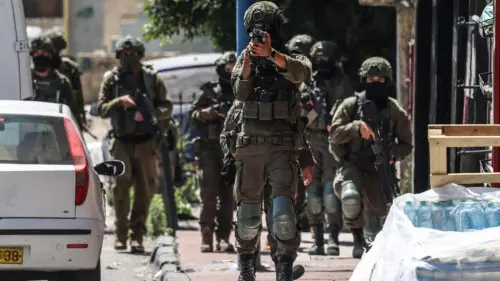
Rights groups have long accused the thousands of Indian soldiers deployed in Kashmir of acting with impunity, as they search for militants fighting against Indian rule for independence or merger of the region with Pakistan.
Families of the victims claimed the army lured the three close to the de-facto border that divides Kashmir between India and Pakisan, on the promise of jobs and money, before staging the “fake encounter”.
The killings in Machil sector sparked widespread protests in Kashmir at the time, leading to 120 deaths in battles between demonstrators and security forces, according to the Press Trust of India news agency.
“I hope that we never see such #Machil fake encounter type of incidents ever again and let this serve as a warning to those tempted to try,” Abdullah said.
The army declined to confirm when the military court's ruling was handed down. According to local media, court martial proceedings began in January this year against the seven and ended in September.
Amnesty International applauded the sentences, but called for allegations of human rights abuses to be probed by civilian courts instead of the army itself.
“For justice to be the rule and not the exception, all cases of human rights violations should be investigated and prosecuted by independent civilian authorities,” Amnesty India programmes director Shailesh Rai said.
Under an emergency military law known as the Armed Forces Special Powers Act, soldiers deployed in Kashmir cannot stand trial in civilian courts without express permission of the federal government in New Delhi.
In January, a military court exonerated five army officers over the killing of five civilians 14 years ago, sparking clashes between angry Kashmiris and police and the closure of shops and schools in protest.
About a dozen rebel groups have been fighting Indian forces since 1989 for Kashmir's independence or for its merger with Pakistan. The fighting has left tens of thousands of people, mostly civilians, dead.
India and Pakistan have fought two of their three wars over the picturesque Himalayan region of Kashmir.