7
7
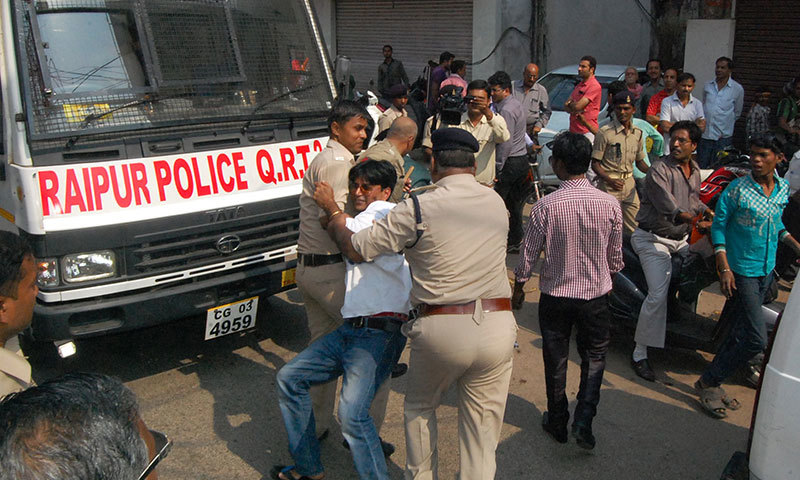

RAIPUR: Indian police announced Thursday they had detained the doctor behind botched mass sterilisation surgeries that left 13 women dead, as campaigners called for urgent reform of the government's family planning programme.
R.K Gupta was seized for questioning amid mounting anger over the tragedy in central Chhattisgarh state where women were paid to undergo a procedure that also left dozens in hospital, senior police officers said.
The doctor carried out 83 operations in just five hours on the impoverished women, who were paid 1,400 rupees ($23) at a state-run camp in Bilaspur district at the weekend.
“He has been taken into custody. He will be produced in the court in the afternoon today. He is likely to be arrested soon after,” police inspector general Pawan Deo said from Bilaspur.
Police were planning to seize equipment used during the operations, Deo said, amid fears that it was contaminated before the operations were carried out.
Gupta said he was under pressure from the state government to perform the operations, while also blaming the drugs used.
“It was not my fault — the administration pressured me to meet targets, “the doctor was quoted by NDTV as saying as he was being detained on Wednesday night.
“The surgeries went well but the problem was with the medicines given to the women,” he also alleged.
The state government has banned the sale of six drugs used during the operations over concerns they were substandard, the Press Trust of India news agency said.
Sterilisation is one of the most popular methods of family planning in India, and many state governments organise mass camps where rural women can undergo the usually straightforward procedure.
Although the surgery is voluntary, rights groups say the target-driven nature of the programme has led to women being coerced into being sterilised, often in inadequate medical facilities.
Vomiting after surgery
The victims had suffered vomiting and a dramatic fall in blood pressure on Monday after undergoing laparoscopic sterilisation, a process in which the fallopian tubes are blocked. Some 14 women remain in hospital in a serious condition.
Sixteen-year-old Neelu Bai said her mother Meera died after opting to have the surgery 10 months after giving birth to her fourth child.
“She started vomiting after she came back home. The doctor said she was vomiting because it was hot. He asked her to take another medicine (to stop the vomiting),” the teenager told NDTV.
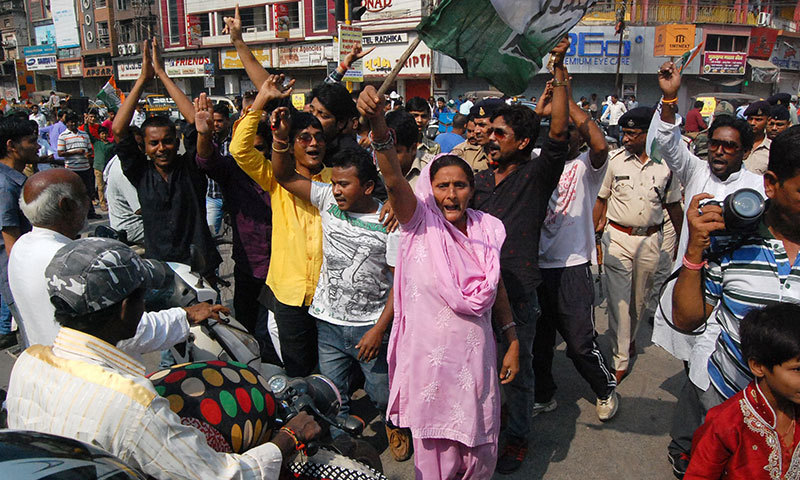
The government has suspended four health officials and ordered an investigation into the tragedy, while angry protesters took to the streets in the state capital Raipur on Wednesday demanding the chief minister's resignation.
Gupta was rounded up in Baloda Bazar district, close to where the camp was held, police inspector general Gurjinder Pal Singh told AFP.
Human Rights Watch said India has a long history of sterilisation-related deaths, in part because health workers were under pressure to meet “informal” monthly targets.
Health workers faced salary cuts or dismissal in at least one Indian state if they failed to meet their quotas, HRW senior researcher Aruna Kashyap said on the group's website.
“Access to information, informed consent, and quality of services are often sacrificed by this target-driven approach,” Kashyap said, calling for an overhaul of the programme.
“Women may not find out about the range of contraceptive methods available or the irreversibility or potential medical complications of sterilisation.”
Family planning programmes unfairly target women whose rights were often ignored, another group, the National Alliance for People's Movement, said.
“(The tragedy) is yet another instance of serious violations of medical guidelines and brutal repression of reproductive rights and health of women in India,” the Mumbai-based rights group said in a statement.
India's programmes have traditionally focused on women, and experts say that male sterilisation is still not accepted socially.