0
0


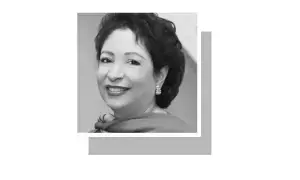
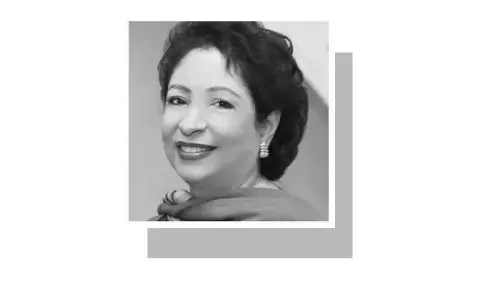
OSLO: Education activist Malala Yousufzai and Indian campaigner against child trafficking and labour Kailash Satyarthi won the 2014 Nobel Peace Prize on Friday.
Malala, aged 17, became the youngest Nobel Prize winner.
She and Mr Satyarthi were picked for their struggle against the oppression of children and young people, and for the right of all children to education, the Norwegian Nobel Committee said.
“The Nobel Committee regards it as an important point for a Hindu and a Muslim, an Indian and a Pakistani, to join in a common struggle for education and against extremism,” said Thorbjoern Jagland, the head of the Norwegian Nobel Committee.
Kristian Berg Harpviken, head of the Peace Research Institute in Oslo, described the joint award “an innovative prize that brings attention to the problems of the young”. Mr Satyarthi said he hoped to work with Malala for peace.
Swat girl shares prize with Indian child rights activist Kailash Satyarthi
Malala later told reporters in Birmingham, where she now lives, that she found out about winning the prize from a teacher during a chemistry lesson, adding that the news had come as a big surprise.
“This is not the end of this campaign which I have started. I think this is really the beginning. I want to see every child going to school,” she said, adding she felt “really honoured”.
Malala was attacked in 2012 on a school bus in Swat Valley by masked gunmen as a punishment for a blog that she wrote for the BBC’s Urdu service as an 11-year-old to campaign against the Taliban’s efforts to deny women an education.
Unable to return to Pakistan after her recovery, she moved to England, setting up the Malala Fund and supporting local education advocacy groups with a focus on Pakistan, Nigeria, Jordan, Syria and Kenya.
Malala addressed the UN Youth Assembly last year at an event Secretary-General Ban Ki-moon called “Malala Day”. This year she travelled to Nigeria to demand the release of 200 schoolgirls kidnapped by the Islamist group Boko Haram.
“To the girls of Nigeria and across Africa, and all over the world, I want to say: don’t let anyone tell you that you are weaker than or less than anything,” she said in a speech. “You are not less than a boy. You are not less than a child from a richer or more powerful country. You are the future of your country. You are going to build it strong. It is you who can lead the charge.”
Mr Satyarthi, who gave up a career as an electrical engineer in 1980 to campaign against child labour, has headed various forms of peaceful protests and demonstrations, focusing on the exploitation of children for financial gain. “It is a disgrace for every human being if any child is working as a child slave in any part of the world,” he said. “I feel very proud to be an Indian that in India I was able to keep this fight on for the last 30 years or so. This is a great recognition and honour for all my fellow Indians.”
Published in Dawn, October 11th , 2014