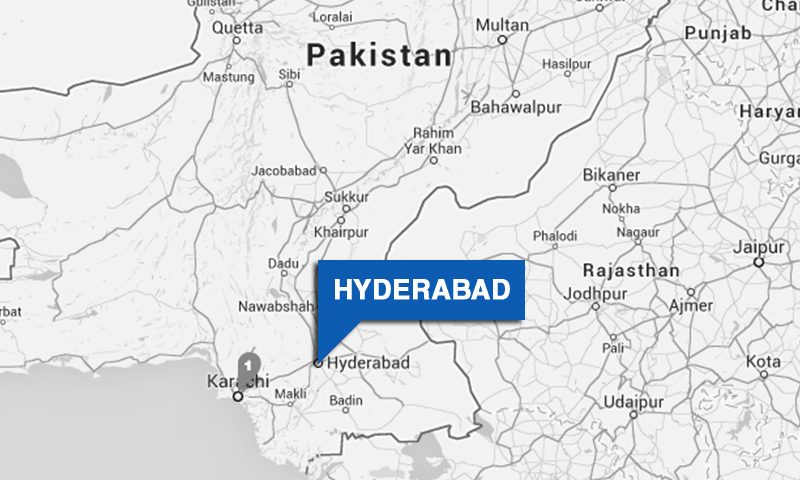
HYDERABAD: Climate change has the potential to destroy the planet and could lead to economic, social, development and security challenges.
This was observed by speakers at a one-day seminar on the ‘Impacts of climate change and disasters on small farmers’ organised by the Laar Humanitarian and Development Programme (LHDP) in a local hotel on Saturday.
Former technical adviser of the Sindh Coastal Development Authority Shams-ul-Haque Memon said climate change was a cancer that might destroy the planet and could pose economic, social, development and food security challenges.
He said that most vulnerable sectors were water resources and agriculture.
There had been a decline in water flows downstream Kotri barrage, affecting freshwater and marine fishery resources, he said, adding export of fish, shellfish, shrimp and other important marine resources had declined and employment opportunities in fisheries for the coastal communities of Badin and Thatta remained under threat.
He made mention of potential challenges like changing weather patterns, intense precipitation events, risk of prolonged droughts, unpredictable frequency of tropical cyclones and storms being faced by people of the coastal and desert areas.
The other challenges, he said, were prolonged monsoon, flash floods, rising sea level, erosion of islands of primary importance including Buddo and Bhandar, the twin islands off Karachi, and impact of the climate change on Ramsar sites – Keenjhar, Haleji, Nurreri and Jhabbo wetlands.
However, Mashkoor Phalkaro, a writer and political activist, said that there had been erratic rains for some time and no one was able to make an accurate forecast to safeguard physical structures and save communities. He said the Laar region had been badly damaged due to climate change impacts.
Previously, he said, there had been no obstruction in natural flow of water between 1819 and 1974 so there was no destruction at all.
He said that glaciers were rapidly melting and triggering floods and in future they could turn more devastating than in 2010.
Prof Dr Shahab Mughal from the Sindh Development Studies Centre, University of Sindh, called for plantation of mangroves which were fast disappearing from the coastal areas of Sindh.
Opposing industrialisation and commercialism, he said the poor, particularly marginalised farmers, lived in miserable conditions. He referred to 2035 projections which did not have any mention of Badin and major cities of the world.
Others who also spoke on the occasion included Sajjan Shaikh, Ashok Lilani, Nisar Khokhar and LHDP executive director Iqbal Haider.
Published in Dawn, June 29th, 2014