WASHINGTON: Former US secretary of state Hillary Clinton has said that Pakistan’s policy of seeking strategic depth in Afghanistan has been proven wrong and the country now needs to focus all its strength on dealing with the militants.
“Their idea, that they have these groups to provide strategic depth, as they like to say, vis-a-vis Afghanistan, or vis-a-vis India, I think if that were ever true, which I doubt, but if that were ever true, it no longer is,” she told Indian NDTV channel.
In the interview that focused on her new book, ‘Hard Choices’, Ms Clinton said that Pakistan also needed to make a hard choice now, disconnecting its ties to various terrorist groups and putting together all state powers to “once and for all go after extremists, shut down their training camps, their safe havens, (and) madressahs that are inculcating suicide bombing behaviour.”
Former US secretary of state says Islamabad’s policy of strategic depth no longer valid
The Pakistanis must also “begin to have a different view of themselves in the future”, she added.
Ms Clinton said she believed the Asif Zardari government did not know what the connections were between elements within the military and the ISI and various extremist and even terrorist groups.
She also said that those were under the mistaken view that having these kinds of proxies vis-a-vis India, vis-a-vis Afghanistan were in Pakistan’s interests.
“It’s like keeping poisonous snakes in your backyard expecting they will only bite your neighbour and what we are seeing now is the continuing threat to the state of Pakistan by these very same elements.”
Ms Clinton said that when she visited India after the Mumbai terror attacks, she was “very struck” by how the then government said it was very difficult to exercise restraint. “I don’t think any government could say anything differently.”
She said when Sonia Gandhi and former Indian prime minister Manmohan Singh conveyed the news of the Mumbai terror attacks to her, she told them: “This is an element within the military intelligence institutional base, but that the civilian government was not involved. But I think that no country can turn away from that kind of attack continuously.”
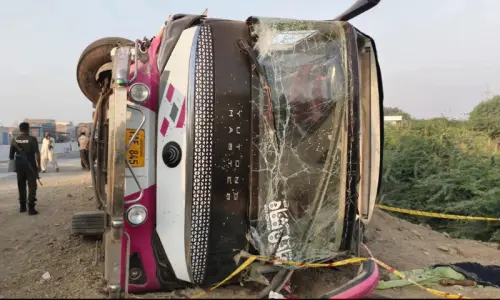
She noted that the terrorists now had moved deeper inside Pakistan, attacking targets in major Pakistani cities. “We’ve just seen the attacks in Karachi. And I don’t see how Pakistan can ignore this much longer.”
Asked who she thought was accountable for the terror attacks, she said: “We certainly never had any evidence that it went to the very top, but that may or may not be true.”
Published in Dawn, June 23rd, 2014