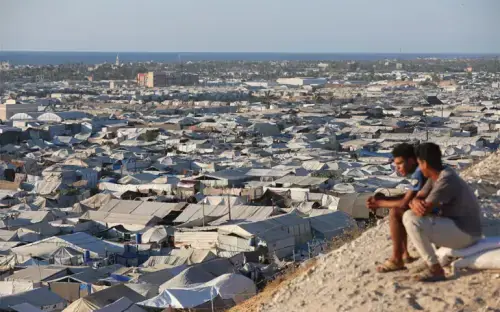
WHETHER Pakistan’s militancy problems are to be resolved through dialogue or some other means is yet unclear. What is clear, however, is that for several years now the country has been faced with one of the major consequences of the unsettled situation across the northwest, and yet has consistently failed to come up with effective and long-term management strategies or even a policy. We refer, of course, to the hundreds of thousands of people displaced internally, a euphemism for those who had to flee for their lives in the face of the threat to their security posed by either militant elements or security forces’ action against them, as well as those asked to leave their places of residence ahead of a clean-up operation. In a few cases, the government set up camps where living conditions were cramped and many facilities unavailable. In most instances, there was not even that and the waves of fleeing people were forced to go wherever they could find shelter and livelihood. This means that by now they are scattered across the country, many in cities such as Islamabad and Karachi where their presence places further pressure on already strained infrastructure. Now with speculation about a possible military operation in North Waziristan, an exodus appears to be poised to occur. Many people have already left their homes. This has led many, including the Sindh Writers and Thinkers Forum, to make appeals that a proper management plan be devised.
That the presence of IDPs in the country’s towns and provinces be resisted is not acceptable, regardless of the inherent challenges huge influxes throw up. It is crucial, therefore, that a strategy be fully fleshed out at the centre. But first, what is the government’s policy in this regard? Why, for example, are IDPs from South Waziristan, who held a demonstration in Islamabad recently, not being allowed to return to an area where peace, it is claimed, has been restored? The IDPs issue will not resolve itself, and the effects internal displacement has on the refugees and the areas to which they relocate can be very destructive. A well-managed strategy, therefore, has to be in place to ease the pressure on both the refugees and the areas to which they flee.