0
0

President Bush in China
WITH an average annual growth of 9.5 per cent for almost three decades, China has not only managed to lift a large section of its population out of poverty. It has also emerged as an economic, political and military force to reckon with. It is therefore nothing extraordinary that President George W. Bush should have included a visit to Beijing in his Asia-Pacific itinerary. This was the American president’s third visit to China since 2001 when he assumed office. As is generally the case, there were no major tangible developments that made the visit a landmark occasion. The symbolic significance of the visit was, however, tremendous since the issues taken up indicated the major concerns that characterize relations between China and the United States. Against the backdrop of the global balance of power in which China figures prominently, the United States’ major concern has been its enormous trade deficit with China amounting to 200 billion dollars this year. This has created some friction between the two countries as the US, which finds itself at a disadvantage, accuses China of manipulating its currency rate to boost its export and of turning a blind eye to the piracy of goods. The US has also tried to pin down China by calling on it to allow more freedoms and human rights to its people. Unsurprisingly, Beijing has brushed aside the American call for freedom, since it is confident about its own standing and refuses to be bullied around by a state which is the sole superpower in the world today and which has many of its own human rights abuses to answer for.
The fact is that China is playing an important role in world affairs, especially in the region on its periphery. Thus it was instrumental in brokering a compromise on the nuclear issue between Pyongyang and Washington. As the champion of the developing countries, China is acting as the countervailing force to neutralize American dominance. This has been pretty obvious in the case of Iran’s nuclear imbroglio. Its improving relationship with India has also created another centre of power in international politics. To neutralize China, President Bush has propped up Taiwan and Japan as models of democracy and economic development in Asia. Given the conflict between Beijing and Taipei and the undercurrent of resentment between China and Japan, one can hardly expect the American strategy to work. Therefore relations between the US and China will not be tension-free and since they will be adversarial on occasions, they can be expected to act as independent power centres.
This is a major development since it indicates a shift in the international system — from the unipolar world of the post-Cold War era to a pattern that envisages multiple centres of power. Since China is an Asian state which describes itself as a developing economy, its presence as a geopolitical actor in the global system will be taken as indicating the emergence of a force that will safeguard the interests of Third World countries which are in danger of being browbeaten and exploited by the big powers. Hence one can understand President Bush’s suggestion, reciprocated by President Hu Jintao, that the two countries should increase the area of their cooperation and at the same time, be candid about their disagreements on major issues. Although at present the Bush visit to Beijing is being presented as having sent positive signals, there is a general impression that the contentious issues between them could strain bilateral ties at any time.
Ensuring judicial probity
THE approval by the Supreme Judicial Council (SJC) on Saturday of a procedure to probe allegations of misconduct against judges of the apex and high courts is a welcome step. It shows that the SJC is at least cognizant of the perception prevailing among the general public that the judiciary — just like any other section of society — has its share of black sheep who are giving the institution a bad name. Under the said procedure, the council will take cognizance of any information passed on to it by a citizen regarding the conduct of a judge. It will then investigate the matter and if the allegations are proven, the council may then send a recommendation to the president to remove the judge in question from his position. The procedure also permits the use of information from the electronic or print media which the SJC chairman (the Supreme Court’s chief justice) may refer to any council member who will then decide whether the information contains enough material to warrant a formal inquiry. However, there are some aspects of the procedure which raise a few questions. In the case of the council acting on information provided by a member of the public, it has been laid down that the latter will have to come forward and identify himself. This may deter many people having vital information about the questionable conduct and actions of a judge from coming forward to report unless their identity is kept a guarded secret, known only to the SJC and the inquiry committee that it may appoint but not disclosed for general information.
At a separate meeting, the National Judicial Policy Making Committee enhanced the existing code of conduct for judicial officers requiring them, among other things, not to meet people in hotels and not to hear cases in which they have a conflict of interest or know either of the litigants. In the days of the British, judicial officers at even lower levels were required to stay away from public occasions such as meetings, weddings, etc, in order to avoid any interaction with the non-judicial sections of society. That was meant to avoid any views on exchanges influ-encing the impartiality of a judgment in a particular case. It would be good if our judicial officers followed such traditions.
Development backlog in Fata
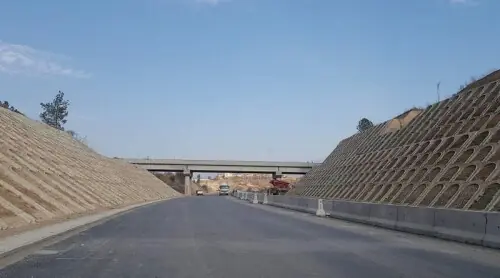
WHEN it comes to any form of negotiation, there’s always some give and take. This idea wasn’t lost on the Zakhakhel tribesmen in Bazaar area of Landi Kotal in Khyber Agency, who, on Saturday, stopped army people from constructing a helipad until more development projects were initiated in the area. Given that Fata’s political administration is largely autonomous, the army would need its consent to construct the helipad as the area is frequented by senior military officials monitoring the Pak-Afghan border. However, locals clearly feel that their area has been neglected by the government and the much touted development projects have not brought about any noticeable change. In fact, three years ago the establishment of an army camp in Jarhobi, the proposed site of the helipad, was the first of its kind which shows just how underdeveloped the area is. While there is no correlation between the construction of a helipad and development, tribal elders clearly think otherwise which is why they are using negotiation tactics, ostensibly to their advantage. A final decision on the issue is due this coming Friday and authorities would do well to place the needs of the residents ahead of military installations.
Successive governments have miserably failed to integrate Fata into the national mainstream. In June last year, the poverty level in Fata was estimated to have reached 60 per cent, almost double that of the rest of the country. During the same time, a Fata annual development programme of over four billion rupees was finalized, with education topping the list. This year too there have been sizable funds allocated to developing Fata. However, there is little to show for it all and the agitation amongst people is high. A wholehearted commitment on the part of the government is required if it is serious in its desire to uplift the area.
| © DAWN Group of Newspapers, 2005 |