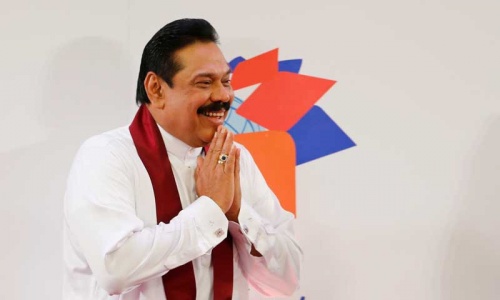
COLOMBO: Sri Lankan President Mahinda Rajapaksa made it clear on Saturday there was no room for an international inquiry into charges of war crimes and other human rights violations against his country, as there were ongoing independent domestic inquiries as per the recommendations of the Lessons Learnt and Reconciliation Commission.
“Is it a crime to have saved lives…? People were dying. We stopped it. Pressure will not help. It is better to make a request.
“At any rate, we are ready to face any allegations from anyone. We have nothing to hide,” a combative Rajapaksa told the media after the conclusion of a ‘Retreat’ of the Commonwealth Heads of Government Meeting (CHOGM) here.
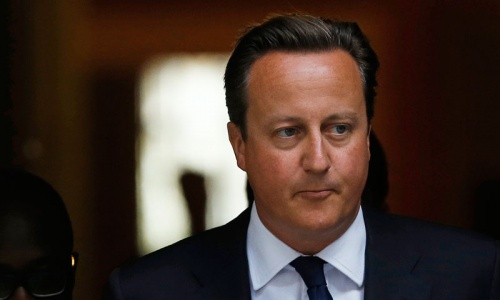
He was replying to British Prime Minister David Cameron’s statement that the UK would press the UN Human Rights Council (UNHRC) to demand an independent international inquiry into alleged human rights abuses by Sri Lankan forces.
Rajapaksa said: “People in glass houses should not throw stones.” He did not elaborate, but he clearly had in mind the atrocities committed by the Western allies in Iraq and other Middle Eastern countries.
The Sri Lankan president said the issues involved were deep, and these could not be resolved in such a short time. Sri Lanka had gone through a 30-year-long conflict and the war had ended only four years ago, he pointed out.
“The processes relating to reconciliation are on, and they need to be given sufficient time to be completed,” he said.
AFP adds: Cameron effectively put Sri Lanka on notice to address the allegations within months or else he would lead a push for action at the UN.
He warned his host that pressure over the alleged abuses was not about to go away.
Cameron, who made a historic visit to the former war zone on Friday, also spoke of how he had ‘frank’ exchanges with Rajapaksa on his return from there.
“The Sri Lankan government needs to go further and faster on human rights and reconciliation,” he told a press conference.
The UN and rights group say as many as 40,000 civilians may have been killed in the final stages of the war in May 2009 when Tamil Tiger rebels were crushed by government troops.
Cameron said Rajapaksa wanted more time to address the claims but told him to deliver by March or else he would push for an international investigation through UN human rights bodies.
In an interview, the powerful Economic Development Minister Basil Rajapaksa — who is also the president’s brother — totally rejected the idea of foreign investigators operating on Sri Lankan soil.
“Why should we have an international inquiry?” he said. “Definitely, we are not going to allow it.” Asked about Cameron’s March deadline, the minister said: “They can’t give dates. It is not fair.”
Cameron upstaged the first day of the three-day meeting by travelling to Jaffna, which bore the brunt of the 37-year war, meeting local ethnic Tamils who lost loved ones or were left homeless.
He was the first foreign leader to visit Jaffna since Sri Lanka, a former British colony, gained independence in 1948.
While Sri Lanka had hoped the summit would showcase its revival since troops from the mainly Sinhalese government crushed the Tigers, Cameron’s visit and boycotts have torpedoed its strategy.
After detailing how leaders had spent the day addressing topics such as debt relief and youth issues, the Commonwealth’s Secretary General Kamalesh Sharma was asked to explain the widespread absence of leaders.
Only 27 heads of government are attending the 53-nation bloc’s biennial summit.
“As far as the outcomes are concerned, you will find at the end of this CHOGM, that it has been very productive, and it has been very meaningful and successful,” said Sharma, seated alongside Rajapaksa.