PESHAWAR, Oct 31: The Fata Secretariat is understood to be in contact with the Taliban through a tribal jirga for early removal of the ban on polio vaccination in North Waziristan Agency.
The development comes out as another child in the restive agency tests positive for polio taking the number of this year’s cases of the crippling disease to 16, the highest by any agency or district in the country.
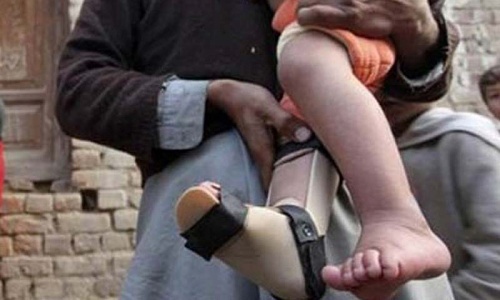
The National Institute of Health, Islamabad on Thursday diagnosed 15-month-old Essa Khan of Mussaki village in Razmak tehsil of North Waziristan Agency with polio. The child didn’t get any dose of oral polio vaccine due to the Taliban’s ban on polio campaigns, which has been in place since June 2012.
Until now this year, 39 of the 54 nationwide polio cases have been reported in the Federally Administered Tribal Areas, a major obstacle to the global polio eradication efforts as declared by the World Health Organisation.
According to the relevant government officials here, talks are underway between the Fata Secretariat and the Taliban in North Waziristan Agency through a tribal jirga comprising local elders and parliamentarians for permission to begin door-to-door vaccination of local children against polio.
They told Dawn on Thursday that more than 150,000 children remained unvaccinated due to the Taliban ban.
An official said the ban had already shown its adverse effects on children, while the rest were at the risk of being crippled due to the virus’ circulation.
“We are hopeful that the Taliban will realise the gravity of the situation and lift the ban,” he said.
Other officials said one round of talks had taken place, where the Taliban had showed willingness to continue with the dialogue process.
They said the jirga told the Taliban that more than 300,000 children risked disability due to the vaccination ban.
The officials said the Taliban knew it very well that the Pakistani government had no authority over the US drone strikes in Fata and that only the US could stop them and therefore, they (Taliban) were ready to listen to the jirga.
They said the Taliban understood that the government was opposed to drone strikes.
The officials said if talks succeeded, then children in North Waziristan Agency would be vaccinated through special campaigns in the current low transmission season to enhance their immunity against the virus in highly transmission season beginning in Feb or mid-March.
They said had the virus not entered the agency, there would have been no concern but detection of back-to-back cases warranted serious corrective steps.
First, the Taliban in North Waziristan Agency warned vaccinators of repercussions over violation of ban and a week later, the Taliban in adjacent South Waziristan Agency not only banned polio campaigns but went a step further by ordering complete suspension of the government’s vaccination programme for nine vaccine preventable childhood ailments, including polio, in the area.
The officials said the polio situation in Fata was critical to global polio eradication for which different strategies were being applied to ensure vaccination of all children in every campaign repeatedly.
They said they were confident that ban on vaccination would be lifted as the Taliban knew that the decision had rendered many children physically disabled permanently.
The officials said the government had already begun door-to-door campaigns in Bara tehsil of Khyber Agency with the help of the security forces for the first time in two years.
It is, according to them, is a welcome development in the militancy-stricken agency, which has reported 14 polio cases, the second largest in the country this year.
The officials said vaccinators had no access to 25 per cent of the 1.1 million children targeted in Fata.
They said they were hopeful that sense would prevail and the Taliban would allow vaccinators to administer polio drops to children.