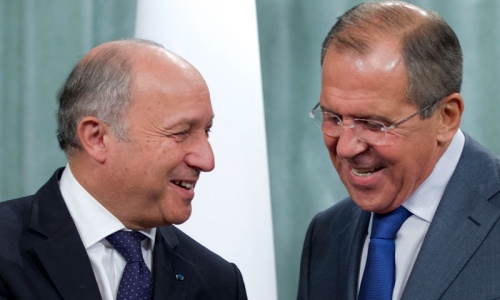
MOSCOW: The Syrian regime has handed Russia new materials implicating rebels in a chemical attack outside Damascus on August 21, Russian Deputy Foreign Minister Sergei Ryabkov said Wednesday after talks in Damascus.
“The corresponding materials were handed to the Russian side. We were told that they were evidence that the rebels are implicated in the chemical attack,”Ryabkov was quoted as saying by Russian news agencies after talks with Syrian
Foreign Minister Walid al-Muallem late Tuesday.
He said that Russia would “examine the Syrian materials implicating the rebels with the utmost seriousness.”To the fury of the West, Russia has repeatedly expressed suspicion that the chemical attack was a “provocation” staged by the rebels with the aim of attracting Western military intervention in the conflict.
Ryabkov also said Russia was disappointed with the UN report into the chemical weapons attack published this week, saying it was selective and had ignored other episodes.
“Without a full picture... we cannot describe the character of the conclusions as anything other than politicised, biased and one-sided,” he said.
Ryabkov is on a visit to Damascus to present the Syrian regime with the results of the agreement between Moscow and Washington reached in Geneva at the weekend to rid Syria of its chemical weapons.
He said he emphasised to Muallem the importance of the Syrian side “strictly and swiftly” handing over details of its chemical weapons arsenal to the Organisation for the Prohibition of Chemical Weapons, the first step in the agreement.
The Russia-US agreement is aimed at warding off the threat of US-led military action as retribution for the chemical attack, which the West blames squarely on the regime.
The Syrian ambassador to Moscow, Riyad Haddad, told the Interfax news agency that Ryabkov was expected to have a meeting Wednesday with President Bashar al-Assad.
Ryabkov said he assured the Syrian side that there was “no basis” for a UN Security Council resolution on the chemical weapons agreement to invoke Chapter VII of the UN Charter that allows the use of force and tough sanctions.
He said this could only be considered if the UN Security Council was able to confirm violations of the convention on chemical weapons. “This is a hypothetical situation.”
”It is especially important that some kind of political interests do not again appear, especially in New York (at the UN Security Council),” he added.