2
2


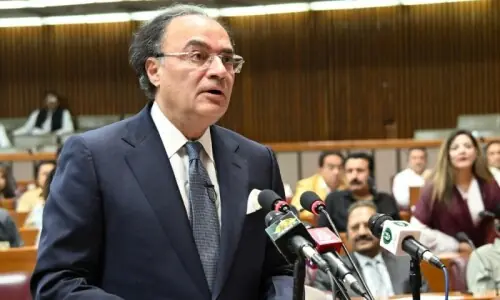
KARACHI: The revised fiscal deficit, as mentioned by the Finance Minister in his budget speech, was not only shocking but also surprising since the Economic Survey presented on Tuesday showed that the fiscal deficit has been falling from its peak of 7.3 per cent of the GDP since 2008-09.
“The revised estimate of deficit for 2012-13 is Rs2,024 billion or 8.8pc of the GDP,” said the minister, adding that it would be reduced to Rs1,651bn or by nearly 2.5 percentage points to 6.3pc of the GDP.
“We need to further reduce it, but we have to do so gradually; and in the medium term, we have plans to reduce it to 4pc of the GDP,” he said.
The Economic Survey mentioned several indicators that support its own claim of lower fiscal deficit.
“Several efforts to contain expenditures and to increase revenues during the past five years resulted in a significant decline of fiscal deficit from 7.3pc of the GDP in 2007-08 to 6.8pc of the GDP in 2011-12,” said the Economic Survey.
It did not mention the fiscal deficit for 2012-13, but the target was 4.7pc in the budget.
However, it said the total expenditure as percentage of the GDP declined from 21.4pc in 2007-08 to 19.6pc of the GDP in 2011-12.
“It is expected to decline further by 0.6 percentage points to 19pc in 2012-13,” said the Survey.
According to the Survey, to keep the fiscal deficit at a sustainable level, containment of current expenditures was also targeted by adopting austerity measures as current expenditures reduced to 15.5pc of the GDP in 2011-12 from 17.4pc of the GDP in 2007-08.
“It is expected to decline further in 2012-13 at 14.6pc of the GDP.”
Falling expenditures with increasing revenues indicates that fiscal gap was not as big as it was seen in the revised estimate.
It said the FBR tax collection showed a tremendous growth of 86.8pc since 2007-08.
“During July-March 2012-13, FBR collection reached Rs1,352.3bn as against Rs1280.4bn in the same period last year, posting a growth of 5.6pc,” it said. The finance minister has some traditional but ineffective measures to contain inflation which is already 10-year low. In May CPI was 5.1pc and July-May inflation was 7.5pc.
The minister said that in order to reduce the inflationary pressure, there are plans to regulate prices by establishing Friday and Sunday bazaars across the country. This measures never succeeded in the past and is considered a cosmetic treatment.
To finance the fiscal gap, the government would use public savings and cheap foreign borrowings that would reduce the burden of debt servicing, the minister said.
“Elimination of borrowing from State Bank will be pursued vigorously,” said the minister.
It is believed that the government needs to borrow Rs400 to Rs500bn for short term settlement of the circular debt and this money could come only by printing of notes.