LAHORE: Gay romance, Islamic extremism and a soundtrack of classic love songs make for Pakistan's taboo-breaking answer to the hugely successful US television series 'Glee'.
Like its smash hit forerunner, 'Taan' follows the lives and loves of a group of young people who regularly burst into song. But this time they attend a music academy in Lahore, instead of an American high school.
Taan - which is a musical note in Urdu - tackles subjects considered off limits in Pakistan's deeply conservative Muslim society, with plotlines including love affairs between two men and between a Taliban extremist and a beautiful Christian girl.
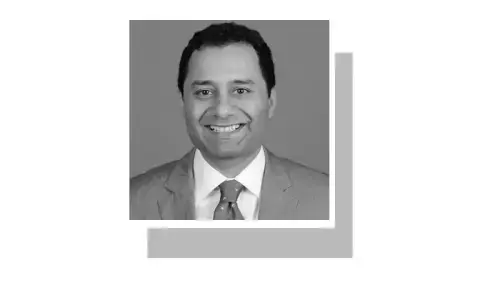
The plan is for the 26-episode series to air in September or October, and while producer Nabeel Sarwar insisted the programme was not a “political pulpit”, he is determined to take on the tough issues.
“Nobody wants to have controversy for the sake of controversy, nobody wants to have an assignment to violence, nobody wants to push a button that would result in a disaster for anyone,” he told AFP. “But the truth has to come out somewhere. Where are we going to put a line in the sand and say, 'Look, this is what we are'?”
Taking a public stand to defend liberal values like this is rare in Pakistan, where forces of religious conservatism have risen steadily in recent years.
Risque scenes in foreign films are routinely cut by the authorities and the team behind ‘Taan’ is acutely aware that they must tread carefully with their challenging material.
In one scene the two gay lovers dance and sing in a small room but never embrace - their relationship is suggested rather than overtly shown. The moment is interrupted when a radical Islamist character bursts in.
Director Samar Raza said representing the lives of gay characters was difficult in a country where homosexuality is still illegal.
“Let's say in a certain scene, there are two boys talking to each other, they are not allowed to show their physical attachment to each other,” he said. “So I bring a third character who says: 'God designed Adam and Eve, not Adam and Steve'.”
It is not only the sensibilities of the censors the producers must navigate. While 70 per cent of Pakistan's population is under 35, a huge and potentially lucrative audience for advertisers, it is the head of the household who decides what families watch on TV, explains Sarwar.
“The head of the household during the day is the matriarch and the head of the household at night is the patriarch - they control access to TV,” he told AFP. “You have to find programming that allows the matriarch and the patriarch to join in and participate, but there has to be room for the younger audience.”
In a bid to appeal to older viewers the makers of ‘Taan’ have licensed around 100 classic Pakistani songs, some by legendary artists such as Nusrat Fateh Ali Khan, and have reworked them to suit modern tastes, as Glee does.
“We try to find music that resonates with the older generation which control the access to the TV but we contemporise that music so that the younger audience does not feel left out,” Sarwar said.
The show hopes that by taking on difficult issues in a light-hearted way it will both reflect the changing nature of Pakistani society and attract a young audience currently hooked on imported Turkish soap operas.
Local dramas struggle to compete with the likes of “Manahil and Khalil” and “Ishq-e-Mamnu” (Forbidden Love) - Turkish serials starring Westernised characters with fair skin and dubbed into Urdu.
Turkish soaps are widely watched across the Muslim world, but the popularity of “Ishq-e-Mamnu” has prompted a lively debate about the “Turkish invasion” of the small screen in Pakistan, with local production companies complaining that they do not have the resources to rival them.
Yasmin Huq, one of the stars of ‘Taan’, told AFP a homegrown show could speak more clearly to Pakistanis than foreign imports.
“Today's generation is watching Turkish and Indian dramas,” she said. “But no one can make a musical story like Pakistanis. Even if you watch the Turkish and Indian dramas, you will see that nobody can talk about Pakistan like Pakistanis.”