



 0
0

The nation’s intellectual decline is distressing — Prof Fateh Mohammed Malik
 The author of many highly acclaimed books, Prof Fateh Mohammad Malik is indeed one of Pakistan’s most prominent critics and writers. Having already served the nation for about 45 years as a teacher and a writer, he continues to make his valuable contribution as before in both his capacities.
Alternately pushed by religious and secular groups into each other’s camp, he sums up his position saying: “I’m a progressive — a true Muslim can’t be otherwise.”
A patriot to the core, Prof Malik seems to have been influenced by Iqbal the most. Of his more than two dozen books, at least six are on Iqbal and his poetry. His English book titled ‘Iqbal’s reconstruction of Muslim political thought’ is considered so important that it was published by the University of Leicester, England.
Besides, he has contributed many essays to prestigious journals and delivered lectures at national and international seminars on Iqbal. He is preparing to publish a collection of his English essays on Iqbal in the next five to six months.
But sooner to be published is his book on N.M. Rashid who, along with Faiz Ahmed Faiz and Ahmed Nadeem Qasmi occupies a top slot in the list of his post-independence favourite poets. Among the classical poets, he loves Mir and Ghalib. He has studied Maulana Rumi more deeply than other Persian greats such as Saadi Shirazi, Hafiz and Omar Khayyam because Iqbal described Rumi to be his spiritual guide.
Although he was brought up in a religious environment, Fateh, like most other college students, was attracted to the Progressive Writers’ Movement. Despite his long stay in the west, he retained his anti-imperialism outlook developed during his days of leftist activism.
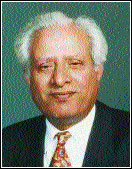 In an interview with Dawn, when asked how he feels about the current situation prevailing in the country, he says: “I’m much more distressed by the intellectual decline of the nation. We have very good universities in Islamabad, such as the Quaid-i-Azam University, Allama Iqbal Open University and the International Islamic University, with which I’m associated. But none of them has a department of philosophy.”
Furthermore, he says: “We are churning out technologists, good or bad that’s debatable. But we are not inculcating in our youths the faculty to think. We are not impressing upon them the importance of intellect. We need to arrest this dangerous intellectual decline.
“This trend is reflected even in politics, where we no longer have statesmen like Zulfikar Ali Bhutto and Liaquat Ali Khan.”
Continuing, he says: “The situation in the country is really bad. But I am not disappointed because the people are awake and continue to express themselves boldly.”
Having served the National Language Authority as its chairman for about eight years, Prof Fateh Mohammad Malik has joined the International Islamic University, Islamabad, as its dean of the faculty of languages, literature and humanities, the subjects he has pursued all his life.
As the head of the NLA, he helped promote local languages and cultures. The last major work under his stewardship was the five-volume book on the origin of Urdu. In those volumes he allowed key proponents to present their arguments to justify the claim that Urdu originated in their region. In the preface to this interesting debate, Prof Malik says he is pleased to note that every region of Pakistan – from Sindh and Balochistan to Khyber and Gilgit and beyond – loves to own Urdu.
Going by both his teaching and administrative assignments, Prof Malik’s career may be a matter of envy for any scholar in Pakistan. Born in a small village of Attock district in 1936, he spent 10 years of his teaching career abroad, serving at such renowned universities as Columbia University of New York, Heidelberg University and Humboldt University of Berlin, Germany, and Saint Petersburg University of Russia.
Prof Malik says his years abroad were quite productive. “Loneliness is a cruel phenomenon, but I harnessed it to boost my creativity and wrote abroad what I probably couldn’t have written here.”
He began writing with the college magazine, which got an encouraging response. “But when in third year, I began regularly contributing to prestigious magazines such as Humayun and Mehr-i-Neemroz, the later edited by Dr Abul Khair Kashfi.” However, he began writing criticism seriously in 1961.
He says in criticism he drew his inspiration from Mohammed Hassan Askari and to some extent from Saleem Ahmed, “but being impressed by someone doesn’t mean that you totally agree to what they write. But I still consider myself a student of criticism rather than its scholar.”
Fateh Malik received his early education at a Talagang government school, did his graduation from the government college of Attock and his master’s from the Gordon College in Rawalpindi.
His books on literary criticism include: Saadat Hassan Manto: ek nai taabeer, Ahmed Nadeem Qasmi: shair aur afsana nigar, and Faiz: shairi aur siyasat. Pakistan is his most favourite subject and his books in this category include: Fitnaie-Inkaar-i-Pakistan, Khitaah-i-Khak ya Arz-i-Paak, and Ghulamon ki Ghulami.
His services have rightfully earned him various prestigious awards, including the Sitara-i-Imtiaz. A few MPhil and PhD theses have also been written on him and his works.
Good governance in NWFP victim of secrecy
 The practice of secrecy employed too long becomes an addiction. Among officials of the NWFP government it has spread like an infection. Be if an office order, a memorandum or a notification to be published in official gazette or an item of the budget; everything is an ‘official secret’ for them.
Public’s access to official record is the only remedy for transparency in government affairs. International donor agencies emphasise openness in official business to ensure good governance.
The NWFP government is required to upload details of its fiscal accounts on the official website of Finance Department under an agreement finalised with the World Bank that qualified it to get a $270 million soft loan in 2001.
The Finance Department is supposed to place details of government’s receipts and expenditures on its official website on a monthly basis.
But since 2001, the department has hardly ever fulfilled this official obligation since details of the province’s income and expenditures are not being maintained on the prescribed format as required.
The bigwigs of the department claim that the financial management of the province is even better than the centre and the other three provinces. But the way the administration keeps everything secret tells a different story.
Ideally, the department’s website at http://www.nwfpfinance.gov.pk) should be the prime source of information about the financial health of the province, if it is maintained in line with what the government had pledged with the international lending agency that supported a so-called reform programme in the province.
The website is not updated on monthly basis and lack of interest on the part of authorities can be measured from the fact that the link offering details about fiscal accounts contains only data about the first quarter of the current financial year despite the fact one and half months are left in the third quarter.
A journalist friend, who reports on provincial economy, says getting authentic and timely information about the province’s finances is next to impossible. “Bureaucracy hides budget details as if these are blueprints of a nuclear bomb,” he opines.
From top to bottom, he says, a mindset of hiding things prevails in government departments, particularly the Finance Department. Complete black out of information encourages speculation and makes objective reporting extremely difficult.
On the one hand, if the Finance Department is bound to put the fiscal details on the website so that general public including media can benefit from it, at the same time officials of other government departments are restricted to interact with the media.
These restrictions, mentioned in the Estacode, provide justification to the officials for not sharing even ordinary information with the general public and sometimes with fellow officials of other departments.
This eventually promotes corruption as former US President Woodrow Wilson said: “Government ought to be all outside and no inside . . . Everybody knows that corruption thrives in secret places, and avoids public places, and we believe it a fair presumption that secrecy means impropriety.”
The federal government had promulgated Freedom of Information Ordinance in 2002 in a bid to ensure public access to information for good governance. This law, which is too considered as flawed and ineffective, is not applicable to NWFP because the provincial government is yet to adopt it.
It is time the ANP-led provincial government ensured public access to information because when information which properly belongs to the public is systematically withheld by those in power, the people soon become ignorant of their own affairs and -- eventually -- incapable of determining their own destinies.
Sami Ahuja and his interpretors
 I was labouring through the labrynth of words my friend Sami Ahuja has constructed to narrate the conflagration of fractals he has reduced his story into for the reader to piece together. At our last meeting when he came with so much love to deliver me a copy of his latest book of stories, Kashkole Badan, I had begged him to write something in the languages that are spoken, read and understood in Pakistan, and, I think he had got my point without getting angry and foul mouthing me, or perhaps, he was somewhat disappointed in me for my poor, low brow, journalistic quest for a reportable story. “Oh, dear chap, you are still stuck where I left you last time; ain’t you finished with Intezar Hussain yet? Or have you sunk even lower, paging through Bano Qudsia and Mansha Yaad and the rest of the Muslim Leaguers!!”, he seemed to say as he surveyed me sorrowfully.
He changed the topic and told me about his disappointing meeting with psychiatrist Akhter Ahsen in Lahore the last time he was here some years back from America where he is settled since the 60s. I know Akhtar Ahsen. He is capable of much insensitivity. But Sami with all his basic rural core should still have understood and not minded being used by a friend who gets no one to use or lean upon in America. Yet I am happy Sami broke the meeting abruptly and told Ahsen to go to hell. I could not have done that and later fumed and fretted at my stupid courtesy. But to return to Kashkole Badan, I remembered Kishwar Naheed had told me about the tedious preface to the book poet and philosopher Abdul Rashid had written. I must admit that though I approached the said discourse to get some cues about the stories I wanted to make head or tail of, I found myself flattened, reduced to dust, by a humiliating rage at the depth and breadth of my ignorance. How could I not know that a piece of writing was not meant to convey anything? It was itself a thing. And that’s that. Rashid’s labours to provide a rationale for Ahuja’s narrative are indeed admirable, as were perhaps Iftikhar Jalib’s who played no smaller role in spoiling this unique sculptor of words putting his stories beyond the reach of lay readers like me.
 Asghar Nadeem Syed who communicates on a more palpable level than the promiscuity of words would permit and who visualises stories through characterisation and advancement of plot and action, seems to have been carried away by the argument he profers to substantiate Ahuja. It is a very simple thing he says that the master perverts the language of the slave to exploit him and dries up the creative fonts of the vocabulary and solidifies the expression into jargon which then becomes the currency of traditional expression. He says that such a stereotyped and stultified language could not express what Sami Ahuja wants to say. Yet Mr Syed may perhaps allow me to suggest that Ghulam Abbas and Manto did rather well with that same ordinary language which constitutes our daily parlance.
In any case taking liberties with Ahuja to cover our inability to communicate with his fiction does not mean his vitality as a writer is under question. Ahuja may be conversing with moss covered stones. That is his problem. Perhaps his time has not come. But, in the meanwhile, we too cannot be faulted for wanting to be told a story.


























