0
0

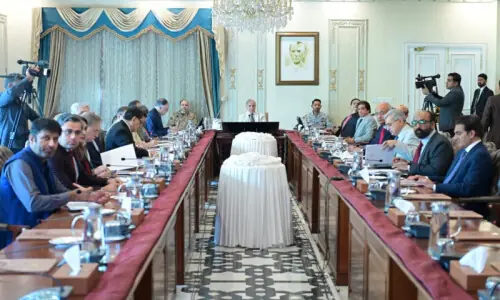
KARACHI, Dec 2: Energy experts have expressed concern over continuous load-shedding in the country and called upon law-makers to enact legislation to ensure indigenous and cost-effective means of energy production, transmission and distribution.
Since the present policy did not fix any minimum standard for efficiency of power plants, Wapda and the KESC had allowed use of less efficient power plants, they observed in a focused meeting of the United Nations Development Programme and IPU in collaboration with the National Assembly Secretariat.
Participants of the meeting also blamed the KESC management for not improving generation, transmission and distribution system and cutting down the line losses, which had swelled to about 40 per cent. They were concerned that the utility was unable to contain line losses and power theft, thus losing billions of rupees. They demanded transparency in KESC’s operations and called for making public all the benefits the government had given to Abaraj-led management of the KESC.
Besides laying stress on the import of energy efficient power plants, they called for using coal as alternate solutions to deal with issues of energy crisis. But, they were of the view that while exploring Thar coal deposit the government should not opt for open pit mining for it because not only this technology was inefficient, but also environmentally hazardous, which would affect the lives of area people and destroy their culture.
They also noted that no big dams were in pipeline, except Bhasha that would take much more time than envisaged. “So nothing is coming in medium terms as far as large dams are concerned,” said a participant of the meeting.
The experts suggested that mini-hydel power plants should be built on small rivers to provide relief to the local population. On canals wherever possible, low head hydel power plants should be installed, they added.
It was also suggested that illumination levels for shops and streetlights should be fixed to save energy and localized generation near load centres be encouraged to minimise transmission and distribution losses.