0
0

KARACHI, Dec 1: It was supposed to last seven days, but it didn’t. The explosive law and order situation in the city made the organisers of the International Urdu Conference at the Arts Council Karachi restricted the event to five days. And the concluding session of the truncated conference was held on Monday.
Commenting on the volatile situation, someone who had come to listen to renowned scholars of Urdu literature recited Ghalib’s following couplet:
Ab main hoon aur matam-i-yak shehr-i-aarzu
Tora jo tu ne aina timsaal daar tha
(I mourn the downfall of the city of dreams/ The broken mirror reflected many an exemplary town.)
Despite all the uncertainty surrounding Karachi, the participants and organisers of the conference left no stone unturned in making the last day of the event a memorable one. Their effort bore fruit.
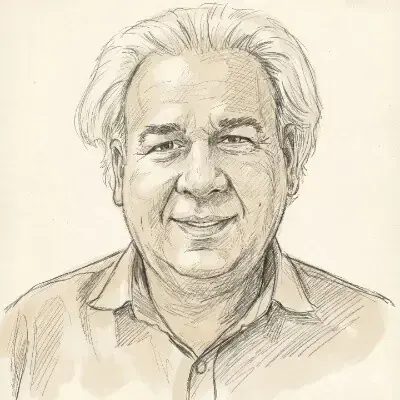
Anyone who has even a modicum of interest in literature should have heard, and seen, Dr Gopi Chand Narang speak while he was extolling the virtues of the International Urdu Conference.
It was a speech that was peppered with intelligent humour, thought-provoking intellectualism and erudition — a specimen that can easily fall into the “work of art” category.
The session on Monday on poet Makhdoom Mohyeddin was a good one, in which men of letters like Mohammad Ahmed Sabzwari, Allahbad University’s Dr Ali Fatimi, Wahid Bashir and Hameed Akhtar took part and highlighted the finer points of Makhdoom Mohyeddin’s revolutionary poetry.
Dr Fatimi said that while discussing Makhdoom, there was a need to differentiate between the “poetry of protest” and “revolutionary poetry”.
But what lifted the sagging spirits of the audience (because of the law and order situation) was Dr Gopi Chand Narang’s remarkable speech.
He profusely praised the efforts of the conference organisers and thanked them for their warm hospitality. He said it was a brilliant idea to do a programme on Jaun Elia as curtain-raiser to the event. He said Elia indulged in self-persecution and was deeply entrenched in his roots, as a result of which he created couplets that are unmatched and unique, but underappreciated.
Dr Narang commented that sessions dedicated to Ghalib, Josh Malihabadi, Makhdoom Mohyeddin, and to topics such as Urdu fiction produced in the last 10 years, delineate the contextual weightiness of the conference.
In his typical effusive style, Dr Narang claimed that new geographical boundaries could be created overnight but not languages, and announced that “Urdu is the subcontinent’s common spiritual legacy”.
The concluding session was articulately conducted by Ambareen Hasib Ambar.
Honorary secretary of the Arts Council Mohammad Ahmed Shah said it was a diligent and dedicated team effort that made the event possible. In this regard, he acknowledged the efforts of Rahat Saeed, Sahar Ansari, Dr Fatima Hasan, Saifur Rehman Grami, Javed Saba, Shahid Rassam and several others. Prof Sahar Ansari thanked the guests and his team, particularly Mohammad Ahmed Shah.