



 0
0

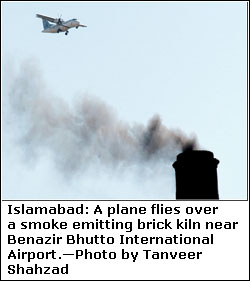 ISLAMABAD, Nov 18: With crisper temperatures approaching, air travellers at Benazir Bhutto International Airport (BBIA) should be bracing for delays yet again – thanks to the smog caused by the brick kilns in the vicinity of the airport.
Every year during peak winter days almost all morning flights are affected by poor visibility resulting from the smog. Though the problem is recurrent concerned civic agencies have taken no action to solve the problem and save air travelers from the agonizing delays.
Ayaz Jadoon, airport manager, Civil Aviation Authority (CAA), told Dawn that there were as many as 80 commercial flights that depart and arrive at the BBIA daily.
“The smoke emanating from the kilns gets condensed in the air during the winter season due to low temperatures and reduces visibility of the pilots during landing. Black smoke in particular poses danger to small training aircraft like the Cessna planes” he said. The flying club located adjacent to the airport had several small aircraft.
Giving further details he said that there were two runways, Runway 30 – (Islamabad side) and Runway 12 – (Murree Road side). There is a ban on high-rise building or tower within a 5 miles (8 kilometers) radius of the airport.
The navigation department had reported the matter to the Rawalpindi City district government but no action was taken on the report.
A commercial airline pilot said that smoke from brick kilns mixing with fog turns into smog, which is a thick layer of haze through which visibility was only 50 per cent.
“The ideal visibility should be one kilometer for small planes” said the pilot. The kilns, he said, present around the vicinity of the airport pose more danger to small aircraft as most of them are without automated landing systems. He added that many flights were often delayed in winter mornings because of the smog over the runways.
Meanwhile, an Environment Protection Agency (EPA) official said: “EPA has been working on the issue for a long time.”
There are around 200 kilns operating in the vicinity of the twin cities. Though these were initially located outside city limits, the mushroom growth of private housing societies in the last few years had brought them within the city confines.
The official added that this was an issue for the CAA to handle but EPA was working on that. He said that the brick kilns were using low quality fuel which, besides creating smog endangering small aircraft, was also damaging the environment of the twin cities and was bad for the health of the people.
“We have set up a model kiln with an international non-governmental organisation, which uses good quality fuel to contain the dangerous smoke emanating from it and the pilot project is working successfully”, he said. EPA had received numerous complaints from residents of various housing societies along the Islamabad highway about pollution caused by the brick kilns.
Manzoor, a kiln owner, explaining his position said: “We were allotted the land by the government outside the city residential areas but the housing societies are swelling very rapidly and now they lie within our working zone. We have no problem with shifting to outside the city if the government provided us land. There are hundreds of families who are earning their livelihood from these kilns. Removing them forcefully will amount to snatching their bread from them,” he said.


























