



 0
0

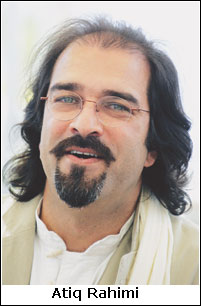 PARIS, Nov 10: France’s top annual book prize, the Goncourt, was awarded on Monday to Afghan writer and refugee Atiq Rahimi, best known for his novel turned into a film “Earth and Ashes”. The prize-winning “Syngue Sabour”, or Stone of Patience, focuses on the plight of Afghan women. It is the 46-year-old Rahimi’s first book penned in French.
The Goncourt is the most prestigious of a series of book awards traditionally handed out in October and November.
Mr Rahimi, whose previous works were written in Persian, was born in Kabul in 1962 and fled the country in the 1980s, first to Pakistan, then to France, where he studied film and settled.
His latest work, in brief, dry, poetic style, follows “The Thousand Rooms of Dream and Fear” and “Eclipse”, and is the confession of an Afghan woman seeking release from social and religious oppression.
“I write about Afghan women and all the world’s women,” Mr Rahimi said. “I’m not making a distinction between an Afghan woman repressed under her burqa and other women. Afghan women like all women have desires, dreams and hopes, as well as strengths and weaknesses.” The title refers to the tradition of confiding to a magic stone and sees the heroine talking to free herself from marital and religious oppression as she watches over her husband, totally disabled by a bullet in the neck.—AFP
In another literary coup for a non-French writer, Guinea’s Tierno Monenembo beat prolific Nobel peace prizewinner Elie Wiesel to the Renaudot, another top book prize.
Monenembo, 61, who fled his country in the 1960s during Sekou Toure’s dictatorship, has written a dozen novels generally about the plight of African intellectuals or the hardships of Africans living in France.
His book about West Africa at the end of the 19th Century sets the scene for the colonisation of the region and is titled “Le Roi du Kahel” (The King of Kahel).
Wiesel’s novel, also short-listed for the prize, is about crime and family secrets titled “Le Cas Sonderberg” (The Sonderberg case).
Last week, Italy’s Sandro Veronesi picked up the Femina prize for best foreign author while Jean-Louis Fournier won the French writer’s prize with a book on having handicapped children.—AFP




























