0
0

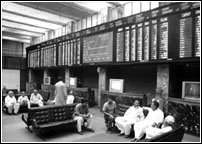 Once the second fastest growing economy after China, Pakistan appears to be on the verge of foreign debt default And the world’s best performing stock market has landed into its a serious crisis for lack of agile policies..
Let’s start from the liquidity crunch when on the back of high inflation coupled with sliding foreign inflows, the central bank tightened its monetary stance. Policy rate hike by 200 bps along with increase in CRR and SLR led to severe cut in liquidity
Was this a good decision? What caused this domestic inflation that forced the SBP to change discount rates overnight? It was international commodity bubble, especially oil prices which skyrocketed to $147 per barrel .This not only increased the cost of doing business including the transportation cost, but added to the domestic retail price increases..
Units of output started to decrease. Our fiscal deficits widened due to rising imports, mainly of oil, food and luxury items including mobile phones. Interesting enough, instead of looking at the fiscaly aspect, the State Bank opted to curb inflation by tightening the monetary stance. How on earth the fiscal indiscipline could be controlled by monetary stance? If we look at the inflation figures, they have actually gone up despite monetary tightening.
After record foreign investment levels, our regulators, with rapidly changing fundamentals, are left with no other choice but to put the market on freeze, a practice which isn’t common. Almost every foreign investor wants to sell his holding but is unable to find exit. Trading activity has been recorded to be the lowest ever in the history of Karachi Stock Exchange. This itself is another blow to the SBP as it will have to pay dollars to the foreigners, selling their stocks, from SCRA (special convertible rupee account) when the foreign reserves have fallen like nine pins. At least 15 branches have been already closed by brokerage houses as a result of the market crash as notified by the KSE.
The solution lies in reversal of policies opted to curb inflation and to restrict supply of money. First, the SBP should reduce the discount rate with nominal 100 bps to stimulate general economic activity and then money will start to flow in from fixed income to equity markets. Today when market is ‘frozen’, the SBP is talking about forming a support fund to inject liquidity. This will generate speculation which the SBP refrained by reducing the requirement for CRR from nine to six per cent. SLR still stands high. Money multipliers need to ensure liquidity in the system, so a cut in SLR should follow.
To become rich, one must use the money borrowed from loan to build up asset rather than accumulating debt. In past, we got huge inflows by privatising government owned assets and borrowing from international markets.
The fiscal deficit kept soaring; this was natural as policy was expansionary. But if government borrowing result in inflation as stated by the central bank, we have to immediately address the fiscal aspect.
Today, international markets are also struggling for liquidity and the country’s risk premium is high. Hence this door should be considered shut at least temporarily. This leaves no option but to raise money from domestic equity market which will have its effect in the long-term.
The first beneficiary of growth is none other than banking sector — the most profitable in 2006 and the only highly organised tax paying sector. If money starts to flow smooth, there are borrowers to lend and depositors feel safe with the intermediary — the banks.
Leverage industries such as cement and textile would get a breather. There is huge cement export potential not only at regional level but across Asia as reflected by a 15 per cent increase in its export sales. This export will help reduce the widening trade deficit.
Can an industry grow when there is high markup cost, load-shedding and tremendous increase in over all cost of doing business?