



 0
0

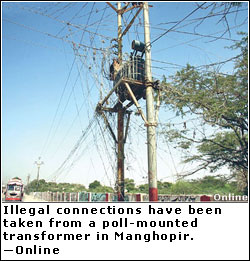 KARACHI, Oct 10: Contrary to the claims of the federal ministry of water and power that the Karachi Electric Supply Company has not been authorised to raise tariff by 71 per cent, an increase in power tariff retroactively effective from September 1 along with the January-March and April-June adjustments will be passed on to consumers.
Up to 70 per cent increase in power tariff along with the backlog of dues since April when the subsidy was withdrawn by the government is expected to double electricity bills of the coming months. The sudden increase that has been received as a bombshell amid rising cost of living and depleting services may not only lead to more power theft, but also trigger power riots in the industrial hub of the country.
Although the KESC management has allowed consumers to pay the arrears in three equal instalments adjusted in the next electricity bills, people across the city demand reversal of the tariff increase and accountability of those responsible for the prevailing situation.
Despite a mandatory ban on any raise in power tariff that was imposed for seven years at the time of the KESC’s privatization, the government and the KESC claim that the latter has raised power tariff by 31 per cent to bring its rates “at par with applied tariffs of Wapda power distribution companies (Discos) throughout the country”. While both the government and new private management of the KESC downplay the impact of the tariff increase, it is worth mentioning here that the KESC had earlier sent a summary of the increased tariff in April and July, which was rejected by the government.
 After the government’s decision to withdraw subsidy, the utility had levied 16 per cent general sales tax on industrial and domestic consumers, and started charging 10 per cent income tax if the amount of the bill exceeded Rs20,000. The National Electric Power Regulatory Authority (Nepra) allowed another 15 per cent raise from July 1. In August M/s Abaraj Capital, the new owners of the privatised utility, had reportedly linked their taking over of the utility with a Rs3 per unit increase in the tariff, resulting in almost 100 per cent increase in most consumers’ electricity bills.
While the latest increase in tariff is most disconcerting for the industries in general, the unusual increase of 61 per cent for bulk consumers during peak hours is like death knell to the manufacturers and exporters.
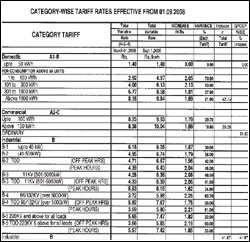
Although there is no increase in new tariff for domestic users consuming not more than 50 kilowatt-hours (kWh), the rate for those consuming between 1kWh and 100kWh would be increased from Rs2.92 to Rs4.97 per kWh, the new list of tariff increase shows. A difference of Rs2.05 on a unit reflects about 70 per cent increase in the tariff.
The consumers spending between 101kWh and 300kWh will be charged at the rate of Rs6.13 a kWh as against Rs4 that was the rate on March 1, representing an increase 53 per cent. The new tariff for those using from 301kWh to 1,000kWh will be Rs8.58 instead of Rs6.77, showing a 27 per cent increase. Those who are spending more than 1,000kWh will be charged Rs9.84 a unit as against Rs8.15, reflecting an increase of Rs1.69 or 27 per cent.
The table also enlists new tariffs for commercial and industrial users as well as for bulk supplies, agriculture purpose, temporary and other categories. Under the new tariffs, there shall be minimum monthly charges even if no energy is consumed during the month.
An analysis of the new tariff-table by the SITE association reveals that fuel adjustment surcharge (FAS) has been increased by 150 per cent for industrial consumers spending not more than 40kWh and to 300 per cent for industrial consumers spending between 501kWh and 5000kWh. The new tariff rates, allowed by Nepra, have come at a time when all economic indicators of the country are in the negative. In such a situation, Nepra should have insisted that KESC improve its efficiency and cut down its distribution and line losses as such strong corrective measures only can offset the subsidy that the federal government has withdrawn. Continuous increase in tariff will only promote complacence, analysts observe.




























