0
0

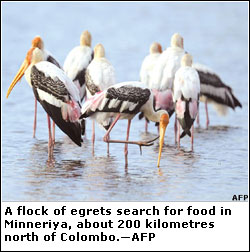 SIGIRIYA: With wetlands and jungles teeming with colourful butterflies and exotic primates, Sri Lanka is planning to lure a new type of tourist who prefers wildlife to beach life.
As well as at least five species of primates – including the purple-faced leaf monkey and the langur – the island boasts hundreds of lakes and lush paddy fields for visitors to explore.
“Primates have always captured peoples’ imagination – perhaps it is because they look and behave so much like humans,” Gehan de Silva Wijeyeratne, head of Jetwing eco-holidays told AFP, while on the trail of the toque monkey in Sigiriya, 170 kilometres north of Colombo.
“Sri Lanka is very rich in primate species and large numbers of primates can be easily observed,” he said.
Sigiriya, a world heritage site and home to a stunning fifth-century rock fortress, is a hotspot for observing langurs and toques.
“The animals look very comfortable with people around them,” said Manduka Premaratne, a local visitor, as he watched dozens of monkeys play and groom each other.
Primates can also be found in the nearby historic sites of Polonnaruwa, Kandy, the southern city of Galle and the wetlands around Colombo.
The critically endangered purple-faced leaf monkey can occasionally be spotted in Colombo’s suburbs, while the brown saucer-eyed loris lives in the island’s Horton Plains national park.
“The loris is rare. Few sightings have been made,” said Nalin Perera of the International Conservation Union in Sri Lanka.
Traditionally the loris has been killed for the supposed medicinal properties of its body parts.
Sri Lanka is also a paradise for butterflies, dragonflies, leopards and exotic birds, who are found in abundance in the island’s rainforests and jungles, said Chandra Jayawardene, a naturalist at the Hotel Vil Uyana.
Around 243 species of butterflies and 118 species of dragonflies have been discovered so far, Jayawardene said.
Wijeyeratne said the leisure industry was counting on Sri Lanka’s natural wonders to bring foreign visitors to the tropical island, adding that “conventional tourism is in trouble”.
Sri Lanka’s golden beaches, tea plantations and ancient religious sites have long attracted visitors, but numbers have been falling as a nasty civil war drags on.
Arrivals in July dropped 25 per cent to 32,982 over the same period in 2007, according to Sri Lanka Tourism, amid a spate of bomb attacks and heavy fighting between troops and Tamil Tiger rebels in the north.
Authorities had forecast 600,000 visitors this year, bringing in 550 million dollars, but figures are falling well short of such projections.
Tourism revenue for the six months to June this year totalled 175 million dollars, according to Sri Lanka’s central bank, while the number of visitors from January to July this year was 225,000.
“I don’t think we will cross 600,000 this year because of the terrorist problem,” Sri Lanka’s tourism chief, Renton de Alwis said.
“But we hope that environmental tourism can be a big help to us in the future.”—AFP