



 0
0

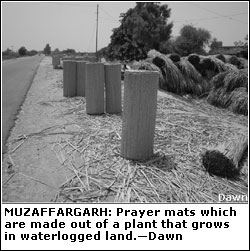 MUZAFFARGARH, Sept 5: Vegetation in waterlogged areas and wetlands has turned into a source of income for many a family in the Muzaffargarh district.
An agricultural official says that about 175,000 acres are waterlogged in the district as water table has risen by virtue of continuous seepage from either banks of the Muzaffargarh canal.
Although no crop can be tilled, hydrophytes plants or wetland plants can survive on these waterlogged areas. One such plant is locally known as Kondr and its botanical name is typha which is from the mono-generic family, Typhaceae.
These plants are typically one to seven meter tall with spongy, strap-like leaves and starchy, creeping stems. Their leaves eventually bear the flowers.
Typha plants are wind-pollinated and their leaves are being used for making prayer mats, interior decorations and for stuffing of pillows and beds.
Aside from this, these plants are also used as fuel in brick kilns which are sold for Rs180 per 40kg.
Allah Bux from Sultan Colony said that he was a rich man before the salinity and waterlogging devoured his 40 acres some 15 years ago.
He said the natural calamity forced him to work in a textile mills as an ordinary worker. Three years back, he said the vegetation grew in his waterlogged area which brought back his days of prosperity.
“For the last two years he has been selling his inland vegetation to some families who prepare mats, chair seats and other stuffs from the leaves and stems. The parties from Karachi and Peshawar place orders to these families after paying them advance payments,” he said.
Mr Bux said he had leased out his land for Rs10,000 per acre per season.
Iqbal Ood, another owner of the waterlogged land, said that landholders of wetland had become prosperous after they started giving their lands on lease to brokers and local families.
Broker Sardar Khan said that his family, who was expert in making prayer mats with leaves, prepared 200 feet mats every day which fetched Rs10 per feet. From one acre of vegetation, he said up to 10,000 feet of mats could be made.
He said these mats and other stuffs were in great demand at Karachi and Peshawar.
He urged the government to help them buying machinery because manually-manufacturing of mats consumed much time and energy.
He said Mahmood Kot was known for producing the best quality of wetland plants in the district.
Some farmers alleged that the agricultural department did not help them in getting loans from the agricultural bank.


























