0
0

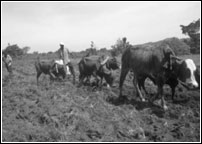 HUMAN health is inextricably linked to animal health and production. This link between human and animal populations, and with the surrounding environment, is particularly close where animals provide transportation, drau-ght power, fuel and clothing as well as proteins (meat, eggs and milk).
More than 75 per cent of all infectious diseases emerging in the last 50 years have been zoonotic diseases. These are those diseases that move from animals to people. Besides avian flu, these diseases include AIDS, Lyme disease, Bovine Spongiform Encephalitis (BSE) (mad cow) disease and SARS
To effectively meet these challenges, human and animal health issues must be merged into a new public health agenda. Creating and responding to such an agenda depends on strong interactions between the human and veterinary clinical, laboratory, and public health professional organisations. These interactions are essential for developing new and strengthening existing partnership necessary for implementing effective public health programmes.
In many parts of the world, veterinarians have been instrumental in developing and implementing new methods of promoting sustainable public health that are eco-systematically grounded, culturally feasible and economically realistic.
Animal diseases may threaten human health in two ways: they may threaten the animal populations that serve as food, transportation, or traction power in the fields; and through zoonotic diseases, that are transmissible to humans. Cattle plague, or rinderpest, which affects all cloven-hoofed animals, may serve as an example of how an epidemic disease in animals may have catastrophic effects on public health through a variety of indirect ways. The virus which causes rinderpest, related to canine distemper and human measles, was once endemic in Central Asia and made periodic forays into Europe, where it killed millions of cattle in the eighteenth century, despite strong quarantine measures, stimulating the creation of Europe’s first veterinary schools.
The second way in which animal diseases may be important for public health is when the agents that cause them can be transmitted to people. The World Health Organization (WHO) defines zoonoses as “those diseases and infections, (the agents of) which are naturally transmitted between (other) vertebrate animals and (people).” This is a good, clear definition, and includes most of the diseases, such as rabies, brucellosis, tuberculosis, Q Fever, Lyme disease, salmonellosis, hydatid disease and sleeping sickness, which are conventionally viewed as being zoonoses.
Most often, humans are accidental hosts of zoonotic agents. The exceptions are some tapeworms, such as Taenia solium, Taenia saginata, and Diphyllobothrium latum, for which humans are the definitive host. In these cases, the agent is recycled back to people when they ingest meat from cattle, and fish, respectively, which have had the misfortune of ingesting infested human feces.
Food-borne diseases re-emerged in the 1980s as a major class of human infections. Most of the agents associated with the current worldwide increases in cases of food-borne diseases have their reservoirs in animal populations. In most cases, they cannot be controlled without a full, multi-species understanding of the food chain, from “stable to table.”
The reasons for the global increases in food-borne diseases are complex, and have revealed weaknesses in how modern agriculture is organised. Industrialised agriculture tends to encourage economies of scale to keep prices down, and large groups of animals are often gathered into one place. Since the conditions which promote epidemics are a function of the size of the susceptible population and the probability of adequate contact (itself a function of the agents and the methods of spread), these large populations of animals are vulnerable to epidemic diseases.
In an attempt to control this vulnerability, veterinarians have worked closely with various livestock industries to set up “herd health” or “flock health” programmes. When these have broken down, there have been catastrophic epidemics of diseases such as hog cholera, salmonella, or foot-and-mouth disease. But these economies of scale have also created epidemic conditions for agents which may not only affect the livestock themselves.
Most livestock, or livestock products such as milk, are processed in centralised facilities. At some point in the modern food system, the bacteria and viruses from a wide variety of sources are brought together in one place. This allows not only for cross-contamination, but for wide dispersal of the agents so gathered, since these centralised processing industries must, in order to remain economically viable, serve large populations.
The biological effects of these economies of scale have been exacerbated by the economic pressure to become more efficient; hence animal “wastes” (organs and parts of animals not considered fit for human consumption) have been reprocessed (rendered) into protein supplements (meat and bone meal, or MBM) through various heat and chemical processes. These allow animals to grow faster or produce more milk.
Economically, this seems to make sense. Ecologically, however, this has created ideal conditions for the spread and enhancement of food-borne illnesses. Well before the epidemic of BSE in Britain in the 1980s and 1990s, salmonellosis was known to increase and be magnified throughout the food system through the synergistic effects associated with scale and efficiency.
The first cases of BSE in cattle were reported in 1986. Within two years, it became clear that there was a serious epidemic of a new disease in cattle underway, and a series of well-designed veterinary epidemiological studies were done. As the epidemic unfolded, the emphasis shifted between concerns for BSE as an animal disease, to BSE as a public health, economic, and sociopolitical problem.
There was evidence in the 1970s that feeding of antimicrobials to animals for growth promotion or as prophylaxis could promote the spread of resistant bacteria. What also became apparent was how easily bacteria can share genetic coding for resistance, and the degree to which resistance to various drugs might be linked. An understanding of the ecology of microbial populations in the food chain has improved, even as new strains of multi drug resistant bacteria, such as Salmonella DT 104, have emerged as serious human pathogens. The links between microbial ecology, veterinary practices, and public health have made this an increasing area of concern for veterinary public health practitioners.
The role of Federal Food, Agriculture and Livestock Ministry (MINFAL) and Provincial Livestock Departments to strengthen the surveillance to all communicable diseases which are or may emerge as public health threats should be:
Identifying and evaluating microbiological hazards to human health of animal origin: new, emerging and re-emerging zoonotic diseases, and food borne diseases, including those due to antimicrobial resistant bacteria. *Developing policies, guidelines, operational research and strategies for the control of zoonotic and food borne diseases. *Promoting research on zoonotic and food borne diseases and their management in humans. *Strengthening National surveillance of zoonotic diseases and antimicrobial resistance in food borne pathogens by enhancing the epidemiological capabilities of national laboratories. *Disseminating relevant information to experts in public health, veterinary science and other scientific disciplines, as well as to consumer groups and the public. *Contributing to field and laboratory investigations of zoonotic and food borne diseases.
Facilitating active contributions to public health by the veterinary services, an essential requirement for the cost-effective surveillance and control of zoonotic and food borne diseases in their animal hosts. *Providing technical and scientific assistance to experts for their surveillance and control programmes, when requested. *Providing technical and scientific assistance to experts for their surveillance and control programmes, when requested.
For a joint approach to flourish, the curriculums of DVM degree must enable and encourage communication and exchange with other disciplines. Intermittent crossover education and courses may be a way to stimulate eventual partnerships. Public health and veterinary programmes should share their knowledge (including their different approaches) more widely and explore local priorities and perceived needs. They can then develop joint implementation arrangements to improve services to poor and hard to reach communities.
Overall, there is a lack of awareness of how veterinary medicine is tied into public health, a dearth of positions for veterinarians in public health, and insufficient funds for research in this field. It seems obvious, but it still needs to be said: Pakistan needs more trained veterinary public health experts for careers in public practice and veterinary research, strengthening our nation’s ability to develop critical emergency response plans to protect people, animals and the environment against outbreaks of zoonotic diseases.
Dr Alamdar Hussain Malik is presently working as Secretary/Registrar, Pakistan Veterinary Medical Council.