



 0
0

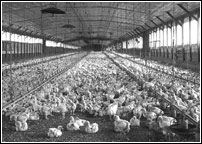 Dr Rao Zahid Abbas and Dr Zafar Iqbal
OWING to the increase in the demand for meat during the past few years, and an exorbitant increase in the rate of mutton and beef, poultry meat has emerged as a good substitute.
Intensive poultry farming has been adopted to achieve maximum production of meat and eggs. The major threat in poultry operations is stress of hot weather. The summer season has set with a threat of heat stress.
There are very few problems of poultry production in which there may be 100 per cent deaths and among those the hot weather stress is the most significant. Besides high mortality, heat stress also affects the performance parameters of weight gain and feed conversion ratio. Therefore, timely hot weather management is vital for poultry producers to achieve the maximum growth performance and better feed conversion ratio.
Heat stress is the self-created problem because of poor management. Therefore, losses due to heat stress can be minimised by adopting standard procedures of heat management during the summer.
Ventilation: The key point in hot weather management is to keep the birds cool and that can be done in a better way by proper ventilation and air circulation. A lot of money is being spent on the construction of controlled sheds and the main advantage of the modern controlled sheds is to maintain adequate level of relative humidity by providing proper air circulation. Uniform distribution of air particularly at bird’s level is essential to control rise in temperature in birds’ sheds.
This is the main difference of traditional sheds and modern sheds. Adequate amount of air is also present in ordinary traditional shed but the body temperature of birds can not be maintained due to lack of uniform circulation and distribution in the shed. So keeping in view the importance of air distribution, circulation and proper ventilation, fans in the poultry sheds should be designed in such a way so as to provide air speed of 500-600 feet/minute. The whole system of air circulation and ventilation is operated by fans supplemented with cooling pads and their functioning is dependant on the provision of electricity. Therefore, availability of generator is essential during the periods of load shedding.
Litter management: Poultry farmers use different materials as litter such as rice hulls, soft wood shavings and wheat straw. All the above mentioned litter sources are good for cold weather but in case of summer, sand is the best substitute as litter source because it remains cold. But the important point to consider is that the moisture level in the sand should not be less than 15 per cent because it results in respiratory problems and more than 30 per cent because it results in the onset of coccidiosis disease.
Allocation: Birds should also be distributed uniformly through out the poultry shed to enhance birds’ performance and to reduce heat stress. If bird distribution is not uniform, then equal distribution of feed, water, and air and growth performance would not be practical. Equal distribution of birds can be achieved by allocating the proper space for the birds by timely fitting the migration fences. The key point to consider in the installation of fences is that fences should not create resistance in the circulation of air. Therefore, fences with wire shelving are recommended.
It is also essential to give more space for birds during the hot weather as heat produced by birds’ body is the major source of heat addition to poultry sheds. So reducing the number of birds means reducing the amount of heat produced in the shed. However, in case of controlled sheds, the same number of birds can be reared in hot weather like that of winter.
Feed and water: Normally feed and water are provided ad libitum to the birds. In hot seasons, fasting is a good tool to combat with heat stress. The heat production reaches up to 25-40 per cent more as compared to off feed birds. Therefore, feed should be provided only in the morning, evening and during night. On the other hand, water should be provided ad libitum to all birds.
No doubt, heat stress is a very serious problem but it is a self-created problem due to mismanagement which can be controlled completely by adopting the measures mentioned.





























