0
0

 Russia has seen strong economic growth over the last eight years. Consumers have more disposable income, which continues to rise.
According to official statistics, the average salary in 2007 was about ruble 12, 700 per month, a 25 per cent increase from 2006.
Positive economic trends have influenced the growth of retail sales. Russia is now the world’s 12th largest retail market and its retail sale is one of the fastest growing sector. It is estimated that middle class families spend a quarter of their incomes on clothing, sportswear and footwear which has stimulated sales in this market.
Competition: Depending on the product category, imports account for 40-65 per cent of the total sporting goods market. In general, Russian-made products are of lower quality, compared with their foreign counterparts; their main advantage are their lower prices. Russian sports goods manufacturers are usually small companies with low production volumes, compared with their competitors from the United States and Europe. However, some Russian companies are very successful.
Trends: Moscow and St. Petersburg account for more than 50 per cent of total sport goods sales, and there is a definite trend toward market concentration in these two cities. Currently, there are about 1000 sports goods stores in Moscow, but fewer than 10 big market players. This market is highly influenced by six major companies, which have built multi-brand chains with four to eight stores each. These six companies control about 50 per cent of the market.
In the St. Petersburg market, sports goods chains are aggressively increasing their market shares. Small individual stores are being pushed out, and they either have to leave the market or slowly turn into so-called boutiques, which market themselves to a narrow audience of consumers with high incomes.
Currently, there are 185 sporting goods stores. About 15 per cent of the market belongs to large and multi-branded chain stores. The rest is shared between small individual stores and mono-branded international chains.
Expansion: Until recently, most of many market players did not compete in the low-income market segment; they concentrated on the middle class. Currently, expansion into the low-income segment is on the agenda of many companies. Sporting goods stores are also expanding into the middle-plus and premium segments, as more expensive sports, such as diving, mountain biking, downhill skiing, and snowboarding, are becoming popular.
To supply this new market demand, small sports goods stores, or boutiques, are a growing category. These stores specialise in particular sports items, such as diving, fishing with advanced equipment, downhill skiing, and tennis. They provide top-notch service to their clients. Client loyalty is typical for boutiques, where people come not only for the most fashionable and high quality products, but also for a club atmosphere and additional services.
Simultaneously expanding into the premium and low-income segments, the stores will maintain high growth in the coming years, and they will present great opportunities for Pakistani manufacturers.
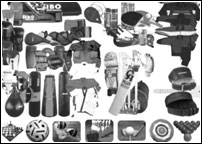
Opportunities: Russia is one of the largest markets for suppliers from European and Asian countries. More than 30 per cent of the sports goods production sold in the world is presented in Russia. These include, sports (equipment, devices and uniform), football, volleyball, basketball, hockey, equipment for gyms, fields, courts, playgrounds, ice arenas, skating rinks, martial arts, inventory, fitness expo, fitness clothes, fitness-centres, outdoor expo, clothes and footwear, tourist equipment, hunting, winter fishing, clubs activities, billiard, bowling, tennis, squash, golf, diving, equipment, diving-centres, training, sport food etc.
Pakistani exporters can get a fair share of the Russian market by a flexible pricing policy; introduction of new or innovative sports goods product categories; aggressive promotion of new products; a continuous presence via sports exhibitions; establishing warehouses, display centre and a bank in Moscow; direct contacts with end-users; cooperation with reputable and knowledgeable local distributors; expansion into regional markets with a wide product range and, frequent interaction between the members of sports trade bodies of both the countries.
The best prospects for Pakistani suppliers in the next three years will be in new value added products for all sports goods categories.