



 0
0

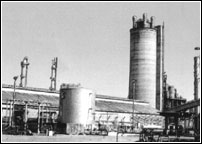 THE demand for urea far exceeds the domestic production capacity and the country has to import the rest. The main buyers of urea are wheat growers, followed by cotton, rice and sugarcane cultivators.
Fertiliser production is one of the most energy intensive processes. Energy is consumed in the form of natural gas as feedstock and as fuel for generation of electricity and steam. An energy efficient plant takes around 24 MMBTU of natural gas to produce one ton of urea.
There are six urea manufacturers in the country. The Fauji Fertiliser is the largest in this sector with a 59 per cent market share, while Engro, as the second largest urea manufacturer, has about 20 per cent.
Ever since the first fertiliser plant was set up, the government provided subsidy to fertiliser manufacturers by selling feedstock gas, which is around 80 per cent of the raw material cost, at subsidised rate to increase indigenous production and ensure smooth and timely supply of fertiliser to farmers. However, domestic fertiliser production declined during the last fiscal year.
The government provides an indirect subsidy to fertiliser manufacturers by selling feedstock gas at rates ranging up to $1.36 against commercial rates of $4.28 per MMBTU which results in subsidy of around $459.98 million on 157.528 billion cubic feet (BCF) of natural gas consumed by the fertiliser sector.
Due to uneven geographic distribution and difficulties in transportation for long distances, natural gas prices vary across countries. Pakistan is negotiating with Iran for the purchase of natural gas that will cost around $7 per MMBTU.
A barrel of crude oil has a heat value of 5.8 million BTU. This means the crude oil at current price of $135 per barrel is worth roughly $23.5 per MMBTU. On the other side, Henry Hub spot market price of natural gas in New York Stock Market is currently around $12 per MMBTU.
In Pakistan, natural gas is being sold to the fertiliser industry at subsidised rate at a time when the demand for gas is quite competitive since it serves as a major input to electricity generation and provides the preferred fuel input to many other industrial processes.
Because of its importance as an alternative and relatively cheaper fuel, the share of gas in total energy is on the rise. During the last fiscal year, the consumption of gas in transport sector had increased by 27.8 per cent, while household consumption grew by 11.6 per cent followed by fertiliser with 3.5 per cent.
Due to non-availability of natural gas most of dual-fire power plants are currently being run on costly imported furnace oil. Despite present power crises, the government is not allowing any new power plant based on natural gas. The setting of gas power plant takes only one year.
The return on paid-up capital in the fertiliser industry is about 80-100 per cent per annum. Unfortunately, both leading local fertiliser manufacturers while enjoying subsidy on feedstock gas are diverting their profit to other sectors and the country has to import costly urea from international markets creating substantial burden on the national exchequer.
In the last five years the price of urea has grown at an average rate of 6.7 per cent. At present a 50kg bag of urea costs about Rs610 to the farmer. On the flip side, imported urea costs at least Rs1,200/bag. As a result, the farmers get the subsidy of $894 million on five million tons urea produced by local manufacturers, while the heavy burden of imported urea’s cost is being borne by the government.
According to the national fertiliser policy 2001 natural gas subsidy was for five years. The government should bring the prices of natural gas sold to fertiliser units to international level of $7 per MMBTU which Pakistan will pay to Iran. The additional revenue generated can be used to subsidise the farmers by increasing the support prices of farm products.
The government can ensure that the fertiliser usages do not fall by providing the easy credit facilities to farmers and early announcing the support prices of agricultures products. Commercial and industrial natural gas consumers are also demanding removal of subsidy for fertiliser industry.
Removing the subsidy will also motivate the manufacturer to improve the energy efficiency. Most fertiliser units are second hand or old and less efficient, resulting more energy waste. Balancing, modernising and replacement carried out on the some of old plants have improved energy efficiency; still these plants are less energy efficient and environmentally harmful.
As a result, our fertiliser industry consumes more energy than the world average per unit of production. Unfortunately Fertiliser Policy 2001 has also allowed import of second hand plants for the manufacture of fertiliser. The industry can reduce energy consumption by employing advance process technology and catalysts, better stream sizes of urea plants and increased capacity utilisation.
About 77 per cent of ammonia production capacity world over is currently based on natural gas while five to 10 per cent on oil or coal where mostly partial oxidation is used.
In India, about 49 per cent of the total existing urea capacity is based on natural gas while naphtha fuel oil and others sources mainly coal account for 30 per cent, 10 per cent and 11 per cent respectively.
Pakistan can use locally available coal which is cheap for production of fertiliser and more economical through partial oxidation process. While the country continues to face mounting shortage of urea for the next couple of years, the government should encourage investment in fertiliser sector based on locally available coal as feedstock to lessen dependence on imported petroleum products and to increase share of coal in energy mix. Dual technology both for natural gas and coal are also available.
The indigenous coal with very high sulphur and ash contents can be used effectively for co-production of electricity and fertiliser through gasification technology. The local coal can be used more effectively if mining sector is re-organised and mining is developed in the Thar region.






























