0
0

PESHAWAR, June 14: An Italian scientific and technical institute has identified areas in the NWFP and the tribal region having potential for olive cultivation for production of edible oil.
The Instituto Agronomico Per L’Oltremar (IAO), a scientific and technical branch of the Italian Ministry of Foreign Affairs, has undertaken a project in collaboration with the Pakistan Oilseed Development Board (PODB), Tarnab, to provide technical support to farmers in the areas with potential for olive cultivation in an effort to produce edible oil, official sources said.
“Olive cultivation has the potential to ease together with other crops the burden of the import bill for edible oil,” said a survey report prepared by Del Cima Raffaele, a researcher working with the IAO. The survey was conducted to identify areas suitable for olive plantation.
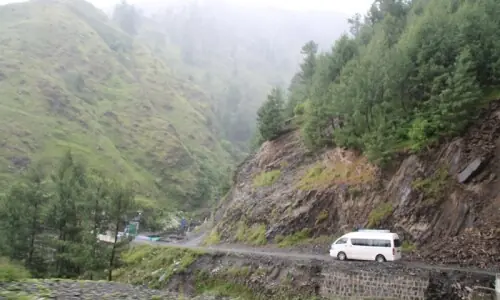
The Italian institute selected Charsadda, Bajaur, Bannu, Buner, Lower Dir, Malakand, Mardan, Swabi, Swat, Kurram, North and South Waziristan, Tank and Khyber Agency. Some areas in Batagram, Shangla and Kohistan and parts of Balochistan were also found suitable for olive cultivation.
The country’s edible oil bill is $ 958 million per annum and it is the second largest allocation after petroleum products. The country’s requirement of edible oil is 2.775 million tons per year and indigenous production is only 0.815 million tons per year, which is only 30 per cent of the total edible oil consumption. “We have to import 1.67 million tons per year,” the sources said.
“The PODB wants to bridge the gap between consumption and production by 2015 to 50 per cent through introduction of olive oil production,” said a researcher involved in training of staff for oil cultivation under the project called ‘Olive plantation in the NWFP, Potohar and Balochistan and maintenance of orchards established by the PODB’.
About 30 employees of the PODB were recently trained under the project by the Pakistan Chemical and Industrial Research Laboratory (PCSIR) and the Italian Cooperation Office.
The project, which commenced in April 2005 with a cost of Rs39.185 million, was conducted and financed with the assistance of the IAO, but technical trainings had recently been started, the sources said.
“The project of IAO-PODB aims at providing technical support to farmers in an effort to produce edible oil and we want to extend it to the seven tribal agencies,” said Azmat Ali Awan, the project in-charge and a researcher at the PODB.
He said they wanted to train farmers in the seven agencies, but so far they had been able to cultivate olive only in settled parts.
“We plan to train 1,000 small farmers and 600 have already been trained,” he said.
Farmers are being provided with saplings on confessional rates. The PODB was already running three projects, but the Mr Awan admitted that they faced a two-year delay in the projects, started in 2001, on grafting of wild olives.
There was a two-year delay in funding and provision of saplings, but slowly the orchards cultivated under the ongoing projects were yielding results, he said.Of the targeted eight million plants, 5.5 million plants have been converted through grafting.
Orchards in Malakand and Sungbhati (Mardan) have produced fruit. Orchards in Malakand produced 85 litres of olive oil from 889kg and 733kg produced 183 litres of olive oil in Sungbhati, Mr Awan said.
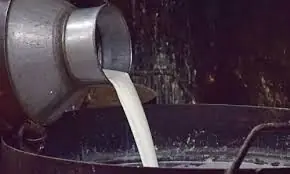
He said the Italian government had provided an automatic olive extraction unit, a machine that could extract oil from 500kg per hour. Before that, the PBOD only had an outdated machine that could extract oil from 50kg per hour.
He said that in the beginning wrong selection of areas without conducting any research had resulted in wastage of energies, but now he hoped that in the next five years or so they would be able to work on commercial lines and 50 per cent of requirement of edible oil would be achieved.
He said areas in the tribal region should be focused for olive cultivation. Efforts to introduce olive cultivation in Fata have been fruitless so far. Mr Awan said a plan had been prepared during the tenure of NWFP Governor Ali Mohammad Jan Orakzai for olive cultivation in the seven agencies, but the project hit snags after the governor was replaced.