0
0

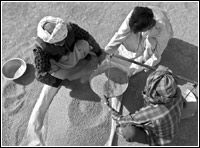 WHEAT availability is a vital component of food security. To take care of the shortage, the government has decided to import 2.5 million tons of wheat this year as the domestic production is lower than the national consumption. Out of 120 districts, only 48 produce surplus and the remaining suffer from deficits. In terms of availability, some regions like NWFP, Northern Areas and AJK etc., are prone to food insecurity.
In the given situation, the supply of wheat to food deficit areas is essential to overcome food insecurity. The government has to play its role to procure wheat from districts which are surplus and to distribute it in those districts which are deficient. Every year, the government procures wheat to build strategic reserves.
This year also, the government has directed its agencies to gear up procurement effort to acquire sufficient wheat stocks to avert any future crisis. So far, 1.8 million metric tons of wheat has been procured in Punjab, says Punjab Food Minister Malik Nadeem Kamran. To add to this, the food departments claim of having achieved half of the wheat procurement targets. In spite of all these tall claims, the overall situation looks to be grim in the wake of farmers’ reluctance to sell the commodity to the government.
Farmers’ reluctance is because of known reasons. The continuing floor crisis, enhanced by smuggling and resulting in inflated prices has made the farmers reluctant to bring their crop to the food department. The private sector is instigating the growers about future wheat price hype. So, every grower, who has the means, has the intentions to store at least half of the saleable produce to fetch good price in the future. Hoarding of wheat has become a norm for the past few years. The growers are told not to sell the yield at one time but in three to four installments to get maximum benefit.
Initially, there were hopes of better yield but untimely rain near the harvesting stage badly affected the wheat yield. A majority of the growers are harvesting between 30 and 40 maunds per acre. A lesser number of the growers has succeeded to get wheat yield of 40 to 50 maunds per acre. Last but not the least, the growers are alarmed at the wheat crisis of the previous year, and are building their own strategic reserves at micro-levels.
Therefore, there is no hustle and bustle at the official wheat procurement centres which used to normally receive heaps of the produce during this time of the season. But the government has also speeded its efforts to coerce farmers and millers to sell their excessive stocks to food department. For instance, the Punjab government has launched much essential anti-holding campaign in the southern districts. The campaign is to be run through patwaris, lambardars and tehsildars. However, the stakeholders have not welcomed the anti-holding campaign. Former federal minister Awais Ahmed Lehgari criticised the government’s policy and said that farmers were already under stress and such campaigns might create unrest among the rural community.
The government has to build wheat reserves to cater to the domestic needs. There is a need to curb wheat smuggling with iron hand. All routes of wheat smuggling should be plugged by deploying effective forces. It is wheat smuggling that dries up supplies to local markets and pushes wheat and flour prices up. The government should take the hoarders/speculators to task and compel them to stop hoarding. Hoarding also creates artificial shortages of wheat.
At the end, the government should gradually raise wheat prices to the international level because the growers pay international prices for inputs and get bank loans at much higher rates than available in the global financial market. For example, DAP has gone up to Rs4,000 and urea to Rs1,000 per bag, not to speak of rising pesticides and energy prices. The government has to focus on increasing crop yield.. The small farmers would be big losers if their rising cost of production is not compensated by hike in their crop prices.