



 0
0

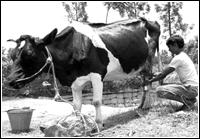 COMMERCIAL dairy colonies in Karachi as well as in other big cities are providing a better market for high-yielding buffaloes and providing job opportunities to rural as well as urban people.
Over two million buffaloes are kept by breeders in dams in commercial colonies in Karachi, Thatta, Badin and Hyderabad and in the surrounding areas. The job of breeders and commercial farmers are different. The breeders raise herds for dairy farmer where as, the latter produce milk for consumers of these cities.
Breeders with few dams are scattered in villages of Sindh and Punjab, and commercial farmers having larger number of dams are in bigger cities of Sindh as the requirement of milk markets in Karachi and dairy requirements of Balochistan depend on Sindh province, mainly Karachi.
Everyday commercial farmers of Sindh require about 3,000 to 3,500 high-yielding milch buffaloes, out of which 60-65 per cent are from Punjab and the rest from interior Sindh. About 90 per cent milch buffaloes are kept in colonies, along with three to four days calves, replacing an equal number of dry buffaloes from these colonies.
The dairy farmers to get maximum milk do not keep claves in their farms, as calves usually share 20 per cent milk of their mother reducing farmers’ income by the same percentage. Moreover, neither they have extra space to keep these calves nor they are trained to rear them.
On the other hand, no farmer is ready to purchase these calves as it is very difficult to rear them. The four to seven days calves are sold to butchers for slaughtering. The meat of these immature calves is without any taste, flavour and nutritional value and is also injurious to public health.
More than 80 per cent dry buffaloes are healthy and fertile with normal teats, while 10-15 per cent in infertile with mastitis, and fit to be slaughtered for beef. Other problem of the sector is the stock which is genetically low producing and underfed. To save these dry buffaloes and calves to avert heavy national losses, there is a need to ascertain the reasons and save the animals from being sold to butchers and this can only be done by proper planning.
It has been observed that commercial farmers are not interested in sparing these animals as they are short of space/land, and extra funds. It has also been assessed that farmers and unemployed people in rural areas are interested in raising herds, but they lack the required funds. Commercial banks and the government should provide loan to these people at nominal rate of two to three per cent as service charges. Every interested small farmer with agricultural background should be provided credit on recommendation of the union council nazim without any collateral. This can help develop dairy industry of the country and alleviate poverty of the rural masses.
Proposal: Hundreds of farmers in the eight districts of the dairy-herd breeding areas on both banks of the River Indus should be provided a credit of about Rs4,00,000 each for purchase and rearing of 10 dry buffaloes. The recovery should be started after 10-12 months in 24 easy installments. A credit of Rs3,00,000 be given for the purchase of 100 female buffalo/ calves of two months age to 100 framers, each in every eight districts of the dairy-farming area every year and the recovery should be started after four years in 24 easy installments.
A credit of Rs3,00,000 should be given for purchase of 100 tow-month-old male calves to each 100 farmers in the districts of arid and semi-arid areas and recovery be started after two years, in 12 installments.
Establishment of dairy farms with these farming communities, laboratories and high pedigreed breeding bulls together with fodder facilities are the requirements of the time and in the best interest of the dairy industry.
This project will bring a lot of development in the rural areas, specially in the drought-hit and backward areas providing jobs to unemployed people and reducing poverty of the masses. Production of milk and meat would increase keeping the prices of buffaloes and their products (milk and meat) under control and within reach of everybody.





























