



 0
0

 THE small and medium enterprises (SME) sector of the tribal areas bordering Afghanistan has a demand of more than Rs5 billion credit, whereas the banks have just lend Rs300 million or six per cent of the total requirement, according to a survey.
The survey findings, released recently in Peshawar, demonstrate a significant demand for the SME and microfinance lending products in the tribal areas.
In general terms, the SMEs are defined as enterprises with 1-250 employees (50 for trade) and assets up to Rs100 million (Rs50 million for trade).
In the survey, conducted by the Shore Bank International (SBI) in collaboration with the Tribal Area Chamber of Commerce and Industry (TACCI), the coverage has been extended to include light manufacturing operations and mineral extraction besides small shops and retail outlets.
Sizing the SME finance market, the survey reveals that the sector has almost 5,000 prospective borrowers.
Need assessment, as per survey findings, shows that the potential borrowers in category of medium to large SMEs desire loans averaging Rs7.8 million, whereas average demand of small shops and crafts is Rs900,000.
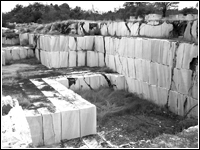
Identifying the potential areas of SMEs, the survey highlights that currently at least 400 marble extraction operations are in progress mostly in Khyber, Mohmand and Bajaur tribal regions.
Similarly, over 300 small textile weaving units are operating in the Khyber and Bajaur regions. These facilities use traditional handlooms and power looms, as they send items for finishing to Multan, and Gujranwala and then export them.
Likewise, Fata has more than 100 furniture manufacturing units, three major oil and ghee processing units employing 600 work force, 200 light manufacturing units including arms, stainless steel cutlery, kitchen wares, locks, metal sheets and containers and safes employing 37,000 people.
On microfinance side, the survey shows that demand of micro credit facility in tribal areas is more than Rs216 million, whereas the current supply is just Rs11 million or 0.8 per cent of the total demand.
According to the Prudential Regulations for microfinance banks, a loan cannot exceed Rs150,000, but in this survey, average loan sizes are assumed to be Rs8,000 but range between Rs30,000 to Rs50,000 for agricultural and trade sectors.
The survey shows that of the total population of 4.2 million, only 1,860 clients are receiving micro credit from the Khushali Bank and the ZTBL which makes coverage ratio at 0.8 per cent of the total market size.
According to the survey, the tribal areas have potential market portfolio of Rs216.35 million that can earn approximate annual revenue of Rs43 million.
Despite having such a vast demand from the SMEs and microfinance, there are currently no other bank, which have active branches in the tribal areas except the National Bank of Pakistan and the ZTBL, whose supply of credit and outreach into the tribal areas is very low.
In absence of formal lending facility by the commercial banks, the market gap is filled by informal moneylenders and Hawala dealers, who are active on the market and the level of credit supply by these entities is primarily in support of agricultural lending and shops.
The survey points out top five constraints to the growth of lending activities by financial institutions in the programme area. At the top of them is security.
An executive of a leading bank in Peshawar explains that situation in the two Waziristan agencies is comparatively more critical than in other tribal regions as all commercial banks have closed down their branches following repeated robberies and looting. Now these banks are operating from Bannu.
He was of the view that since there was not a single bank to offer services in the troubled tribal areas, their clients have to depend on illegal operatives, who offer their services at much lower cost than the banks.
According to him, the situation in southern districts of NWFP particularly Dera Ismail Khan, Bannu and Tank is not satisfactory. Thus they consider them as high risk areas.
An executive of another national level bank also argues that business of financial institutions is closely linked with commercial activities of an area, where they operate.
In his views, subversive activities in southern districts particularly in these three districts have badly affected business activities and it has a trickle down affect on the overall operations of the banks there.
According to him, branches of almost every bank in these areas are passing through a critical period both from security and business points of view.
On-time recovery of loans, higher operational and loan monitoring cost and lack of knowledge of micro and SME business in Fata are four other major constraints as identified by the survey. One of the prime reasons for these constraints is that financial regulations such as Recovery Act have not been extended to Fata.
The survey has also some recommendations for the financial entities, government and donor institutions to implement. Financial institutions have been suggested to address micro-entrepreneur and SME credit demand in Fata with targeted loan products and other financial services.
It has suggested intervention by banks, if possible, for identification and quantification of market segments, determining an appropriate lending approach and loan products, examining market for remittances, savings products and Islamic products.
Likewise, the banks also need to identify potential activities in mobile banks, branchless banking and new technology besides fund-raising, and aggressively seek capital for Fata expansion, the survey recommends.
The survey also recommends to the government to provide assistance to financial institutions as well as to SMEs directly in order to sustainable facilities access to finance.
The government can work within the existing Frontier Crimes Regulations (FCR) regulatory environment while providing additional protection to property rights of all parties.
Political agents and local government should support the process of facilitating security for loans, provide and arrange technical assistance to SMEs to qualify for loans and improve security and environment for them.
For donor institutions, the survey suggests that the donors should combine other elements of development initiatives (livelihood grants, food assistance).
The donors should not mix loans with grants, cash for work and other soft assistance and develop a long-term strategy to facilitate increased lending by sustainable institutions, the report concludes.





























