0
0

WASHINGTON, March 16: As the new parliament prepares to meet in Islamabad, policy-makers in Washington hope that the new set-up in Pakistan will retain the country’s position as a strong US ally in the ‘war against terror’.
US officials, in background briefings, stress that President Pervez Musharraf no longer enjoys a pivotal role in US policies towards Pakistan.
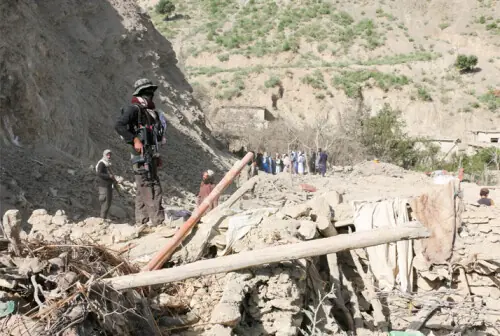
Instead, the focus is on the fight in the tribal areas, particularly Waziristan where Americans believe that Al Qaeda and the Taliban have established a safe haven and are supervising terrorist operations in Pakistan and abroad from there.
US intelligence officials also have noted that the militants have recently set up a hospital in North Waziristan called Zaqeem, where people injured while fighting US and Pakistani troops in Afghanistan and Pakistan are being treated.
At a recent congressional hearing, Secretary of State Condoleezza Rice said that the US hoped the new Pakistani government would continue military operations in the tribal region.
“I feel strongly that we’re in a better place about this than when they tried to make a deal essentially, some time ago, which I believe did not work,” she said. “And I believe the Pakistanis now understand that they have to take a different tack there.”
This spells out trouble for the new government which hopes to engage the militants in a dialogue to end the crisis.
But there is also a strong realisation in Washington that within Pakistan, the US needs to build up its relationship with political forces. This too, however, is linked to the US desire to fight terrorism.
“Successful American engagement with a stable and democratic Pakistan is vital to our national security interests,” says Deputy Secretary of State John Negroponte.
“Pakistan has been indispensable to our worldwide struggle against radical terrorist groups,” he said. “Without peace and stability on the Pakistani side of the border, success in Afghanistan will prove illusive.”
It’s the US emphasis on the war on terror that still causes some policy makers in Washington to wish to see President Musharraf continue, even if only as a titular head.
In their recent briefings, both White House and State Department officials referred to this new role for Mr Musharraf, saying that he would be a “ceremonial head of state” in the post-election arrangement in Pakistan.
Before the election, the Bush administration had publicly championed Mr Musharraf as an “indispensable” ally and even after the election President Bush telephoned his Pakistani counterpart to express his continued support to him.
The change in Washington’s attitude followed a post-election alliance between the PPP and PML-N, forcing US policy-makers to concede that it has depleted whatever political clout Mr Musharraf had after the election.
If some in Washington still want to see Mr Musharraf continue as a titular head, it is because US policy-makers feel that the presence of a general, even if retired, in the government is useful for the war against terrorists.
Diplomatic sources in Washington point out that it will be difficult for a purely civilian government to keep the army in the tribal areas for a long period.
The sources also note that no civilian government could have survived if more than 1,000 soldiers had been killed fighting the militants, as they did under the Musharraf government.
Strangely, some in Washington argue that Asif Ali Zardari is better placed to allow Mr Musharraf to continue as a ceremonial head of state than any other Pakistani politician and that’s why they predict they see the two working together in the near future.