0
0

ISLAMABAD, Feb 25: Speak-ers on Monday urged the incoming government to restore the pre-November 3 judiciary in line with the expectations of the electorates.
Speaking at a seminar on “New government and challenging facing it”, organised by the Pakistan Liberal Forum (PLF), they observed that the orders sacking the chief justice and around 60 more judges of the superior courts were unconstitutional.
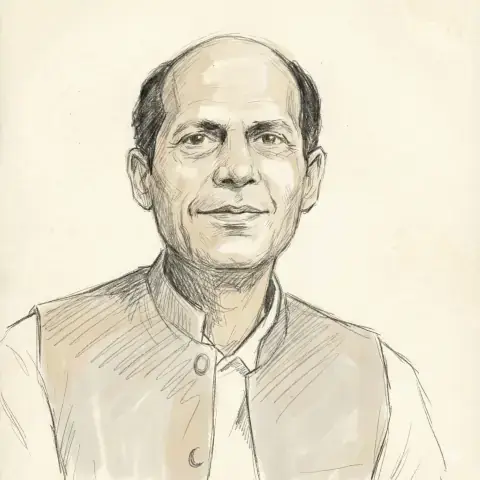
Former presidential candidate Justice (retired) Wajihuddin Ahmed said restoration of the pre-November 3 judiciary was inevitable.
“It is only question of time, but not question of much time,” he remarked.
Talking about the scenario after reinstatement of pre- November 3 judiciary, he said: “We would like a fair deal with those who took oath under the Provisional Constitution Order (PCO)”.
He said their cases should be referred to the Supreme Judicial Council. He said the people who were appointed as judges after November 3, despite the fact they lacked the qualifications required under the rules for appointment as a judge of the superior courts should cease to hold their offices and their names should not be considered for any future appointments in the judiciary.
He said the people of the country including the legal fraternity would rise if the judiciary was not restored.
Justice Ahmed said there were fears that the pre-Nov 3 judiciary, after its restoration, would give a verdict against President Pervez Musharraf, strike down the National Reconciliation Ordinance (NRO) and reopen the case of missing persons.
He said there were also reports about a package for an honourable exit of President Musharraf. He said many things would automatically settle, if Pervez Musharraf stepped down himself.
He rejected the figures of massive turnout in the general elections and said everybody knew that the ballot boxes were stuffed with bogus votes. He said there were certain areas where the number of votes polled exceeded the number of registered voters on the electoral rolls.
“But it is very clear that the people have spoken against Musharraf and in favour of an independent judiciary. They have voted for a change and better future,” he remarked.
Anees Jilani said the question at this stage was as to how the pre-November judiciary would be restored. “Is it to be done through an executive order or the parliament will do it,” he posed a question.
Jameel Abbasi said the coming government was not expected to fulfil its promises. He, however, said the public would mount pressure on it for doing so.
Pakistan Liberal Forum Chairman Asif Khan also urged the incoming government to take steps for restoration of the pre- November 3 judiciary, soon after coming into power.
He observed that suicide bombings in Pakistan would not stop unless the support for the US-led so-called war on terror was withdrawn.
Meanwhile, analysing the post-election scenario at another seminar, speakers said they saw a tough battle for new government amid heavy responsibility of people’s mandate.
Zafarullah Khan of the Centre for Civic Education (CCE), Harris Khalique of the Strengthening Participatory Organisation (SPO) and Dr Farzana Bari of the Quaid-i-Azam University, Islamabad, were the speakers at a seminar on “Beyond elections: Challenges and expectation” organised by the Sustainable Development Policy Institute (SDPI) on Monday.
Dr Abid Q. Suleri of the SDPI, while presiding over the proceedings, maintained that a number of questions and suspicions existed before the elections, but relatively free and fair elections had been held with a peaceful environment in which people had used a remarkable collective wisdom.
Dr Suleri said things still seemed hazy as whether people’s mandate would be saved from hijacking of international powers, restoration of law and order, and rule of law, economic revival, talibanisation and militarisation of the society were serious challenges ahead to the new government.
Talking of challenges, Zafarullah Khan believed that formation of a coalition government, marrying of domestic compulsions with international pressures especially war on terror, restoration of judiciary, rehabilitation of heavily dependent economy, sovereignty of the parliament, polarisation in the society and talibanisation would be key challenges to the new government.
He said the elections had been held in a peaceful environment despite all odds where ballot and brain prevailed, and now people of Pakistan were expecting good governance, tolerance, peace, coexistence and long-term political reforms to strengthen democracy and democratic process in the country.
Harris Khalique lauded the fact that people of Pakistan had given their verdict in the favour of liberal and secular political forces to lead them against serious challenges the country and the nation were facing today.
Mr Khalique identified numerous challenges that the new government had to wisely deal with, which included existing fiscal arrangement, donor dependency, restoration of democracy, law and order, and war on terror, lamenting that the previous government had not appropriately invested in energy, industry and agriculture sectors. These factors will be instrumental in huge price hikes and shortage of oil and power in near future, he said.
He also noted that elections were selectively rigged and peaceful contrary to the expectations that these elections would be massively rigged and full of violence. However, he urge the civil society for a renewed struggle, adding that it was not the end of struggle but a new start.
While taking of structural and internal challenges to the new government, Dr Farzana Bari urged realisation of the context and constraints in which the new government was going to be formed.
Talking of structural issues alone, she said Pakistan’s future role in the war on terror as a front-line ally and over- influence of international powers for the formation of government would prove to be crucial in the process.