



 0
0

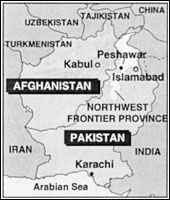 The proximity with Afghanistan and the Central Asian Republics (CARs). makes the NWFP a gateway to an emerging regional market. It has the potential to turn itself into a hub of transit trade and it can also supply consumer items to the landlocked countries.
Pakistan signed first-ever transit trade treaty with Afghanistan in 1965.The goods in transit to Afghanistan (Gita) are transported through wagons of Pakistan Railways (PR) and in trucks of the National Logistic Cell’s (NLC) from Karachi sea port to Peshawar from where they are shifted across the border at Torkham.
This cross-border trade has significantly increased over the years which benefits Pakistan in the shape of revenue from logistic services and NWFP in particular, in shape of thousands jobs. But the transport sector is marred by inefficiency resulting in delays, high costs and low reliability.
According to official estimates inadequate and inefficient transport system countrywide results in losses of four to six per cent of the GDP limiting economic growth and reducing export competitiveness. This include delays and high port costs at Karachi.
Haji Gul Afzal Shinwari, president Pakistan-Afghan Traders Group explains: “In normal conditions, 50-60 containers loaded with transit goods arrive daily at Karachi seaport, which are physically examined one by one. Since the port is short of required capacity, this exercise results in congestions at terminals, besides delays in their speedy custom clearance.”
He believes that up-gradation of the Karachi seaport with additional facilities is essential for improving the country’s logistic services.
The PR has been a main service provider since 1965 for movement of transit goods from Karachi seaport to Peshawar Dry Port from where they are sent across the border through private trucks. The PR’s annual freight business through transit goods is more than Rs480 million and it could increase manifold, if it enhances its capacity.
Traders say they need daily 40-50 wagons from Karachi to Peshawar, whereas actual availability is far less than the demand forcing them to opt for other costly options including the NLC.
Apart from non-availability of required wagons, safe transportation through PR is another issue, where the traders have many concerns. According to them, the PR is responsible for the safe and sound transportation of goods. But there are reports alleging organised pilferage of the goods on their way to Peshawar from Karachi which is managed without cutting the seals of containers. While no compensation is paid to traders for their loss, the customs charges full duty from them which is an injustice,” says a trader.
The NLC’s trucks are a costlier option as against Rs43000 per wagon fare of PR, the NLC charge Rs85,000 for carrying the same load via road.
A few years ago, the NLC was allowed to operate because the PR lacked the capacity to cater to the growing cross border trade.
Even though, NLC’s charges are almost double the PR, traders opt for it to avoid delays in transportation of their goods. According to them, the PR wagons take eight to 10 days to reach Peshawar, whereas the NLC trucks take hardly four days. But NLC also cannot fulfil the demand and traders had to wait for seven to eight days at Karachi to acquire sufficient number of trucks.
The NLC has limited capacity that is why it has acquired heavy duty vehicles from the private sector that carry transit goods on its behalf . About 80-120 trucks reach daily at NLC Amangarh (Nowshera) terminal.
Interestingly, the NLC offers logistic services for the last couple of years, but it has no written agreement with Afghan traders which creates numerous problems in routine operations of the service, explains Mr Shinwari. There is no legal framework that fixes responsibility for the maximum delivery period and clearance of claims in case goods are damaged or go missing on the way.
Likewise, NLC’s own fleet is dilapidated, as most of its vehicles are outdated which delays the delivery of goods. The trucks are also handicapped by poor highway conditions and weak highway management that cannot deliver the required levels of service.
According to official statistics, 44 per cent of the roads on this trade corridor are in poor condition, making the journey as slow as around 25 km per hour. The growing volume of the cross-border trade also requires a dry port equipped with modern facilities at Peshawar to ensure speedy clearance of goods.
Unfortunately, the dry port in Peshawar is also one of the victims of ad hocism, as a small portion of Peshawar Cantonment Railway Station is used as dry port which lacks required facilities.
On repeated demands of traders, the provincial government in 1986 allotted three small-size sheds at Peshawar Cantonment Railway Station and pledged for its further development as a dry port.
After that, Sardar Metab-led provincial government approved Rs20 million for establishing a modern dry port and allotted 64-acre land near Azakhel Payan G.T Road. This land was used by UNHCR during Afghan War and had storage infrastructure for goods.
Unfortunately, the project was forgotten after dissolution of that government. Traders however till want a dry port to be set up at Azakhel Payan to boost the transit trade. PR’s recent approach to establish new dry ports on the basis of public private partnership is being offered as an alternative.
The caretaker Minister for Railways, Mansoor Tariq in a meeting with traders in Peshawar clarified last month that financial health of the PR doesn’t allow investing money in such projects. Annual financial losses of the PR, he says, are in billions that is why it restraining itself from going into such projects. He argues: “Traders should come forward and make joint venture for establishment of a new dry port at Azakhel for which the PR will provide land.”
On the other hand, the NLC has recently built a terminal at Jamrud, just 35 km away from the Torkham border. But traders have many reservations over shifting of this business from Peshawar and Amangarh station of NLC to tribal region on account of prevailing security situation and lack of facilities there.






























