0
0

MAKHACHKALA (Russia): Smart cars purr along the streets of Moscow and French chefs run glitzy restaurants in thriving Russian mining towns, but in the impoverished regions of Ingushetia and Dagestan people live on a few dollars a day.
Eight years of oil-backed economic growth under President Vladimir Putin have failed to touch these volatile regions in the North Caucasus and they are likely to pose a major challenge for Dmitry Medvedev, the man Putin wants to succeed him.
Grinding poverty and anger over the tough tactics used by Moscow to quell a rebellion in neighbouring Chechnya, have alienated the region’s Muslims. Violence is growing, including killings and kidnappings.
“The problem is not Chechnya any more,” said Alexei Malashenko at the Moscow office of the Carnegie Endowment think tank. “Medvedev will encounter serious problems in Dagestan and Ingushetia.”
Opinion polls show Medvedev, a first deputy prime minister, will win Russia’s presidential election on March 2 by a landslide. In campaign speeches he talks about improving the lives of ordinary people and continuing Putin’s policies.
But the problems he is likely to face in Ingushetia, which has a population of 450,000, and in Dagestan, where there are 2.5 million people, will not be easy to tackle. Besides killings and kidnappings, they also include unemployment and power cuts.“Show us who is doing the killing and why,” said Khadizhat Salikhova, a nurse in Makhachkala, the capital of Dagestan.
Without electricity and stamping her feet in the cold as daylight faded, she said: “Give us light — I have already spent all my salary on candles.”
In the rolling, green foothills of the Caucasus mountains, witnesses say Russian soldiers have cordoned off villages to search for rebel fighters and that jets have carried out bombing raids.
Russia sent troops to Chechnya in 1999 to put down a separatist rebellion and has poured in millions of dollars to rebuild the province under a Kremlin-backed former Chechen rebel, Ramzan Kadyrov.
But the Chechen rebels have shifted their targets to Ingushetia and Dagestan where softer, traditional forms of Islam are losing ground to more radical versions of the faith.
“The ideology of the separatists is an enormous problem for the Russian authorities,” Akhmet Yarlykapov, a researcher at the Russian Academy of Sciences, wrote. “Today they are not fighting for independence ... but for the destruction of the ‘infidel empire’ as they call Russia.”
Rebel car bombs and ambushes strike weekly in Ingushetia.
Half the population of Ingushetia have signed a petition denying voting in Russia’s parliamentary election on Dec 2 despite an official turnout of about 99 per cent. Almost all the votes recorded went to Putin’s political party, United Russia.
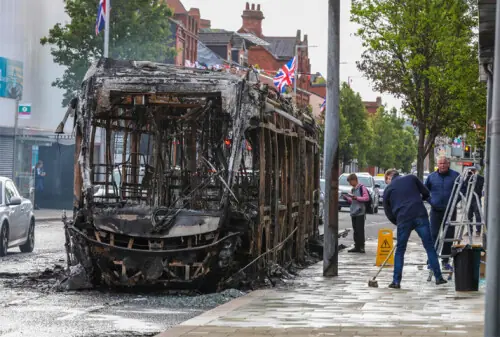
Frustration boiled over and about 30 young men, armed with petrol bombs and sticks, rioted last month in the city of Nazran. Scorch marks now scar a main square and the offices of a pro-government newspaper are now a burnt-out shell.
Moscow sent thousands of extra soldiers and tanks to Ingushetia last year to quell what it described as a surge in rebel attacks. Last month the Russian military declared Nazran an “anti-terrorist zone”, restricting movement in and around the town before the rally.
Police have beaten journalists covering the demonstrations and confiscated their equipment, foreign reporters have problems accessing information and organising visits, and the local authorities have shut down the main opposition website. But residents say they now have no choice but to protest.—Reuters