0
0

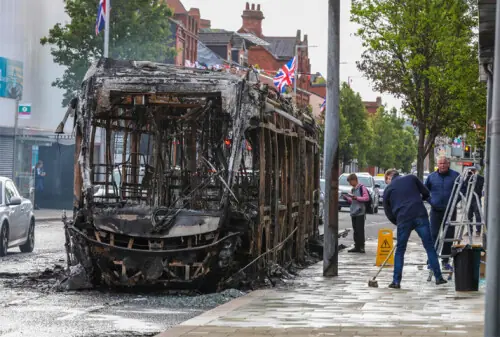
HURUMA SLUM (Kenya): A politician’s fire-blazed portrait in the middle of a rocky street now marks the border between tribes in a tense Kenyan slum.
The picture is of opposition leader Raila Odinga; the road is now called Odinga Street. Odinga was a contender in Kenya’s presidential elections that erupted into violence last month.
President Mwai Kibaki was re-elected in a race the opposition alleged was rigged. Riots, mass looting, protests and ethnic killings swept the country in the poll’s aftermath.
Around 800 have been killed and a quarter of a million uprooted.
In Huruma shantytown, hacked bodies of Kenyans littered the dusty streets as differing ethnic groups burned each other’s homes and shops in a brutal showdown.
The face-off continues.
On one side of the portrait, members of Kibaki’s Kikuyu tribe reside and conduct their daily business. Locals call the area Othaya, the name of the president’s hometown in the Kikuyu heartland of Central province.
On the other side of the slum, members of Odinga’s Luo tribe have taken up residence. The area is called Siaya, after Odinga’s place of birth.
“This is a stronghold of the Kikuyus,” says student David Omore, 22, sweeping his hand over abandoned apartment buildings and people milling around wooden vegetable stalls.
“People used to intermingle, but then the election results stopped that.
The Kikuyus started celebrating and the Luos became angry,” Omore said.
“There was bloodshed, burning of houses. People were hacked on both sides.” Omore pointed to a bridge deeper in the slum that now doubles as a barrier in the divided neighbourhood. “You go at your own peril.” Residents say that Kikuyus traditionally owned the shops, restaurants and apartment buildings in Huruma before the election, while Luos rented from the group.
After the election, thousands of Luos fled the Kikuyu-owned buildings to squat in empty flats on the other end of the re-named Odinga Road.
“We used to live on the other side, but some Kikuyu guys came two days after the elections to attack us,” said artist Judith Akinyi, 23. “They cut people, they burned and they stole.” Akinyi is standing just metres away from the infamous portrait.
Behind her, muddy waters seep under a row of faded-coloured shacks. Children play with a rusty wheelbarrow.
“They said they don’t want Luos here, they want us to go back where we came from,” Akinyi said.
“It’s very dangerous for me to cross the border; they will harass and attack me. They ask, ‘Which tribe are you?’”
Kenyan economist Robert Shaw says long-simmering economic tensions fueled the slum violence and consequent divide.
“There was a lot of loss of property on both sides and an increasingly mutual distrust,” Shaw said. “Kikuyus are much more mercantilist than other tribes. They tend to have a larger stake of the economy.” The ethnic clashes were partly social and partly economic, Shaw said. “It was a reaction against Kikuyu hegemony.”
Popular protest phrases such as “Don’t pay your rent!” actually meant for Luos and other groups not to pay Kikuyus rent.
Kibaki has been accused of favouring Kikuyus — which is the country’s largest tribe but represents only a quarter of the Kenyan population — with plush jobs, land and other economic privileges.—AFP