



 0
0

Karachi’s local colour
 It is often said that the mood and colour of classical Persian poetry is general rather than specific and this, in turn, influenced Urdu poetry. Our poets, the lament goes, would sing of a place that could be anywhere in the world; they would celebrate a flower – any flower – but not name it and capture its locale. Since specifics are missing from our literature, it is about generalities and no great imaginative writing is about generalities, goes the argument. It ought to be specific, breaking through the limitations and prejudices. On the contrary, the critics say, one finds specific references to places and cultures in English literature, or any other literature for that matter.
As if this were not enough, also mentioned in the litany of complaints is that if an Urdu poet ever named a flower or a bird, it would most probably be not a local one but a variety of Iranian origin. Some critics go the extent of saying that Urdu poetry sings of flowers that don’t even grow in the sub-continental soil; that the poets had merely read about them in Persian literature and talked of them only in imitation of Persian poets.
As today’s column is not about debating such premises, I will not venture into this argument. While we cannot reject such claims totally, there has never been a dearth of writers in Urdu who intentionally or unintentionally capture the local colour and depict the locale, customs, sub-cultures, dialects and peculiarities of a specific place and atmosphere.
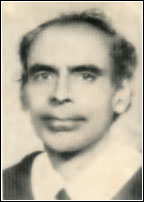
If you name a few authors in modern Urdu literature that successfully captured local colour, made a place come alive and then preserved it for ever in their writings, you cannot miss Mohammed Khalid Akhter. His picaresque novel Chakiwara Main Visaal has immortalised Chakiwara, a Karachi slum situated in the Lyari area. His humorous stories based on the comic character Chacha Abdul Baqi are also set in Karachi and constitute a subtle satire on the commercialised and crooked thinking of some of the people in the metropolis. (Being a Karachiite, I would say that such people can be found anywhere in the world and no offence is intended.)
Chakiwara Main Visaal is a result of Khalid Sahib’s stay in Karachi during the early fifties in the century past. A keen observer and a romantic in essence, Khalid loved Chakiwara, the shanty town of the port city that was then the capital of Pakistan and a melting pot of sub-cultures. With the Baloch and the Makrani as the predominant inhabitants of the Lyari area, other parts of the city were teeming with Muhajirs, speaking slightly different varieties of Urdu, and ethnic groups such as the Memons and the Bohras and, of course, people coming from other parts of the nascent country, all speaking a different language and struggling to eke out a living.
Mohammed Khalid Akhter’s portrayal of Chakiwara – and Karachi – is a bizarre mixture of love and hate. He used to call himself a ‘disciple’ of Robert Louis Stevenson and immersed himself in the latter’s highly imaginative, mysterious and descriptive novels. Khalid Sahib has written that he used to take a tram – which do not ply in Karachi any more – to Chakiwara and marvel at the cultural diversity. To him, the entire area appeared to be shrouded in mystery, beauty and romance. The descriptive English novels he loved so much were an inspiration and Chakiwara and its weird characters – pseudo-medical doctors, fake witchcraft practitioners, so-called professors and lovers – were a novel in themselves, just waiting to be written down.
Dismayed by the abject poverty and filth of the locality, Khalid is nevertheless enticed by the culture, amused by the characters, bewitched by the mystery and just loves to be there. His satire, social criticism, sympathy and ridicule have made the novel a caricature of Chakiwara. He has written it so elegantly that Faiz Ahmed Faiz said Chakiwara Main Visaal was his favourite novel.
 The stories of Chacha Abdul Baqi depict another face of Karachi: commercialised and full of scheming Seths waiting for a simpleton like Chacha Abdul Baqi and his nephew Bakhtiar Khilji to fleece. While these stories make good reading and at times make you laugh, they capture the locale too, naming areas such as Boultan Market, Elphinston Street, West Wharf, Kharadar and Jodia Bazar, addressing at least some of the grievances of those who look for local colour in Urdu literature. One gets the feeling that Khalid Akhter intentionally tried to record Karachi’s atmosphere and aura; perhaps it was an influence of the western literature he was so fond of.
Such influence can be traced in his other works as well as in his language that sometimes feels ridden with literal translations of English idioms, expressions and phrases. As he has admitted, he used to think in English and then commit the thoughts to paper in Urdu. His novel Bees Sou Gyara (2011) was inspired by George Orwell’s Nineteen Eighty Four. As it is Urdu’s first political fantasy, this satirical novel pokes fun at the two newly created nations of the Indo-Pak sub-continent for what Khalid perceived to be a religiosity and nationalism embracing fascism. Makateeb-e-Khizr is a burlesque of Ghalib’s letters, successful to some extent in emulating the style of Ghalib’s inimitable prose.
Mohammed Khalid Akhter was born on January 23, 1920, in a town named Ilahabad in Bahawalpur state. He got his early education in Bahawalpur’s Sadiq High School where Shafeeq-ur-Rehman, the renowned humorist, was his classmate. He met Ahmed Nadeem Qasmi at college and the two luminaries remained his best friends until the very end.
After obtaining a degree in engineering in 1945, he briefly taught English at a school in Diplo, Tharparkar. For a post-graduate training, he left for England in 1946 and returned after about a year and a half. In 1949, he got a job as an electrical engineer in a Karachi firm and that was when his romance with the city began. After retiring from Wapda in 1980, he settled in Karachi where he died on February 2, 2002.
His other works are Khoya Huwa Ufuq, Do Safar, Yatra, Laltain Aur Doosri Kahaniyan and Ibn-e-Jubair Ka Safar.
Mohammed Khalid Akhter was a satirist who was pained to see human suffering. He was a romantic who dreamed of mysterious and exotic places and travelled from the deserts of Thar to the valleys of Kaghan to the narrow alleys of Chakiwara, finding joy in these strange places and capturing it for his readers who, like him, love local colour.
– drraufparekh@yahoo.com
A murder of passion or not, it was still scary
 THE murder of a taxi driver this month sent a scare among the cab drivers of Islamabad and Rawalpindi that taxi snatchers who kill their prey were back in business.
Memories of colleagues killed for their cabs during the past two years were still fresh in their minds. However the fear that killers of taxi drivers were again on the prowl dissipated somewhat after the family of the latest victim suspected it was a murder of passion.
Twenty-eight-year-old Mohammad Nisar of Dhok Saydan went missing on January 20. His brother Mohammad Iftikhar’s search for him ended the next day when his bullet-riddled body in his taxi was found abandoned in Jhangi Saydan area.
Iftikhar alleged that the former owner of the taxi and his brother’s wife were behind the murder.
According to him Nisar had married four years ago. He got suspicious of his wife’s character when she delivered twins after six month. As a result the couple developed difference and later she moved to her parents’ home. The ex-owner allegedly started forcing Nisar to divorce his wife but he refused.
Police booked the wife and the ex-owner of the taxi for murder. Its preliminary investigations suggested the motive was family dispute.
While police was investigating, the murder of Nisar revived the memories of the seven taxi drivers murdered during 2006 and 2007 and sent a scare in the community. To this day they are afraid of picking passengers for rural and suburban areas of the capital at unearthly hours.
Two of the seven taxi drivers were found murdered in Dhok Mughlan and Sarai Kharbuza localities in the jurisdiction of the Golra police station, and others near Carriage Factory, Chand Sitara Chowk, Dhok Abdullah, in Sector I-14 and Shahzad Town. The Golra police have solved both the cases and arrested four persons for snatching taxis and murdering their drivers. One taxi was sold in Nowshera and the other in Hangu. Police have arrested the buyers of the stolen taxis also but could recover only one taxi as the other was dismantled.
Likewise, the culprits who stole the taxi from Shahzad Town were also arrested but the police failed to recover the vehicle.
Most taxi drivers who ply their trade at night prefer to transport families only, and within the city limits. Some of the part-time taxi drivers are said to have left the profession.
Europeans unsure if Sarkozy is ready to lead EU
Forget serious European Union business and the dismal state of the world economy: for most of the opening weeks of 2008, the EU agenda has been dominated by the very public, jet-setting romance between French President Nicolas Sarkozy and his new flame Carla Bruni, a glamorous singer/model who looks set to become the country’s new first lady.
Sarkozy has also been making headlines on other fronts. In a speech on New Year’s eve, the French President waxed lyrical about a “policy of civilisation” before marching off the Middle East to sell nuclear weapons. He then headed back to Paris to host former British prime minister Tony Blair at a meeting of the French centre-right ruling party where he backed his British guest’s ambitions to become the first-ever EU “president”.
With France also set to take up the EU’s rotating chairmanship for a six-month period starting in July, it certainly looks like 2008 will be the “Year of Sarkozy”. However, while the French leader is certainly ready and eager to take over the reins of power at the EU, many Europeans aren’t too sure they want the energetic but often erratic Sarkozy to cast too long a shadow over the 27-nation bloc.
Tackling Europe’s many challenges requires serious, hard work on many fronts, say EU policymakers. First of all, the new EU reform treaty, finally signed and sealed last year by the bloc’s leaders, has to be submitted to parliaments for ratification. Crucially, the treaty will be the subject of a referendum in Ireland. Under EU rules, the blueprint — designed to streamline EU decision-making — can only enter into force if it is ratified by all 27 member states.
Second, while the EU is keeping its economic jitters under control, the
European Commission has warned that economic growth is set to slow down substantially in the coming quarter. Both Joaquin Almunia, the EU’s monetary affairs commissioner, and Slovenian Prime Minister Janez Jansa, whose country has just taken over the rotating presidency of the EU, say financial market pressures as well as surging oil and food prices will impact negatively on the EU and the eurozone in the months ahead.
EU diplomats are also working hard to secure a satisfactory independence deal for the breakaway Serb province of Kosovo, inject more momentum into efforts to secure Middle East peace and press harder for domestic and international action to fight global warming.
For the moment, however, it’s Sarkozy’s distinctive silhouette that looms large on the EU horizon. And while the public is clearly most transfixed by the president’s public displays of affection, breaking with France’s tradition of steering clear off leaders’ love lives, his political style and agenda are also drawing comment.
While the “Sarko-Bruni” affair continues to dominate the covers of France’s celebrity magazines, serious newspapers warn that the president is paying more attention to his love life than to affairs of the state. Increasingly, also the French public has begun to criticise the president for taking his eye off the job, prompting Sarkozy’s popularity index to tumble into negative ratings for the first time this month.
The problem is three-fold, say critics. The president’s love affair with the unpredictable Bruni — who has come out publicly against monogamy — comes just three months after his divorce from his second wife Cecilia. Many say this is too hasty, indicating that the president may take equally rushed decisions when dealing with issues related to the state.
Second, Sarkozy’s passion for ostentatious living and luxury consumer goods — he loves expensive watches and Bruni is now seen sporting a massive ruby ring, a gift from the president — is seen as embarrassing in a country where jobless figures remain high and many complain about the rising cost of living, including food items.
Third, the president is accused of deliberately using his romance to distract from the country’s economic troubles. Critics say the “hyperactive” French leader has yet to show any real domestic achievements. Last year’s tax cuts, labour law, pension and university reforms require sustained action in 2008. And few have any time for his “policy of civilisation,” viewing it as another distraction. While the French fret over their president’s love life, it’s Sarkozyy’s active promotion of Blair as the first full-time president of the reformed European council — a post created by the new reform treaty — that is causing as much concern in other European capitals.
Sarkozy first floated the idea of President Blair last year. But his decision earlier this month to invite the former British premier to address a French political rally — a task Blair fulfilled in French — was a strong signal to the rest of Europe that the French leader means business.
Blair himself is believed to be unsure whether he wants the job. Diplomats say the new EU post will be largely ceremonial and will involve little more than chairing meetings and hammering out complex compromises. However, if the president is Europe’s representative in the world, with authority not just to manage but to set the agenda on issues such as European defence and international trade, Blair could be seriously tempted.
That is just what EU officials fear, however. A representative of Euro-sceptic Britain should not be rewarded with such a top job, say critics. Instead, many believe that the post should go to Jean-Claude Juncker, the long-serving and pro-European Prime Minister of Luxembourg.
While Sarkozy clearly needs to consult no one about his future with Bruni, EU officials point out that thankfully for all his clout in Europe, the French leader needs the support of all 26 of his European counterparts on the appointment of Blair as the bloc’s president.
| © DAWN Group of Newspapers, 2008 |



























