0
0

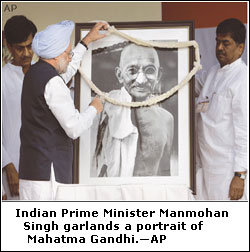 NEW DELHI: Some of the final ashes of Mohandas Gandhi, the apostle of non-violence, who helped found modern India, will be scattered in the Arabian sea following intervention by his descendants to prevent a museum displaying them.
A small steel urn holding the ashes was sent to a Gandhi museum in the Indian port city of Mumbai last year by a businessman whose father had preserved the remains. The political and spiritual leader, given the title Mahatma but whose full name was Mohandas Karamchand Gandhi, was shot dead by a Hindu hardliner in 1948 while walking to a prayer meeting in New Delhi.
Gandhi’s family appealed to the museum to forgo its planned memorial focusing on non-violence and instead scatter his ashes at sea off Mumbai’s coast on Jan 30, the anniversary of his death.
Dhirubhai Mehta, vice-president of the Mani Bhavan Gandhi Sangralaya, said that the museum had thought of displaying the ashes but it would “respect the family’s wishes”. It was “the right thing to do”, he said. Hindus cremate those who have died and generally scatter the ashes in rivers or the sea after 13 days. All of Gandhi’s ashes were meant to have been immersed in the River Ganges in February 1948 but many of the urns were secreted away by followers determined to glorify him in death. As he was killed before the age of television in India, Gandhi’s ashes were sent to towns and villages across the country for memorial services. Some simply never returned.
“When Baapu died, Lord Montbatten (India’s last viceroy) had also suggested embalming Gandhi so he could lie in state, but the family was against it,” said great grandson Tushar Gandhi. “I am very happy that the museum has accepted the family’s wishes.”
He added that the urn was the property of a Dubai-based businessman whose family had known the Indian leader but who had given it to the Mumbai museum after realising the ashes could not leave India. There were at least two other urns with Gandhi ashes on display. One was in the palace of the Aga Khan, leader of the Ismaili sect of Islam, in the southern Indian city of Pune, the other in a Hindu ashram in California. Both he said were now “enshrined” and should be left alone.
“Taking these out would require breaking the shrines which the family does not want. I hope there are no more out there. The family is aware that the ashes could be misused by politically motivated people and damage the Mahatma’s name.”—Dawn/Guardian News Service