



 0
0

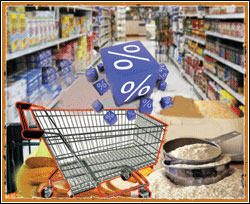 Long queues at the Utility Stores may not be a passing phenomenon; they are likely to become a usual scenario. Perhaps, they are the harbinger of the coming era of dearer food.
This is so because the prices of wheat and other food commodities which rose recently are unlikely to come down. They are poised to go up further in the months ahead and stay high for long unless a radical policy intervention brings them back. That this is a worldwide trend as well is another thing. The prices of flour have already registered a 46 per cent rise in Pakistan since January this year. Reports say a huge quantity of flour, about 2.2 million tons, is being exported to Afghanistan this year. It was 0.6 million tons last year. How will it impact on the availability of wheat in the country is anybody’s guess, for wheat supply has already been mishandled. It means shortages are not the problem, price, priorities and management are.
What is tragic is that the poor waiting for their turn in the endless queues at the Utility Stores –– now described as one of the channels of high corruption in Pakistan by Transparency International for catering more to ‘proxy’ buyers –– have nowhere to go if turned back empty-handed. And in the days ahead their numbers are likely to swell after they are joined by many from lower middle class sections. It is becoming difficult for them to buy these essential commodities, which constitute 60-80 per cent of their budget, at market rates. The current difference between the official and market rates is roughly a hundred rupees for 10kg bag.
Then, it is depressing to note that the poor consumer’s decreasing capacity to pay for food is no more at the heart of public policy. The poor, the rural poor in particular, are fast becoming less relevant. The recent disappearance of wheat flour only to reappear later at a higher price in many cities was an alarming event. But for the establishment, as also stated by the president himself, what is problematic is the ‘lowness’ of Pakistani wheat’s price in the region which attracts its smuggling into neighbouring countries.
Only if wheat was high-priced, there would have been little problem. An increase in support price of wheat is, thus, considered the usual remedy, although it hardly reaches the peasant who produces the crop; it only benefits rich farmers, middlemen and exporters.
The Economist, London, in its December 6 issue, says the era of cheap food that began in 1974 and continued till 2005 has finally come to an end. In this period, food prices on the world markets fell by three quarters. The result is that food has been so cheap “that the West is battling gluttony as it scrapes piles of half-eaten left-overs into the bin.”
In the West, wheat prices have now doubled since spring and almost every crop is at or near a peak in nominal terms. The Economist’s food-price index is higher today than at any time since it was created in 1845. Even in real terms, prices have jumped by 75 per cent since 2005. No doubt, farmers will earn more from higher prices, then invest more and produce more, but dearer food is likely to persist for years.
And this may be too tempting for traders in a developing country like Pakistan to export wheat in larger quantities to the US and Europe at competitive prices, rather than sell it cheaper at home. It will be a rare opportunity both for the state and the private sector to make a killing. The government has already lifted the ban on wheat export but after imposing a 35 per cent duty on it which is hardly a deterrent. The flour mills owners say that export of wheat even after this duty is much profitable; they would still save up to 100 dollars per ton.
The government had placed a ban on export of wheat in May after its market price began going up. The earlier decision to allow its export was based on a miscalculation by the government about the size of the crop which reports said was about 23 million tons. When shortages hit the market, the same wheat was bought back at much high prices. Now again, it is being allowed to be exported. It seems ‘export’ is too sacred an activity that human concerns can be sacrificed for promoting it. Keeping wheat at safe stores or imposing strict price controls are a reluctant activity. The price controls on staple foods, which were in short supply, in Venezuela and Russia on the eve of their referendum and parliamentary election respectively were logical responses to the end of cheap food.
The Economist says that in September this year the world price of wheat rose to over $400 a tonne, the highest ever recorded. Though in real terms its price is far below the heights it scaled in 1974, it is still twice the average of the past 25 years. Earlier this year the price of maize (corn) exceeded $175 a tonne, again a world record. It has fallen from its peak, as has that of wheat, but at $150 a tonne is still 50 per cent above the average for 2006. As the price of one crop shoots up, farmers in the West plant it to take advantage, switching land from other uses. So a rise in wheat prices has a determining effect on other crops. Normally, higher food prices are the result of scarcity caused by crop failurer other factors. Here, what is so amazing is that record prices are occurring at a time not of scarcity but of abundance. According to the International Grains Council, a trade body based in London, this year’s total cereals crop will be 1.66 billion tonnes, the largest on record and 89 million tonnes more than last year’s harvest, another bumper crop. It means something fundamental is affecting the world’s demand for cereals.
The economists see two factors behind it. One is increasing wealth in China and India which is stoking demand for meat in those countries, in turn boosting the demand for cereals to feed to animals. Higher incomes in these two countries have made millions of people rich enough to afford meat and other foods. In developing countries as a whole, consumption of cereals has been flat since 1980 but that of meat has doubled. Since this change in diet has been slow, it may not explain the dramatic price movements of the past year.
However, the second factor may do. It is the rampant demand for ethanol as fuel for American cars. In 2000, around 15 million tonnes of America’s maize crop was turned into ethanol; this year the likely quantity is 85 million tonnes. Though America is the world’s largest maize exporter, it now uses more of its crop for ethanol which is the dominant factor in this year’s increase in grain prices.
If prices do not fall back, this will mean a break with the past. For decades, prices of cereals and other foods have been in decline. The IMF’s index of food prices in 2005 was slightly lower than it had been in 1974. In other words, if food prices stay more or less where they are today, it would signal a radical departure from a past in which buyers and farmers got used to a decline in food prices. It would put an end to the era of cheap food. And its effects would be felt everywhere, but especially in developing countries where food matters most. Pakistan may be critically affected for reasons of poor public policy and greedy traders.
Several countries have resorted to food price controls of some sort. Argentina, Morocco, Egypt, Mexico and China have put restraints on domestic prices. A dozen countries, including India, Pakistan,Vietnam, Serbia and Ukraine, have imposed export taxes or limited exports in an attempt to protect their people.
Meanwhile, the new phenomenon is expected to facilitate a shift in the balance of power in the world economy further towards emerging markets. Although higher food prices have increased inflation around the world, it is not so in the West. In Europe and America, food accounts for only about one-tenth of the consumer-price index. In poor countries, food accounts for half or more of the consumer-price index. Inflation in food prices in emerging markets nearly doubled in the past year, to 11 per cent. In Pakistan, inflation and GDP growth are basically food-driven. The growth in America and Europe is slowing; in China and India it is accelerating. Financial confidence in the West has been shaken by the subprime-mortgage crisis; capital flows into emerging markets are setting records.
The Economist is of the view that this shift will be tricky to handle for such transitions always are. The risk is of a bubble in emerging markets. As Simon Johnson, the IMF’S director of research, notes, “every bubble starts with a change in the real economy.” Food markets are an obvious place to start. How emerging countries fare—and how poor consumers cope—depends on their economic policies.





























