0
0

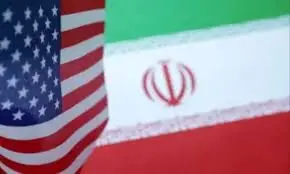
US must change its Iran policy
FOR the past seven years Iran has remained a permanent fixture on the Bush administration’s radar screen. No other issue has caused greater heartache to the policy planners in Washington. Even while finalising its plans for the invasion of Iraq, the Bush administration was working on bringing about a regime change in Iran, which had been designated a member of the ‘axis of evil’.
If in the case of Iraq the driving motive was to destroy the last potential Arab threat to Israel and to gain control over its huge oil resources, Iran aroused altogether different emotions. Apart from concern over an increasingly assertive Iran, the US has neither forgotten nor forgiven Tehran the slights and insults that the Islamic Republic is accused of having caused it.
In the midst of this crescendo of charges against Tehran, the US National Intelligence Estimate that was released last week contained a real bombshell. Two years after the last NIE had claimed “with high confidence that Iran currently is determined to develop nuclear weapons despite its international obligations and international pressures”, the 2007 NIE report compiled jointly by the US’s 16 spy agencies claimed “with high confidence” that the military-run programme was shut in 2003.
The report concluded “with moderate confidence” that the programme had not restarted as of mid-2007.
Thus, in one stroke, the report trashes much of the rationale behind the US campaign for a third round of UN sanctions on Iran. Not surprisingly, the Bush administration was disappointed but refused to be apologetic. Instead it took credit for the change in Tehran’s policy, with National Security Adviser Stephen Hadley claiming that it was US pressure that made Iran reverse course.
This notwithstanding, the NIE revived memories of the embarrassment caused when US assertions about Saddam Hussein’s weapons of mass destruction, advanced as a major justification for the invasion of Iraq, turned out to be false.
Not surprisingly, the Democrats, desirous of appearing bold on national security issues though sceptical about Bush’s unilateral approach to international issues, could not but welcome this intelligence reversal. Senate Majority Leader Harry Reid pointed out that now “the administration could not rush this Congress and the country to another war based on flawed intelligence”, a view echoed by political analysts including Jon Wolfsthal of the Centre for Strategic and International Studies who remarked that the report “is not the time bomb that the administration made it out to be for the last several years”.
This NIE is likely to have an impact on many fronts, starting with the administration’s credibility at home where it will now be difficult to push for a war with Iran. Bush critics are recalling that less than a year ago, the then intelligence chief, John Negroponte, had told Congress that “Iran is determined to develop nuclear weapons.”
Even more ominously, Bush warned on Oct 17 that “if you are interested in avoiding World War III, it seems like you ought to be interested in preventing them from having the knowledge necessary to make nuclear weapons”.
Asked if he definitely believed that Iran wanted to build a nuclear bomb, Bush said “yes, I believe they want to have the capacity, the knowledge, in order to make a nuclear weapon”. Bush’s claims notwithstanding, a tougher UN Security Council resolution is virtually out, as noted by Daryl Kimball, executive director of the Arms Control Association who stated that “the report will make it more, not less difficult, to get UNSC support for tougher sanctions”.
The International Atomic Energy Agency, long accused of being ‘soft’ on Iran, will also feel vindicated. Its chief, Mohamed ElBaradei, was quick to point out that the NIE tallies with the IAEA’s statements that although Iran still needs to clarify some aspects of its nuclear activities, the agency has “no concrete evidence of an ongoing nuclear weapons programme or undeclared nuclear facilities in Iran.”
Tehran, of course, reacted to the report with relief, with Foreign Minister Mottaki remarking that it proved “that the current trend of Iran’s nuclear activities is peaceful”. President Ahmadinejad also called the US report a “great victory and vowed never to yield to western pressure”.
But Bush is nothing if not stubborn. Rather than admit that his administration was basing policy on flawed intelligence he went on the offensive, reiterating that “Iran was dangerous, Iran is dangerous and Iran will be dangerous if they have the knowledge necessary to make a nuclear weapon”.
The NIE has, nevertheless, been greeted with relief in major capitals, which expect it to ease some of the tension over this issue. China, sceptical about the US approach to Iran’s nuclear programme, made it clear that the NIE report will have a deep influence on UNSC deliberations. Russia, already at loggerheads with the US on a host of issues, reacted with caution, impressing on Iran that its nuclear programme should be “transparent” but, significantly, going ahead with dispatching the first consignment of nuclear fuel for Iran’s first atomic power station.
Both countries also welcomed the report as the harbinger of better things. After all, Iran is a rising power in the region, with the world’s second-largest oil reserves as well as huge deposits of natural gas. Both Beijing and Moscow have made massive investments in Iran’s energy sector and wish to forge close and cooperative ties with Tehran.
Moreover, Iran has conducted its diplomacy with great skill and acumen. It is well positioned to help or hurt US objectives in Iraq and across the Middle East. While publicly heading a ‘rejectionist front’, it has calibrated its policy so as not to impinge on core US strategic interests. A Shia state, it has taken care not to differentiate between Sunnis and Shias.
In fact its support to Hamas (a Sunni organisation), as well as Hezbollah in Lebanon, has earned it kudos with the Arab masses, though the leaders have tried to stress their sectarian rather than policy disagreement with Iran.
The latest US intelligence fiasco points to the need for a major policy shift by the US on the issue of Iran. Washington, which has so far pursued a policy consisting of sticks alone, needs to devise a package that has carrots in it as well, as was promised by the European powers when Iran stopped its enrichment programme in 2003. The West needs to appreciate that on the nuclear issue all Iranians hold nearly the same view, especially as it has come to symbolise Iranian national pride. Washington has to de-emphasise the threats hurled at Tehran and instead offer it meaningful incentives, such as normal diplomatic relations, an end to unilateral sanctions and membership of the World Trade Organisation, to bring Iran on board.
In other words, Iran has to be convinced that there are tangible advantages to abandoning the nuclear weapons programme and engaging in dialogue and negotiations. Its legitimate regional and national security interests have to be recognised, as much as those of the US need to be respected.
Bookish judges
ALL sorts of people are qualified to judge books these days. Former British cabinet minister Michael Portillo was on Tuesday named as the next chair of the Man Booker panel, while pop star Lily Allen will help judge the Orange.
Now, Mr Portillo is a thoughtful pundit, and 22-year-old Ms Allen sings smart, sassy songs about unfaithful boyfriends –– but neither is famed for their contribution to literature.
The chief benefit of having either judge a large, commercially sponsored prize is to bring celebrity, in all its backlit, well-coiffed glory, to the dusty world of books. Most big literary awards have a star judge nowadays, although they are usually less incongruous than Olympic rower Matthew Pinsent, who sat on the panel for the Whitbread prize in 2001.
Prizes gain exposure as a result, but they also lose credibility. If an accolade for literary merit is to have much meaning, it should be awarded by people capable of discerning literary merit –– rather than wielding a pair of oars or sitting in a TV studio.
Sifting a long list of more than a hundred books down to one deserving winner requires more literary acumen than simply knowing what one likes. That certainly used to be the case: previous Booker judges included Philip Larkin, David Lodge, and John Carey.
Moving away from that bookish bedrock devalues the expertise of those who take literature seriously enough to make it their career. There are plenty of those, and they are not all as dry as cream crackers. They would surely make more able literary judges.
—The Guardian, London
In defence of politicians
THERE are many countries in Asia, Africa, South America and even in Europe that have experimented with military rule as an alternative to people’s rule. Pakistan, however, is the only country in the world that has chosen to carry out that experiment no less than four times in a short span of 60 years.
Why did Pakistan become a laboratory for these repeated experiments despite having inherited well-established political parties and institutions, a well-organised civil administration and a fairly competent judiciary? In fact, amongst all the developing countries in the world, except India, Pakistan had the best politico-legal infrastructure for democratic governance when it began its journey as an independent nation. Why did that inheritance give way to military rule?
The only arguable justification for military rule in Pakistan is based on the alleged failure of the early political leadership to provide honest and effective governance. The military, supposedly having no other choice, quietly marched into the corridors of civil authority as a replacement for political dead wood after waiting patiently for 10 long years. This view is based on two assumptions: first, the early political leadership was no more than a bunch of incompetent novices; second, the military leadership thought of intervention only when the mess being created by the politicians became too big to be ignored. Both of these assumptions are false.
First, let us take the so-called incompetence of the early political leadership of Pakistan. While making an assessment of its competence or lack of it we should keep in mind the fact that the early leadership of this country was confronted with a challenge such as the one faced by Germany and Japan at the end of the Second World War. By the time the hurriedly constituted government of the newly created country, Pakistan, was inaugurated in August 1947, the territory that was to become Pakistan had been reduced to a wasteland.
More than six million people had migrated out of that territory in a space of a few months and an equal number of refugees, by air, ship, rail, cart and on foot, had poured in. More than a million had been killed. Trade, industry and civil administration had been denuded of skilled manpower, and the armed forces were in the process of being assembled. To cap it all, armed conflict in Kashmir had also begun within months of the birth of the new state. Over this monumental mess presided that “bunch of incompetent novices”.
What those ‘incompetent novices’ achieved was also monumental. Their achievement was eloquently summed up by the father of the nation himself in his message to the nation on the first anniversary of Pakistan: “But for the spirit of brotherhood shown by the people of Pakistan and courage with which people as well as the government faced the almost overwhelming difficulties created by a catastrophe, unparalleled in the history of the world, the entire structure of the state might well have crumbled down.”
Instead of Pakistan going bankrupt in the wake of ruined economic activities, as was predicted in much detail, the ship of the state stayed the course. Again, the Quaid quietly and matter-of-factly concluded in his message to the nation in August 1948: “Our first budget was a surplus one, there is a favourable balance of trade, and a steady and an all-round improvement in the economic field.” All of it was achieved by the political leadership of that time without any foreign loan, aid or technical assistance — something that does not sound feasible today with so much cash and competence.
Another serious charge against the leadership is that it failed to give the nation a constitution. But the fact is that the politicians, thus condemned, gave not one but two constitutions — one in 1954 and the other in 1956. The third report of the Basic Principles Committee was adopted by the Constituent Assembly in Oct 1954, and it was reported by Dawn (Oct 14, 1954) that the “Constitution bill is reported to be ready and now remains the formality of enacting it into law.” Ten days later the Constituent Assembly was dismissed before it could meet.
The fate of the 1956 Constitution is more well-known. Even the present Constitution, again formulated by politicians, has not only been reduced to a state of suspended animation but, for good measure, has also been amended, distorted, bruised and battered beyond recognition. Not by politicians, if I may add.
So much for the incompetent novices. Next, the second of the two assumptions: the military acted only when the mess created by the politicians had become too big to be ignored. Would it surprise you, dear readers, that the military was toying with interventionist ideas even before the first anniversary of Pakistan. Here again let the father of the nation be the judge.
On June 14, 1948, the Quaid addressed the officers of the Staff College, Quetta. In the course of that speech he deviated from the formal text to add “one thing more”, and went on to say: “I am persuaded to say this because during my talks with one or two very high-ranking officers I discovered that they did not know the implications of the oath taken by the troops of Pakistan.”
Having come to that conclusion he went on to explain to them the legal implications of being faithful to the Constitution (at that time the Act of 1935) and further explained to them that “the executive authority flows from the Head of the Government of Pakistan, who is the Governor General and, therefore, any command or orders that may come to you cannot come without the sanction of the Executive Head.” This happened only ten months after the creation of Pakistan and while the father of the nation was alive and head of the government.
Would the guilty please stand up and identify themselves?
tvo@isb.comsats.net.pk
Morals and politics
MORE than the slander, back-stabbing and maligning indulged in by various political parties, taken as they are as an established prelude to any election campaign, both voters and non-voters have been wondering why morals have become an arrant redundancy in politics. Not concerned about the theoretical dialectics of morals and politics, the democratic majority wants certain questions answered before joining the election fanfare. Foremost amongst those queries is why affixing morals to politics is irrational idealism whereas politics without morals is considered political pragmatism.
As the country is pushed into yet another prefabricated ‘transition to democracy’, there is an evident formation of diversity, dissent and disillusionment amongst people, with some subscribing to the ‘transition’ and others opposing it. What is also noticeable is the stark detachment of political parties from those people who are not willing to run to their nearest polling booth to cast their ballot. Electing new federal and provincial assemblies ought to be the singular purpose behind the electoral exercise. But the power-plays and shenanigans now on display have forced a huge number of people to wonder whether the process is concerned more with political demagogy than democracy. The ones not willing to leave their homes on January 8, 2008 want to know why morals have become subservient to power politics.
The non-voters’ essential inquiry concerns not the validation of the boycotters, like what remains of the APDM, or the vilification of participants, in this instance some parties of the ARD. All they want to understand is why Ms Benazir Bhutto and Maulana Fazlur Rehman are seen as astute politicians because they have subscribed to the ‘transitional’ formula. And why are those extracting morality from politics denounced as political non-starters.
People want to know why the transition of a general to a president is accepted by some political parties as the only means to reach a state of democracy, despite their cries of foul play and pre-poll rigging. How can the electorate trust political representatives when their words are diametrically opposed to their actions? If at all their vote matters, why should people not expect a modicum of transparency, if not political morality, from those shifting restlessly to occupy a legislator’s seat?
“It’s alright to have morals but it serves no purpose in politics,” commented a US senator from Alaska on a visit to Lahore when asked about the role of morals in politics. “Look what happened to Al Gore in the 2000 US general elections. Critics accused Ralph Nader, a deeply moralistic man, of taking votes away from Democrat Al Gore, as he narrowly lost to the Republican George W. Bush.”
Political pragmatists do not look kindly at Ralph Nader, nor do they call the tearing of nomination papers by Imran Khan, chairman of the Pakistan Tehrik-i-Insaf, an act of wisdom. But people want to know why actions based on morals are dismissed as political puerility while another politician’s duplicity (or diplomacy as some like to call it), as seen in the hesitation in dissolving the NWFP assembly before the presidential election, is considered a feat extraordinaire? The political participants’ answer is that the transition to democracy must not be derailed.
“If you want to remain in politics there is only one way to go, that is through treachery and deceiving your opponent. This is how power politics works and anybody bringing morals into it stays out,” said an experienced journalist, as an aside, at a seminar in Islamabad.
Nobody expects politicians to move around with haloes around their heads and follow the moralist Socrates, who was sentenced to death in an ancient democracy. Nor are they required to practise the theories of Aristotle and Plato who did not differentiate between private and public morality. The simple expectation of the electorate as we embark on the path to ‘democratisation’ is unadulterated, untainted truth.
To require politicians to be truthful, if not moral, can again be shelved as idealism. It can impel inconclusive philosophical debate. And if idealism and morals have no place in politics, why was US President Bill Clinton forced to appear before the grand jury in the famous Monica Lewinsky case? His dalliance with a White House intern became one of the biggest challenges to his presidency. Why did moral aberration turn into an indictment of his political fitness?
The answer is perjury — the president of the most powerful country in the world had lied under oath. In his televised speech after the trial, Bill Clinton had to apologise to his people. The apology was not for playing Don Juan in the Oval Office, it was for lying.
Absence of morals in politics might be a short cut to the highest seat in parliament. Does that mean truth and transparency should also be interred forever?
| © DAWN Group of Newspapers, 2007 |