0
0

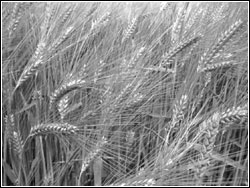 BARLEY, locally known as jao, is a widely cultivated cereal crop in the temperate regions. The crop is the most hardy of all the cereal grains. Its cultivation extends farther north than any other crop and at the same time it can be cultivated in sub-tropical countries. It is a versatile cereal grain with nutlike flavour and in appearance it resembles wheat corn, but is lighter in colour.
Barley is being used since ancient times as a food for humans and animals, as well as to make alcoholic beverages. In addition, barley water has been used for medicinal purposes.
Barley is a concentrated source of nearly three dozen vitamins and minerals. It is particularly rich in vitamins A, C, B1, B2, folic acid and B12, calcium, iron, potassium and chlorophyll. Unlike most plants, barley provides all nine essential amino acids.
Barley-meal has water 15 per cent, nitrogenous compounds 13 per cent, gum 7.5 per cent, sugar 3.2 per cent, starch 60 per cent and fat 2.1 per cent. Dehydrated barley has about 11 times the calcium of cow’s milk, five times iron of spinach and more protein than steak. However, it lacks nitrogenous compound called gluten which is present in abundance in wheat. Barley is highly nutritious and the salts it contains have a high proportion of phosphoric acid.
Barley is mainly cultivated for malting to prepare spirits and beer, but it also has a large scope in domestic cookery. For this purpose the hard, somewhat flinty grains are preferable and they are prepared by grinding off the outer cuticle. Sprouted barley is high in maltose sugar which serves as the basis for malt syrup sweetener.
Barley for food is made into pearl barley by using abrasive disks to grind the hulls and bran off the kernels. Pot and pearl barley are used in soups, dressings and stews. Barley flour is used in baby foods and breakfast cereals, or mixed with wheat flour in baking.
Hulled or covered barley may be used as livestock feed. But before using as human food, its outer fibrous hull should be removed. In this form, the grain has its bran and germ, which are highly nutritious. In pearling process, the hulled barley is processed further to remove the bran. The pearled barley may be processed into a variety of barley products such as flour, grits and flakes which are similar to oatmeal.
The grain has alpha-tocopherol succinate, a potent relative of vitamin E, commonly known as alpha-tocopherol, which seems to inhibit leukemia, brain tumors and prostate cancer. Recent research suggests that regular consumption of barley grain is also helpful against diabetes. Eating whole grain barley with other low Glycemic Index (GI) grains such as rye, can regulate blood sugar for up to 10hrs after consumption. Using mixed flour of barley and wheat flour is common in some areas with this belief that it prevents heart diseases. In this form it is easy to make breads and muffins that have a unique taste.
Barley is also a good source of niacin, a vitamin that provides protection against cardiovascular risk. Niacin can also help reduce total cholesterol. Barley grass, a product of barley leaf, helps cure skin diseases and ulcers. It is high in chlorophyll, an antibacterial green pigment. Its extract helps the body heal from many illnesses and helps improve appetite and bowel regularity.
Barley that has been toasted and cracked is kwon as barley grit. Barley grits can be made from hulled or pearl barley. It is significantly different in nutrient content. Cracked barley or barley flakes may be used to make hot cereal which locally called as sattoo. It can also be used as mixed with chopped vegetables to make a tasty cold salad.
Half or more of the barley grown is used for livestock feed which is nearly equal in nutritive value to kernel corn. The entire kernel is used in feed, generally after grinding or steam rolling. Malt sprouts from malting as well as brewer grain, byproducts of brewing, are also valuable livestock feeds.
Barley is also grown as a hay crop in some areas. It may also be pastured moderately before the stems start to elongate. It furnishes nutritive pasturage, and grain yields are not seriously reduced.
The crop has considerable potential for forage production. In addition to the traditional practice of harvesting for seed, barley can be harvested at the milky-dough stage as whole plant silage. It can give high yields of high quality green mass that exceeds the yields, energy content and nutritional quality of forage obtained from winter wheat, fall rye, oats or other crops. The whole plant harvest of winter barley can be used as silage.
The cereal is grown here on small scale and is mostly used as intercropping with wheat and other crops. Water requirement of the crop varies from 310g to 534g to produce one gram of dry matter, depending upon environmental conditions.
Barley grows best on well-drained loams to clay loam soils and can be planted on less fertile marginal lands. It can be planted in rows of 20-40 cm width at a depth of about four centimetre in humid regions and about seven cm in semi-arid regions. Barley crop does not need high doses of fertiliser and can be used successfully in intercropping with other crops.
The crop is a rapidly growing and shallow rooted plant. The upper layer of the soil must therefore be free from weeds, finely pulverised and stocked with a readily available supply of nutrients. The crop is more tolerant to soil salinity, drought or frost than wheat.