0
0

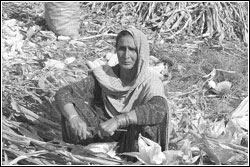 CREDIT requirements of the farming sector have increased rapidly over the past few decades as a result of the rise in use of fertiliser, pesticides, improved seeds and mechanisation, and hike in their prices. Both formal and informal lenders are active in rural credit market.
Collateral-free lending, proximity, timely delivery, and flexibility in loan transactions are some of the attractive features of informal credit. The informal sources include friends, relatives, commission agents, village shopkeepers, traders and private moneylenders etc. At present, the formal credit sources comprise financial institutions like Zarai Taraqiati Bank Limited (ZTBL), commercial banks, and Federal Bank for Cooperatives. Some non-government organisations (NGOS) are also advancing agricultural credit to rural communities.
About 95 per cent of farms are less than 25 acres, majority of these (86 per cent) have holdings less than 12.1 acres, while around 60 per cent of the total number of farms are less than five acres holding capacity (Pakistan Agricultural Census 2000). Small farmers do not have direct access to the formal lending institutions hence they are trapped in the net of informal lenders. Likewise financial institutions have not approached the farmers because of poor agricultural credit disbursement network.
For the last three or four decades, contribution of agricultural sector in GDP had been diminishing while contribution of production sector increasing year by year. The reason behind the decline in GDP of agriculture sector is because on the one hand agriculture has become an industry while the government sector does not provide it facilities at par with the industrial sector.
The reason behind the lack of attention of financial institutions towards farming sector is because of the highest number of non-performing loans and bad debt in the sector. The institutional loaning agencies have the view that the absorption capacity of the farming community is not improving significantly because of lack of innovations in agriculture-based rural economies. But contrary to this, complicated and dilatory procedures are hampering the growth in credit disbursement.
Majority of our farmers have small holdings (86 per cent) that needs to be explored to widen the absorptive capacity of credit in agriculture sector. Similarly, the livestock sector should also be the consideration of financial institutions for agriculture credit. Some of the domestic private banks have disbursed over 100 per cent whereas some have achieved below 50 per cent target during 2006-07. However, it has been noticed that some banks have business only in metropolitan cities.. It is not certain that from their disbursement, whether the beneficiaries were the peasants or landlord-cum industrialists.
Subsistence and economic farm land holdings both need agricultural credit for production as well development purposes. Since 95 per cent of farms of less than 25 acres holding and mostly in remote rural areas, where the network of formal agricultural credit institutions is negligible except ZTBL. The small farmers/tenants are becoming hesitant to avail loaning facilities from institutions due to cumbersome procedures. The farming community prefers to become a catch of private loaning agencies to purchase crop inputs on double prices payable at the time of harvest. This is another dilemma of poor farmers.
The class of farmers under discussion is living below the poverty line, totally dependent on loans for farm inputs. Under the situation it could not be fair to say low absorptive capacity of the growers. But the small farmers/tenants need proper setup/back stopping in shape of supervised loaning through formal public and semi-public loaning institutions. Livestock rearing is co-related with crop farming particularly in case of small farmers/tenants while fresh water fish farming is being geared up at marshy and wet waste lands.
Both these fields are potential for investment which would be definitely through credit catalyses absorptive capacity of agricultural credit for agri- business purposes. The loaning and recoveries could be doubled of the existing levels if one window operation be launched in all branches of ZTBL and other formal agri credit disbursing institutions. This operation will require collaboration of revenue department of provincial governments (verification of land record), postal authorities (issuance of passbooks) and agriculture credit officers of formal lending agencies (for processing loan documents). This will enable the borrowers to get payments released on the next day from the credit-giving agency. Higher markup rates on agriculture credit is also one of the obstacles which may be reduced and kept at par with the loans for small cottage industry in rural areas. It is now the prime need of time to integrate credit availability, supply of inputs, supervision of field operation and marketing mechanism at least at union council level.
The union council is the basic unit of development process which comprises two to five dehs (revenue jurisdiction). The offices of the union councils are located at major villages touching link roads. Undoubtedly some union council situated at remote areas wmight have no access to farm-to-market roads.
However, agriculture related artisans are earning their livelihood in rural areas by opening khokhas (work place) on rural road sides at thickly populated villages most probably union council’s headquarters. These artisans include tractor mechanics, skilled persons repairing agriculture implements etc. There is a potential for non-farm credit other than livestock and fisheries sectors.
The authors of Medium Term Development Frameworks (MTDF 2005 10) had rightly forecast credit requirement of Rs1, 665 billion for uplift of agricultural economy. During the initial two years of MTDF (2005-06 and 2006-07) agricultural credit of Rs130 billion and Rs168 billion had since been disbursed against the calculated requirements of Rs275 billion and Rs300 billion respectively. The target for the current year is far below the requirement worked out under the MTDF.
There is a wider gap between yield per acre achieved by progressive farmers and average yield of common farmers. This indicates that progressive growers are either financially sound to bear the cost of timely and proper inputs or they have access to loaning agencies to avail agriculture credit facility in time.
On the other hand, farming community is devoid of both. Thus there is a potential of absorptive capacity for agriculture credit but it needs direction and proper guidance. About seven million hectares of land is salt-affected or salinity/water-logging co exists in 11 million hectares. It means severely low productivity on account of salinity/aridity/water-logging; and, thus, poverty of highest order prevails in these areas. These menace-hit lands can be converted into cultivable and productive land by growing brackish species of crops/trees, halophytic forage shrubs, raising of livestock and establishing fish farms where such species of fish could be raised.
There is also great potential for production of ethanol/bio fuel from the wild vegetative plants, shrubs habitat to saline/sodic soils other than cereals. To achieve the objective, initial investment is needed which can only be made through agricultural credit.
The agricultural production is linked with nature’s benevolence and hazards. Thus small farmers are hesitant to apply proper inputs.