



 0
0

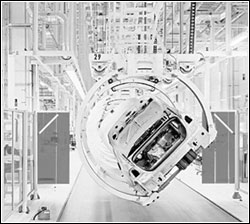 The automotive sector has shown phenomenal growth in recent years-- an estimated seven-fold increase over the past decade. In fact, the number of cars and LCVs assembled in the first quarter of 2007-08 is more than annual production of these vehicles at any given yesteryear until 2001-02.
More than 25 automotive industrial units are engaged in the assembly/manufacturing of cars, LCVs, trucks, buses, motorcycles and tractors. The Japanese companies dominate the automotive sector, whereas the Chinese have entered in a big way in the assembly of LCVs and motorcycles.
Logically, the vending industry should have benefited in proportion to the growth of automotive sector. But it did not happen. Rather, there has been regression.
There were over 200 vendors supplying parts and components to the largest assembler of vehicles until 2001-02. Now, when the production of vehicles has almost doubled, the number of vendors has fallen to almost 100.The vendors are getting bigger orders but the prices offered to them are low and unrealistic.
Also, the Original Equipment Manufacturers (OEMs) do not allow the vendors to supply parts they manufacture for the OEMs in the local after-sales market, which is growing fast. The constraints of the vending industry include stagnation in overall sales volume, roll-back of locally produced parts, forced price reduction and reversal of local content in new models. Of late, there has been problem of availability of raw materials for the vending industry, in particular coke pig iron from Pakistan Steel.
The vending industry, though still in developing stage, is dynamic and well established. There are over 1,250 industrial units engaged in manufacturing of components, parts and accessories for cars, buses, trucks, tractors and motorcycles, with an investment of $1.5 billion, providing employment to about 40,000 workforce. Out of these, 500 vendors are registered with the OEMs. The industry has saved foreign exchange to the cumulative level of $280 million in terms of import substitution, having played a key role in indigenisation of major components under the deletion programme for the automotive sector.
A breakthrough in the export market has been achieved and current annual exports of automotive parts are to the tune of $25 million. A declining trend in exports has, however, been observed in the first quarter 2007-08 performance. The export of automotive parts dropped by over 12 per cent compared to corresponding period of last year.
Over 2,000 components and parts are used in assembly of a vehicle. The vendors and sub-contractors supply most of these parts and accessories primarily to the vehicle assemblers. The OEMs and other assemblers use the original components and parts produced by vendors for assembly under deletion programme. These parts constitute 56—70 per cent, weight-wise and item-wise, of total CKD kit in case of cars and over 80 per cent in tractors, though of much less by value in percentage. Small but critical hi-tech components, of higher value, are being produced and supplied by the OEMs themselves as a matter of policy.
The vending industry manufactures and supplies a large variety of items like pistons, engine valves, gaskets, camshafts, shock absorbers, steering mechanism, cylinder head, cylinder liners, wheel hubs, brake drums, wheels, bumpers, instruments and instrument panels, gears of all type, lights, doors and door locks, radiators and auto air-conditioners etc.
The industry has technical collaboration with Showa Corporation (Japan) and Kayaba Industry Co (Japan) for the manufacturing of shock absorbers, whereas radiators are being produced under license from Toyo Radiator Co (Japan) and UE Automotive Manufacturing (Japan). Likewise, NGK of Japan has provided technology for local production of spark plugs, and Hamana Buhin Kogyo (Japan) for propeller shaft and gear, shift lever and other components.
Pakistan Association of Automotive Parts and Accessories Manufacturers (PAAPAM) alleges that the OEMs and commercial importers were involved in malpractices in the import of auto parts, as they bring in these parts at lower than prescribed rate of tariff to save customs duty.
The deletion programme for automotive sector has been phased out under the WTO regime and replaced with the tariff-based system, effective July 1, 2006. Parts indigenised, or “deleted”, by June 2004 have been placed at higher rate of custom duty, whereas parts not indigenised, or “not deleted”, are allowed at CKD rate of custom duty.
Apparently, there is no check on the OEMs on declared value of “deleted” parts that are importable at higher duty. Thus, supply of output of the vending industry to the vehicle assemblers is not optimised. On the other hand, the assemblers claim that technological level in the indigenous manufacturing of the auto parts remains low and quality standards are not strictly adhered to by the vending industry.
The vending industry is unable to availing facilities under the State Bank of Pakistan scheme for financing engineering sector at concessionary rate. Since most of the vendors belong to the SME sector, with low-volume and low-value exports, they can not meet the condition of exports of $500,000, the limit fixed under the scheme.
There is nothing positive for raising export of auto parts in recent measures adopted by the government. An undue financial burden has been placed on the exporters with the implementation of sales tax notification SRO 824(I)/2007 dated August 16,2007. Before this SRO, input tax paid by the exporters was adjusted from output tax. But, according to the new rules, only a part of input tax, that is, related to domestic taxable purchases (goods and services), is now adjustable. The remaining part of the input tax can be claimed through a refund application only, which is a time–consuming process.
The government has approved the Auto Industrial Development Programme, (AIDP) which outlines a five-year roadmap extending policy incentives to attract investment for achieving targets set for the automotive sector. According to the projections, production capacity of the automobiles would reach 500,000 mark by 2011-12, envisaging an additional investment of $3.75 billion.
This will increase automotive sector contribution to the GDP from 2.8 to 5.6 per cent over five years. With a view to sustain rapid growth of the industry through innovative and competitive development, it is planned to establish two automotive clusters, one each in Karachi and Lahore, for which the land has been acquired by the government.
It is yet to be seen as to what is in store for the promotion of the vending industry in the AIDP that is focused on providing incentives to the OEMs and other vehicle assemblers. While the documents covers promotion of investment in the production capacities of auto parts manufacturing and improving the technological level and quality of products, specific measures to achieve the objectives have not been explicitly outlined. Instead, the government would like the OEMs to motivate their international vendors to manufacture in Pakistan through joint ventures.
The implementation of such measures is likely to deprive a large number of local vendors, who mostly operate in the SME sector, to continue to get their increased share of parts and components. There is no indication of addressing the issues, the vending industry is confronted with at present, largely impeding its growth.
Until the time, the vehicle assemblers realise that improving the vending industry would directly benefit them in terms of lower cost, timely delivery and improved quality, the government needs to extend due support to the local vendors. Pakistan is considered a low-cost manufacturing destination and has the potential to become part of the OEM’s global supply chain for automotive parts and components.






























