



 0
0

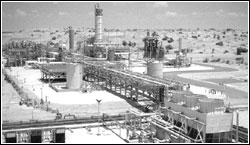 WITH international crude prices ready to breach the $100 a barrel mark, India – which imports nearly 75 per cent of its oil – faces enormous challenges. With the economy growing at over nine per cent, demand for oil is soaring. And while the government is reluctant to raise the price of petroleum products, for fear of alienating voters, consumers still don’t feel the pinch and are recklessly wasting energy.
Refined petroleum products have been capped at unrealistically low levels in India, and most motorists do not feel the need to conserve energy by opting for car-pooling or avoiding unnecessary journeys. The result: even as consumers, auto manufacturers, and governments in the west are coming out with innovative measures to reduce the dependence on oil, in India nobody – except the oil marketing companies – are worried about the prospects of $100-plus a barrel of crude and its impact on long-term energy usage.
Last week, the Paris-based International Energy Agency (IEA) warned that India, along with China, would be responsible for the soaring global energy needs. The two Asian giants – growing at a hefty pace of nine per cent and 12 per cent respectively – are projected to account for half the growth in energy demand over the next 25 years.
Global oil demand, currently around 85 million barrels a day, is likely to touch 116 million barrels a day by 2030. It is expected to grow at an average annual rate of 1.8 per cent, and India and China will account for half of this growth.
Unfortunately, with successive governments in India shying away from telling the truth about the crude story, consumers merrily squander away the hugely subsidised energy. Worse, by delaying the inevitable, the government is passing on the burden of the profligacy of the present generation on to future generations.
With a busy election schedule ahead the United Progressive Alliance (UPA) government is in no mood to raise the price of petrol, diesel, kerosene and LPG (liquefied petroleum gas, used for domestic cooking). State assembly elections are scheduled to be held in Gujarat and Himachal Pradesh this month and in December; Karnataka might see assembly elections if the hotchpotch alliance between the BJP and the Janata Dal (S) collapses over the next few weeks; and if the leftists pull out support, there could be general elections in the country early next year.
LAST week, with crude oil prices set to shatter the $100 a barrel mark, the UPA government once again decided to delay hiking the price of petroleum products. The three state-owned oil marketing companies, Indian Oil Corporation (IOC), Bharat Petroleum (BPCL) and Hindustan Petroleum (HPCL), have been sending distress signals to the government, and Petroleum Minister Murli Deora met Prime Minister Manmohan Singh twice, seeking a hike in retail prices.
Incidentally, figures released last week indicated that inflation had dipped to below three per cent. The wholesale price index fell to 2.97 per cent, it’s lowest in three years, and down from 5.35 per cent a year ago. It appeared to be the ideal time to bite the bullet and raise the price of petroleum products, but the government once again decided to brush the issue under the carpet.
Even the country’s central bank, the Reserve Bank of India – which keeps a close eye on inflation – has urged the government to go in for a price hike and pass on some of the burden to consumers. Y.V. Reddy, the governor, noted that the current low inflation rate was a ‘suppressed’ one as it did not reflect global crude prices.
The government has not allowed petroleum marketing companies to raise the price of their products this year, though crude oil prices have soared by 52 per cent. The Indian crude basket – comprising Oman-Dubai sour grade crude and Brent in a ratio of 60:40 – has jumped by a massive 145 per cent over the last three-and-a-half years, but retail prices of petrol have been raised by less than 30 per cent, and of diesel by 40 per cent. Last week it touched $89.36 a barrel.
According to Deora, the Indian government and the state-owned oil marketing companies are absorbing over 85 per cent of the difference in the cost of import and domestic oil prices. But the latter – all three oil giants are listed on the stock exchanges, with non-government share-holdings of 18 per cent in IOC, 33 per cent in BPCL and 49 per cent in HPCL – are restless and are seeking a hike in prices.
When the government decided to reform the oil economy a few years ago, it announced an ambitious move to dismantle the ‘administered pricing mechanism’ (APM) for petroleum products. Oil marketing companies would be able to decide the price of their products on a daily or weekly basis, linked to international crude prices.
However, the Bharatiya Janata Party (BJP)-led National Democratic Alliance government backed away from giving the necessary autonomy to the oil marketing companies, even when crude oil prices crashed. Raising petroleum prices is a political hot potato and no party wants to be blamed for the high price of petrol or diesel.
BUT what may be good for a political party makes terrible economic sense. The government-controlled oil companies are losing nearly Rs2.5 billion a day on the sale of petrol, diesel, kerosene and LPG. They lose Rs4.94 on every litre of petrol, Rs6.5 on diesel, Rs16.42 on kerosene and over Rs200 on an LPG cylinder.
Many economists have been urging the government to target the subsidies so that only the really poor stand to benefit. Even Prime Minister Manmohan Singh and his bright team of economists and planners are fully aware about the consequences of extending mindless subsidies.
”We need to address the problem of mounting subsidies in food, fertiliser and now, in petroleum which is a recent phenomenon,” Singh told the Planning Commission meeting last week. “Over Rs1 trillion are going to be spent this year alone on these three items.” Ominously, he warned that such a large outgo on subsidies could mean “fewer schools, fewer hospitals, fewer scholarships, lower public investment in agriculture and poor infrastructure.”
While both petrol and diesel are used by the affluent – most Mercedes Benz cars in India run on diesel, and all the air-conditioned luxury buses also guzzle diesel – it is only the rich and the middle-classes who can afford to use domestic LPG. The really poor, those who survive on less than a $1 a day, can scarcely afford stoves; kerosene sold under the public distribution system is generally grabbed by middle-men and unscrupulous operators, who use it to adulterate diesel.
Sarthak Behuria, chairman, IOC, warned last week that his company will have to borrow Rs30 billion a month to meet its expenses, if prices are not raised, or the government compensates the firm for the difference in price. IOC’s borrowings have soared to Rs280 billion this year (as against Rs270 billion in the whole of last year). All three oil giants are neck-deep in debt and their balance-sheets awash in red ink; total losses sustained so far this year because of the failure to raise prices adds up to a whopping Rs700 billion.
Besides raising the retail price of these products, the government also has two other options: issuing bonds to the oil marketing companies – which is tantamount to delaying the impact of the oil price by a few years and passing the burden on to a future government – or reducing domestic taxes. The government is committed to issuing bonds worth nearly Rs250 billion this year, but this may have to be scaled up to Rs300 billion.
The option to reduce taxes is also dicey. Besides the five per cent import tax on crude, domestic taxes account for 54 per cent of the cost of petrol, and 32 per cent of the cost of diesel.
But refined products also fuel the government’s budget, and any cut in excise duties would be fiercely resisted by the states and the various ministries, who would be reluctant to scale down their budgets. The UPA government, to please its leftist supporters, has embarked on ambitious, multi-billion-rupee social welfare schemes; most of these would have to be rolled back, if domestic duties on refined products are cut.






























