



 0
0

‘Society’s lone progressive voice’
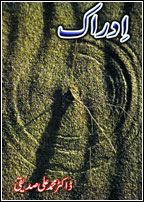 Dr Anwaar Ahmad, who among scholars of Urdu literature, has the distinction of possessing a clear and lucid vision with a succinct expression and whose views, for their avoidance of the cynical and the cant, are widely respected, also for the reason that he doesn’t say things that he does not mean, has rid me of reservations that I rightly entertain about the validity of my own judgment in critical matters —- being as I am a man of much passion, little thought and rather inclined to be somewhat tilted towards my friends —- by his emphatic pronouncement that “after Askari Sahib and Mumtaz Hassan we are left with only one critic who is living and that is Muhammad Ali Siddiqui.”
I wouldn’t say it is a tribute. If it were, Muhammad Ali Siddiqui would use it with caution on the inside cover of his new book, ‘Idraak’, a collection of sundry essays and reviews and some thick discussions on ideological matters. Dr Anwaar’s categorical statement is an assessment that, we can trust, is not an offhand remark but a finding he has precipitated from his constant involvement with literary matters as a University don. Again I am tempted to think it could be a ticklish conjecture, a ‘chher chhaar’ to excite the frogs out of their pond, but it is not. Anwaar is serious. It is a detailed judgement, self contained, delivered in one piece, without reference to any ground realities, that in judicial matters nowadays, are much in use to explain deviations from basic principles. The professor employs no please-all casuistry and chews no cud as is customary among our Urdu critics. To bring his subject into focus and establish the scene he zooms his lens on other objects: “Of researchers and historians there are two —- one is Mushfiq Khwaja and the other is Jamil Jalbi. Yes, there is an essayist too, in Sargodha —- Wazir Agha. For the rest, God be with us! Forgive me, a genuine writer, Mushtaq Ahmad Yusufi, is also there whom I forgot to mention.”
In his brief foreword to Idraak, the sixth collection of his sundry writings on issues like the new world order, post modernism and literature, language and civilisation, the dilemma of Pakistani culture and studies and reviews of literary works from Ghalib and Meer to Shah Latif, Majaz, Ibrahim Jalees, Sheikh Ayaz, Qamar Raees, Humaira Rahman and Pirzade Qasim, Muhammad Ali Siddiqui thinks it is fortunate for him that he doesn’t feel hurt for the heedlessness of times with regard to his nearly 50 years of work when literature’s importance itself is on a gradual decline. Yet a measure of his success is the degree of debate his views have generated which he attributes to his optimism and the system of beliefs he cherishes. It has opponents at both national and international levels, and they would always be there since in a milieu like Pakistan’s the causes of backwardness can always be traced to attitudes that are devoid of self-criticism. He believes that only those societies prosper and advance which do not claim monopoly on what is right and true, and where all schools of thought are allowed to coexist.
“My literary ideology”, says Siddiqui, “is dialectical that holds the search for the better and more acceptable truth by contending ideologies as necessary. Though it is true that observation, study and inductive logic have been my anchor, I do recognise that the inductive process too is now more akin to pluralism and has lost its position as the final truth. The importance of points of view is established from Plato to Derrida. But those who declared there was no place now for points of view are now themselves the target of policies born of specific viewpoints in international affairs and international literature.”
Dr Anwaar says that despite Siddiqui’s positional differences with writers like Dr Ahsan Faruqui, Kalimuddin Ahmad, Hassan Askari and Shamsur Rahman Faruqui, his writings are read with equal interest and attention by the student of Urdu criticism. Or is it because the vital is always controversial, as Oscar Wilde thought.
Dr Anwaar also attaches great importance to Dr Siddiqui’s pioneering studies on the works of western thinkers like Sartre, Heideger, Chomsky and Wittgenstein. Hardly anyone knew about structuralism (except Askari) when he introduced the concept through a number of articles in 1975. He is resourceful not only in literatures of the West but also has a keen eye on modern movements in literary thought in addition to his vast knowledge of social sciences. He quotes Qamar Jalil who has no hesitation in saying that “among modern progressive critics Muhammad Ali Siddiqui is the most eloquent. His voice is the progressive voice of our society. No other critic enjoys the credibility that he commands today in our intellectual and literary circles.”
‘God, help the Muslims’
THE screaming of little animals in their death throes is far worse of course. But even when slaughter isn’t on the menu, Eid mornings are a noisy affair in our neighbourhood. There are at least four large mosques within a half-mile radius of my flat, all wired for maximum penetration into the homes of habitual absconders. Perhaps the prime nature of the real estate has something to do with this profusion of piety, for two mosques should be ample given the low population density.
Try as you might, there is no escaping their sphere of influence. Unless totally deaf or rigged out at all times in Himalayan special operations earmuffs, which are anything but stylish, what you get is four passionate sermons coming at you simultaneously from four different directions. One at a time could be noted and shelved as so much atmosphere but the quadraphonic effect is overpowering early in the morning. It is particularly trying for those told by their elders an age ago that the believer needs neither mullah nor loudspeaker to commune with the Creator.
Enough preamble. This last Eid the mullah in the south-westerly mosque was coming through clearer than the rest. I ignored him until he started repeating one particular plea to the Almighty over and over again: Ya Allah, Musalmanon ki madad farma (Allah, help the Muslims)! He said this at least six times, and that’s not counting what I might have missed. Life is full of regrets.
True, we need all the help coming to us but why ask for it exclusively for Muslims? I personally know several Hindus who need help, desperately, and at least two Christians who could do with a serious talking to if not an outright intervention. The Parsis also have their problems — I married one, I should know. There used to be Jews in the Karachi of my childhood but they all seem to have vanished so I can’t honestly say how they’re faring. Probably in a tight spot like the rest of us. Worse if they are still in this country, in perpetual hiding and forced to live a lie in the land of their birth.
The point is, why can’t we be inclusive in our prayers, let alone our actions? I won’t claim that it was all hunky-dory in the past because it wasn’t. The Muslims of Pakistan have always felt superior and special vis-à-vis their fellow citizens of other faiths. I don’t know, maybe it’s like that in other countries too where one religion dominates. Mired in the concrete jungle and the demands of the monthly envelope, I lack the wisdom of the traveller and cannot say anything with certainty one way or the other.
For better or worse, I do know myself though and, unlike the mullah, my prayers are with all of humanity and every living creature on the face of this planet, dangerous bacteria excluded. God help the geckos and the parrots and the crows and the truly magnificent kite that honours me daily by choosing my balcony for its roost. It is no longer afraid of me, up to a point. No accolade from any corporate overlord can match that primal feeling of true acceptance in the greater scheme of things. The crows have been friends for a long time but their motives are all too clear. Selfish to the core, every last one of them, almost human and too smart for their own good. Insistent too.
To get back to the point, things may never have been great but they were immeasurably better. We used to be more inclusive than we are now. There is no shortage on radio and television of people calmly saying things like “hum sab Musalman hain (we are all Muslims)”. When did that happen and why wasn’t I informed? Has anyone ever given even a passing thought to how statements like that must affect the six-million-plus non-Muslims who are ostensibly equal citizens of this country? They are not only marginalised, their very existence now seems to be under question.
Then there’s ‘Allah hafiz’. Who came up with that and why? Until about twelve years ago we got along just fine with ‘Khuda hafiz’, invoking God’s protection applicable to everyone regardless of religion. Are we telling our non-Muslim brothers and sisters, on TV and radio no less, that their faith is misplaced, that they should see the light as defined by Muslims? Or are we so insecure in our own beliefs that we need the constant prop of mindless ritual?
Enough said, for now.
imalik@dawn.com
| © DAWN Group of Newspapers, 2007 |



























