



 0
0

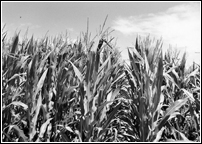 MAIZE is the third important cereal crop of the country after wheat and rice. It is often referred as the ‘king of grain crops’. It accounts for 6.4 per cent of the total food grain production. Maize is grown on an area of about 1.02 million hectares giving an approximate annual production of 3.56 million tones. The crop is mostly cultivated in Punjab and the North West Frontier Province and contributes 99 per cent of the national maize production.
In recent years, a large quantity of maize has been used in manufacturing of shortening of compounds, soaps, varnishes, paints and some other similar products. The increasing industrial use of maize gives this crop a prominent place in agricultural economy. Maize has high nutritional value as it contains 72 per cent starch, 10 per cent protein, 4.8 per cent oil, 8.5 per cent fibre and 1.7 per cent ash.
The average yield of maize in the country is substantially lower as compared with other important maize growing countries and also less than the production potential of existing genotypes. The crop-yield potential of maize hybrid can be partitioned into three components. The first is yield potential per plant, the second is tolerance to various biotic and antibiotic stresses, and the third is responsiveness to inputs. These three components should be considered in breeding programmes as the most effective way of new hybrid development.
Characteristics of Maize Hybrids: Maize hybrids respond differently to various agro-management practices especially plant population. This variable response is mainly due to differences in plant morphology, grain filling duration, intra-specific competition, rate of growth and crowding stress tolerance of different maize hybrids. Hybrids showed earlier flowering, taller plants, and more ears per plant, higher shelling percentage, slower leaf senescence and higher leaf chlorophyll content than inbred under all environments. Maize hybrids vary in plant height, leaf number, individual leaf area, leaf length, vertical leaf angle and leaf area distribution along the main stem. Such canopy architecture differences have concomitant effects on light interception and attenuation, affecting the crop response to plant special arrangement.
The greater tolerance of maize hybrids grown currently to high plant densities has been linked to decreases in plant height, leaf number, leaf area and increase in earliness and vertical leaf angle. Such studies are fundamental to identify the contribution of morphological and physiological traits to the putative improvement of modern hybrids tolerance to high plant population densities.
Modern maize hybrids produce more grain than that of old maize hybrids because of more kernel number per plant and longer plant growth rate. While there is a decline in photosynthetic rate of older hybrids during senescence, which is attributed to the degradation of both structural and functional chloroplasts as they can tolerate crowding stress due to low plant to plant variability. The other reasons may be of lower lodging frequencies, higher nitrogen use efficiency, higher leaf photosynthesis rates, and more efficient stomatal conductance under water stress conditions.
Crowding stress tolerance in maize hybrids: Maize grain yield is more affected by variations in plant density than other members of the grass family due to its low tillering ability, its monoecious floral organisation and the presence of brief flowering period.
Maize grain yield per unit area shows a curvilinear response to plant population, presenting a maximum yield at the optimum plant density. For each production system, there is a population that optimises the use of available resources, allowing the expression of maximum attainable grain yield in that environment. The ideal plant number per unit area will depend on several factors such as water availability, soil fertility, hybrid maturity group and row spacing.
The use of lower than optimum plant population delays canopy closure, decreasing seasonal interception of incident solar radiation, leading to high grain production per plant but low grain production per unit area. Conversely, high plants densities enhance inter-plant competition for assimilates particularly during the period bracketing silking, favouring apical dominance and decreasing the ratio of ear to tassel growth rate. Grain yield of maize crops grown at high densities is composed by plant bearing very different kernel numbers, with slight differences in kernel size and similar starch, oil and protein concentration.
Genetic gain in grain yield was mainly associated with improved kernel number, enhanced post-silking biomass production and enhanced biomass allocation to reproductive sinks. Differences among hybrids arose at the start of the critical period, and were evident as improved radiation use efficiency, enhanced plant growth rate and improved biomass portioning to the ear around silking. Plant density has been recognised as a major factor determining the degree of a competition between plants.
Yield per plant decrease as the density per unit area increases. The rate of yield decrease is in response to decreasing light and other environmental resources available to each plant. Yield per plant is also affected by soil fertility, planting date level of water availability and genotype.
Reduction in yield is mostly due to lower number of ears (bareness), fewer kernels per ear, lower kernel weight or a combination of these components. In dense populations, many kernels may not develop. This occurs in some genotypes due to poor pollination resulting from a delayed silking period compared with tassel emergence and/or due to a limitation in assimilates supply that cause kernel and ear abortion.
Findings: Realising the genetic potential and indispensability of the plant population, a field experiment was conducted in 2005-06 at the Government Agricultural Extension Farm, Bahawalpur, under different interplant spacing i.e., 4.1, 5.7 and 9.5 plants/ meter2 to evaluate the crowding stress tolerance of three different maize hybrids i.e. Pioneer-3012, Pioneer-3062 and Pioneer-30D55. Among these maize hybrids Pioneer-30D55 performed better as compared to other two maize hybrids at crowding stress level of 9.5 plants per meter2 due to more number of cobs per plant, more number of grains per cob, higher 1000-grain weight and stability in harvest index.
Increased plant population, plant height attenuation within the canopy, post flowering source-sink ratio, decreased senescence by kernel set restriction that enhance post flowering assimilate availability. As regards about harvest index stability, analysis showed that high yielding maize hybrids can differ in yield stability but results do not support the contention that yield stability and high grain yield are mutually exclusive. Increase in crowding stress, decreased the oil and protein contents in grains, while starch contents were increased. So, a Pioneer-30 D55 variety is recommended in Bahawalpur region at 9.5 plants/ m2 for maximum yield production.






























