



 0
0

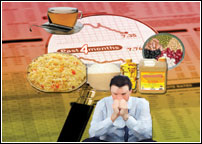 Much is being made about the sale of basic commodities like pulses, tea, sugar, rice and cooking oil through utility stores at subsidised prices. The number of these stores is to be increased by 5,000 so as to provide a store at every union council in the next four months. The role of these stores at best will however remain limited as they are available in cities only.
Moreover, the actual experience one undergoes while making purchases from these stores is itself not a pleasant one, At least half a day is required in the scorching summer heat or chilling winter to buy a commodity which often ends up buying substandard goods--- also some times also short in weight. Some stores insist on selling other commodities with the subsidised commodities entailing unnecessary expenditure.
On the other side of the equation is the burden imposed upon common man by an important shift in the taxation system from direct to indirect. It goes without saying that the ultimate burden of indirect taxes has to be borne by the common consumer. Provincial governments and local bodies also impose indirect taxes. The data for the latter is not readily available. According to federal and provincial consolidated budgets, the share of indirect taxes to total tax revenue had doubled from 28.8 in FY 2000 to 57.9 per cent in FY 07.
Receipts from indirect taxes imposed by the federal government during FY 08 were projected, at the time of presentation of the budget for FY 08, at Rs622 billion as compared with Rs408 billion from direct taxes, according to the Budget-in-Brief for FY08.
Also in the nature of indirect taxed is what is euphemistically called, “cost of doing the business”. It is nothing but corruption in plain terms. Businessmen do not mind paying money to concerned officials because that amount they pass on to the consumer by raising the prices. They, in fact, do so with premium. In the final analysis, it is the common man who actually pays for the rampant corruption.
The common man has thus to put up with “the tyranny of petty officials” in different ways. For instance, it is a common sight in Karachi that hapless person is cornered by police in a broad day light at busy traffic intersections and being searched. They do not frisk him for arms or anything harmful but for his wallet or his pockets for money which they often take away.
Inflation is another curse for the common man, particularly when it impacts the basic necessities of life. With all its basic limitations, CPI has recorded an increase of 48.1 percent since FY 2000 till FY 07, the increase during the latest year being 7,8 as compared with 7.9 per cent in the preceding year. The food sub-index has shown an increase of 53.2 over the period and 10.3 per cent during FY 07 as against 6.9 in the previous year and 12.5 per cent a year earlier.
The inflation rates for July and August 07 have been one per cent and 1.4 per cent for the overall CPI and 1.5 and 2.4 per cent for the food group.
The prices of essential commodities are more revealing. According to the average retail prices for 17 centres worked out by FBS between FY2000 and FY06 have been as follows:
Wheat-41.1 per cent; wheat flour-46.4; rice basmati (broken)- 26.6: rice irri-28.5, milk-33.3, beef-89.8, mutton (goat)-86; sugar-47.8; gur (superior)-81.2: cooking oil-22.5; vegetable ghee-23.4; tea (prepared per cup)-54.3; cooked dal (per plate)-37.9, bread (plain medium size), 29.8 per cent and so on. The data for FY 07 is not yet available.
The fact of the matter is that the basic goods are fast getting out of the reach of the common man. For instance, mutton currently priced at Rs250 per kilo cost as much as 1.7 days income in terms of average annual per capita income and 2.5 days for those in the lowest CPI bracket of Rs3,000 per month.
No wonder, animal protein has disappeared from his diet and there are ample demonstration of it at our marriage feasts Not only common men but sometimes apparently well- to-do guests simply attack the meat dishes and take on their plate more than they could actually eat.
The president has maintained that incomes have increased much more than the rate of inflation. For this, he has cited the tripling of minimum wages from Rs15,00 to Rs4,500. The minimum wage applies to those who are employed in factories covered by the Labour Act. They are a fraction of the total labour force engaged mostly in the informal sector in urban areas and agriculture in rural areas.
Official data on wages are not available except for the construction sector. The average wage of unskilled labour had increased in Karachi by 32.2, in Lahore by 37.9 and in Islamabad by 66.7 per cent during FY 2000-06.
In an election year, government functionaries up to the highest authority in the land are presenting a very glowing picture of the economy to give the impression as if Pakistan has become a land of “milk and honey” for every one.
Against this setting, the intriguing question is: Why the emergence of a new disturbing and rapidly increasing phenomenon of “economic suicides” among Muslims when Islam strictly prohibits it on pain of severe punishment in the life after death?






























